Camellia Elvina Delli
Linden publ|Camellia Elvina Delli
Camellia Elvina Delli
Ten ways of seeing
- measured cast red
- upright 1.50 : 1
First Look
六法者何?一、气韵生动是也;二、骨法用笔是也;三、应物象形是也;四、随类赋彩是也;五、经营位置是也;六、传移模写是也。
—— 南齐·谢赫《古画品录》
The six laws: spirit resonance alive; bone-method in the brush; matching form; colour by kind; planning the placing; copying the masters.
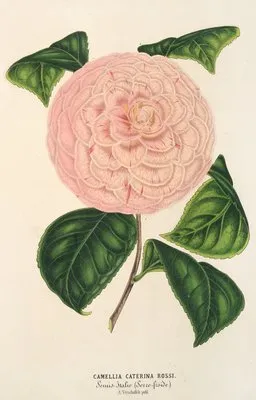
The sheet is vertical: the eye climbs and settles in the upper half. Let the plant stand before you look for detail. Then step in close: watch where colour meets line, and whether the line ever breaks. Third, find where the red is deepest: the whole tonal order is measured from that patch.
Name and Thing
Only the genus Camellia is given; species-level names came later. No established Chinese name exists, so it is cited by its binomial alone.
Form and Colour
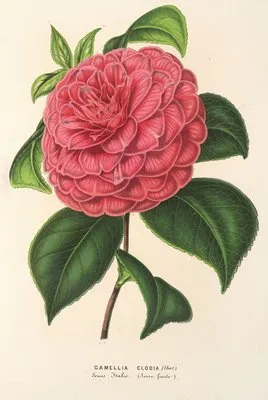
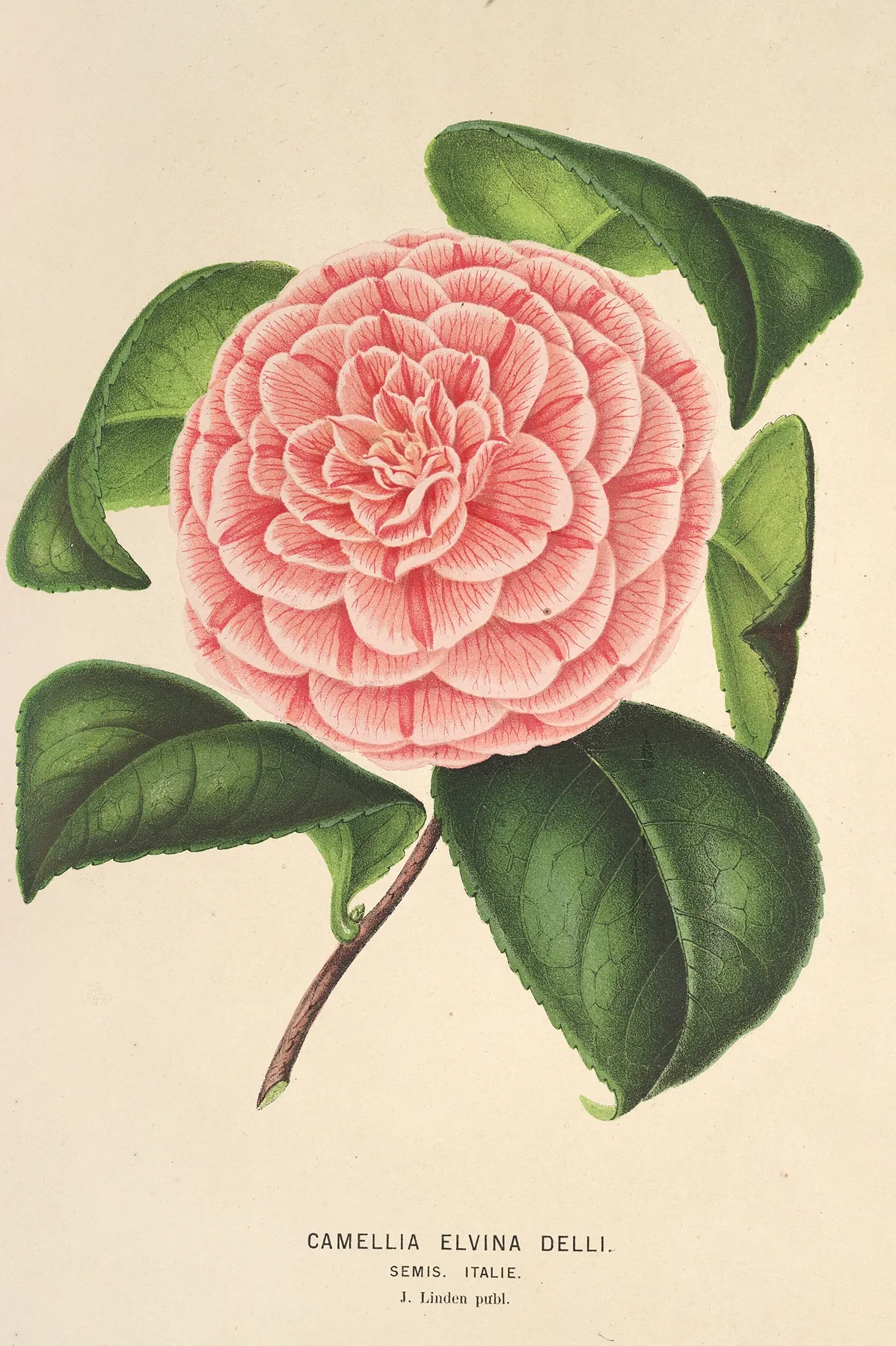
Measured on this plate: flower colour covers 13.9% of the sheet, foliage 20.9%, the cast red with a second note of amber. No other plate shares exactly this measure. Camellias are evergreen shrubs with thick, waxen, serrate leaves; the double flowers overlap like roof tiles and fall whole, petals still attached. Filed under red — a red close to carmine, built in washes from a pale ground. A single plant, laid out with nothing hidden.
Composition
The sheet is tall. No details are appended: a plate for looking, not for keying out. The plant takes about 37% of the sheet, centred near the centre — the easy measure most florists kept to.
Line and Colour
In the later nineteenth century chromolithography took over: colour printed rather than painted, line demoted. Decide first whether it was printed or painted; only then discuss whether it is beautiful. If you mean to copy it: block in the broad shapes and colours first, detail last; lithographic softness comes from thin washes — two or three pale layers will get you close.
Poetic Resonance
空作江南江北梦,辛夷踯躅倚山茶。
—— 宋·黄庭坚《见二十弟倡和花字漫兴五首 其二》
The poem gives the mood first and the picture supplies the form; set the line beside the plate and the red the corolla becomes its resting point.
Symbolism
In China the camellia is the friend that endures; in Europe it became Eastern beauty and unattainability, and after La Dame aux Camélias, a token of brief life. This plate leans red, which in flower language adds one more degree of feeling. Meanings change their tune: the same flower can say opposite things within a century.
Season and Place
a single flower may last a fortnight. Southwest China and Japan, with Yunnan the centre of diversity. The year 1854 on the plate is that of publication, not of flowering — the gathering came a year or two earlier. The bud and the ripe fruit on one branch tell the season; the name in the title often tells the journey.
The Book and the Hand
“L'Illustration horticole” carries only Charles Antoine Lemaire's name. A plate is collective work: drawer, engraver and colourist were different hands, and the unnamed ones decided how good it looks.
What to Take Away
Carry three rules away: whole before detail; line before colour; picture before book. Two centuries on, the plant may still flower in some garden; the one on this sheet stopped in the season of 1854.
About this plate
Camellia Elvina Delli is plate 424, from L'Illustration horticole, drawn by Charles Antoine Lemaire. This public-domain plate is reproduced at high resolution, free to view and download. Publication: Gand, Belgium, Imprimerie et lithographie de F. et E. Gyselnyck,1854-1896.