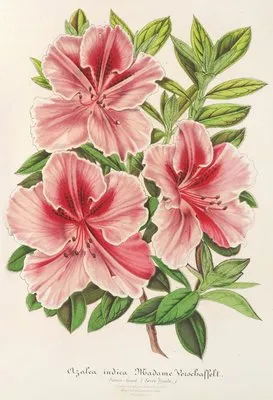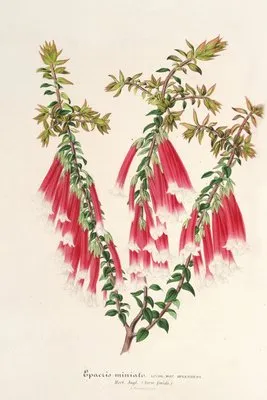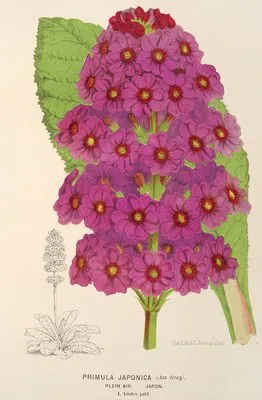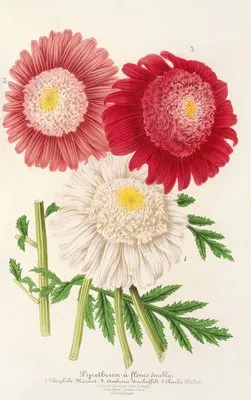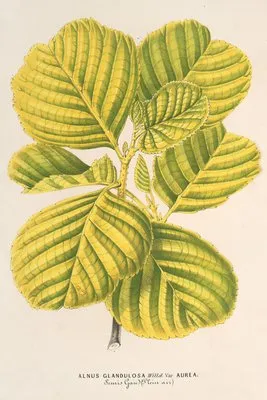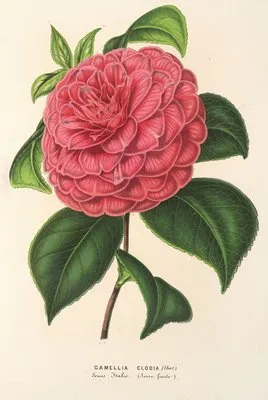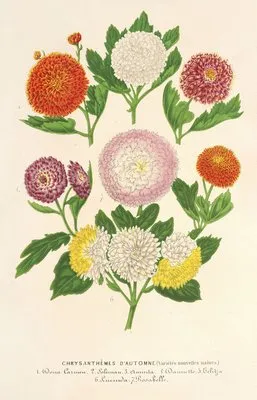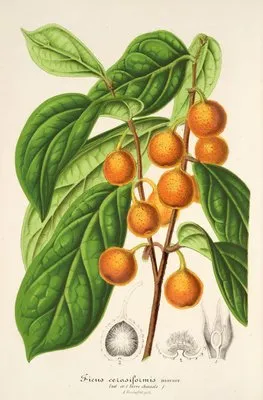
Clematis patens
转子莲
Clematis patens
About this plate
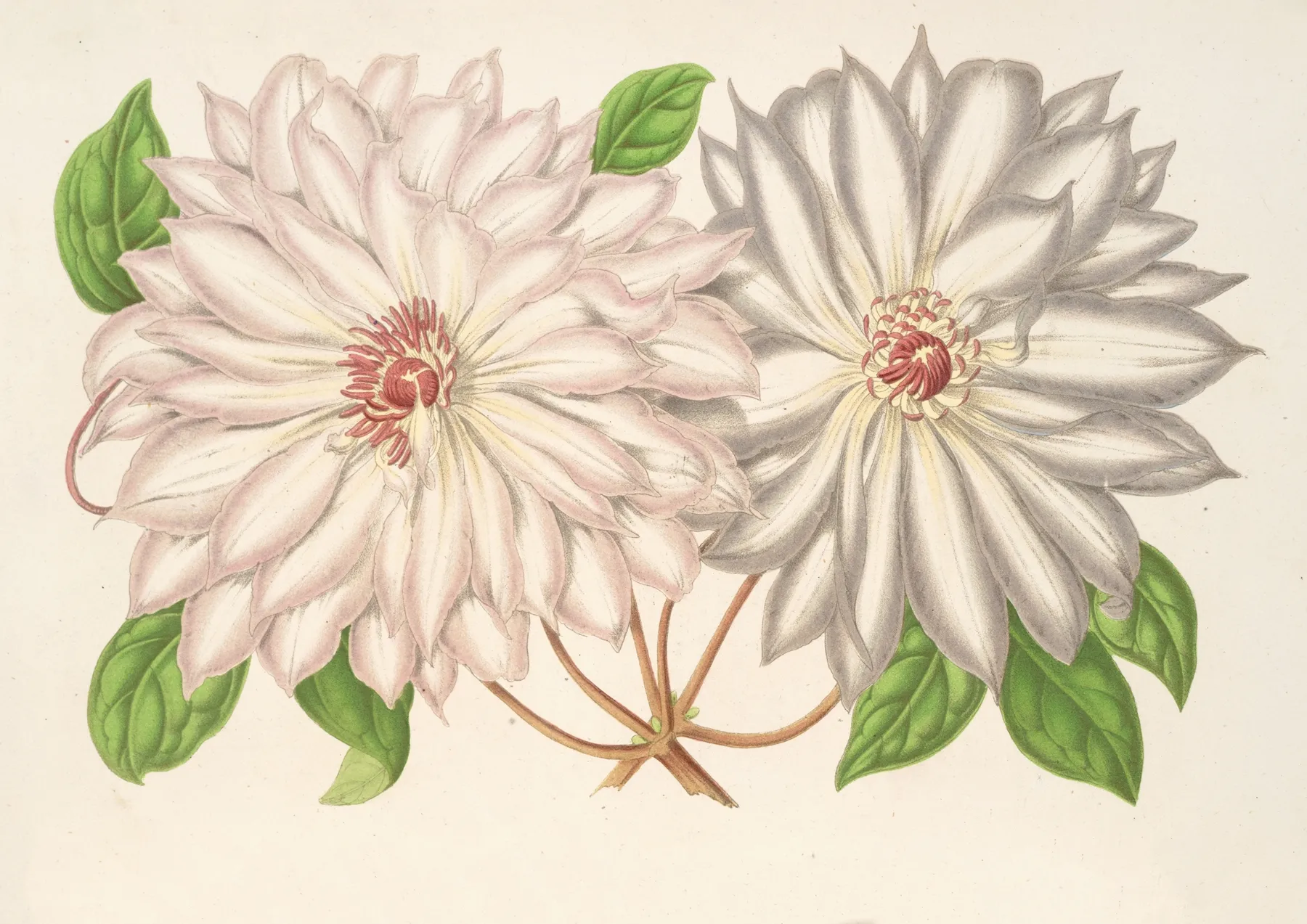
Clematis patens is plate 311, from L'Illustration horticole, drawn by Charles Antoine Lemaire. This public-domain plate is reproduced at high resolution, free to view and download. Publication: Gand, Belgium, Imprimerie et lithographie de F. et E. Gyselnyck,1854-1896.
Twelve ways of seeing
- measured cast amber
- broad 0.71 : 1
- published 1854
- Plate 311
Not a catalogue entry but a way of looking: how to stand, what to notice, how the line was cut, when it flowers, where it came from, who made it — and then the poems and the classics that taught China to see the same flower. Read the twelve in order and the plate opens.
-
First Look
真山水之川谷,远望之以取其势,近看之以取其质。
—— 宋·郭熙《林泉高致·山水训》
Mountains and valleys: from afar take their momentum, up close take their texture — the two distances from which any picture is read.
Broad and horizontal: the eye travels side to side. Find where it stops. Then step in close: watch where colour meets line, and whether the line ever breaks. Third, find the darkest small patch: the whole tonal order is measured from there.
-
Name and Thing
The binomial is Clematis patens: the first word is the genus it belongs among, the second the epithet that sets it apart. Two words carry a whole provenance. The Chinese name 转子莲 is a modern rendering of the Latin, not an old garden name.
-
Form and Colour
Measured on this plate: flower colour covers 5.5% of the sheet, foliage 7.5%, the cast amber with a second note of red. No other plate shares exactly this measure. The sacred lotus lifts shield-shaped leaves above the water with a seed pod standing at the centre; waterlilies float their notched leaves and rest their flowers on the surface.No colour group is recorded. Three things fix the habit: leaf arrangement, tepal count, and how the flower is borne.
-
Composition
Broad and horizontal — the format for groups or a whole plant with its roots. (about 0.71 : 1) No details are appended: a plate for looking, not for keying out. The plant takes about 29% of the sheet, centred near the centre — the easy measure most florists kept to. Cover the margins with your thumb and the plate suffocates; uncover them and the flower breathes again.
-
Line and Colour
In the later nineteenth century chromolithography took over: colour printed rather than painted, line demoted. Craft leaves franker evidence than inscriptions.
-
Season
High summer, June to August; each flower opens at dawn and closes by afternoon, lasting three days. The year 1854 on the plate is that of publication, not of flowering — the gathering came a year or two earlier. The best time to read such a plate is its flowering season: three minutes under the tree explains what no text can.
-
Provenance
The sacred lotus is native to warm Asia and cultivated in China for three millennia; waterlilies are worldwide, and Victorian hybridists made hundreds of garden forms. The volume was made in 1854-1896, when most of this knowledge came from living plants under glass.
-
The Book and the Hand
“L'Illustration horticole” was drawn by Charles Antoine Lemaire and published 1854-1896. This plate is Plate 311. The image is public domain; the hand-colouring is still one person's hand.
-
Poetic Resonance
兰衰花始白,荷破叶犹青。
—— 唐·白居易《池上》
The poem gives the mood first and the picture supplies the form; set the line beside the plate and the corolla becomes its resting point.
-
The Written Tradition
予独爱莲之出淤泥而不染,濯清涟而不妖,中通外直,不蔓不枝,香远益清,亭亭净植。
—— 宋·周敦颐《爱莲说》
I alone love the lotus: out of the mud unstained, washed by clear water without wantonness, hollow within and straight without, neither branching nor trailing, its scent carried far.
Zhou Dunyi's 'On the Love of the Lotus' fixed its reputation as the gentleman among flowers; the Bencao Gangmu prescribes root, seed, plumule and leaf separately. Keep the line; it will surface the next time you meet the same plant.
-
Symbolism
in Buddhism it is the seat of the pure land; in Egypt the waterlily is sunrise and rebirth. In a flora it is a species first and a symbol second; the order is worth keeping.
-
What to Take Away
Next time you stand before a flowering plant, give it three minutes: leaf arrangement, direction of the flower, the darkest patch. A flora exists to be consulted; look long enough and you forget to consult — someone in 1854 gave a whole day to a single flower.