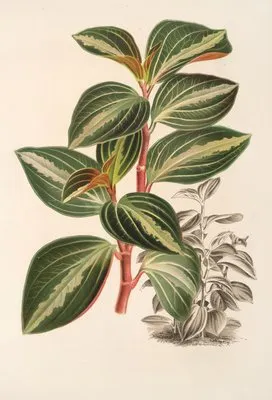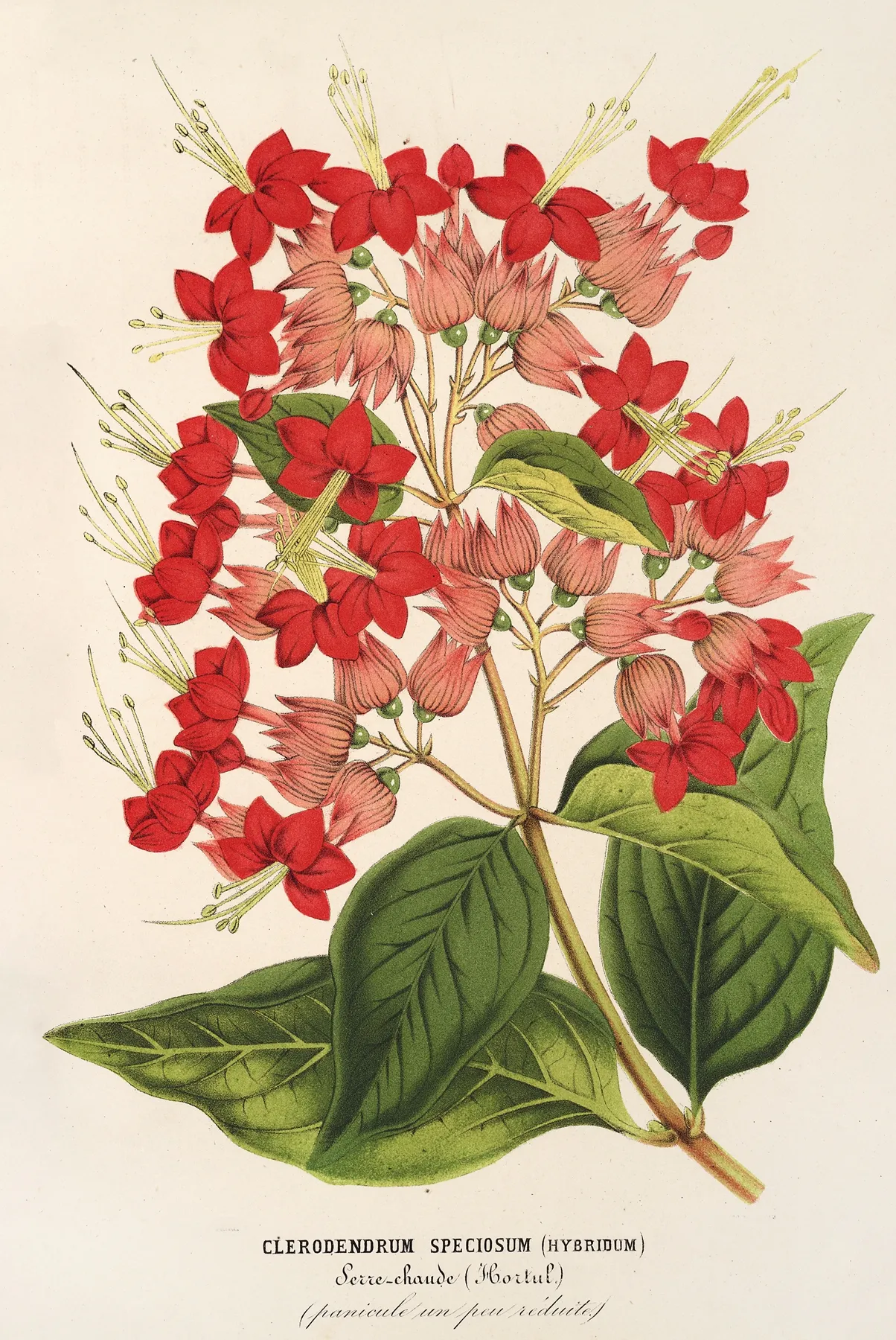
Clerodendrum speciosum (hybridum)
Hpaniculeun cwrcduite|红萼珍珠宝莲
Clerodendrum speciosum (hybridum)
Ten ways of seeing
- measured cast red
- upright 1.50 : 1
First Look
六法者何?一、气韵生动是也;二、骨法用笔是也;三、应物象形是也;四、随类赋彩是也;五、经营位置是也;六、传移模写是也。
—— 南齐·谢赫《古画品录》
The six laws: spirit resonance alive; bone-method in the brush; matching form; colour by kind; planning the placing; copying the masters.
The sheet is vertical: the eye climbs and settles in the upper half. Let the plant stand before you look for detail. Then step in close: watch where colour meets line, and whether the line ever breaks. Third, find where the red is deepest: the whole tonal order is measured from that patch.
Name and Thing
The binomial is Clerodendrum speciosum: the first word is the genus it belongs among, the second the epithet that sets it apart. Two words carry a whole provenance. The Chinese name 红萼珍珠宝莲 is a modern rendering of the Latin, not an old garden name.
Form and Colour
Measured on this plate: flower colour covers 29.4% of the sheet, foliage 12.8%, the cast red with a second note of amber. No other plate shares exactly this measure. The sacred lotus lifts shield-shaped leaves above the water with a seed pod standing at the centre; waterlilies float their notched leaves and rest their flowers on the surface. Filed under red — a red close to carmine, built in washes from a pale ground. Read the outline, then the colour layers, then the brush.
Composition
The sheet is tall. No details are appended: a plate for looking, not for keying out. The plant fills 43% of the sheet, centred near the centre — the herbarium way, drawn to be read whole.
Line and Colour
In the later nineteenth century chromolithography took over: colour printed rather than painted, line demoted. There is evidence on the back too: the plate mark pressed into the paper, the slight relief of the pigment, lines worn shallow in a later printing. If you mean to copy it: block in the broad shapes and colours first, detail last; lithographic softness comes from thin washes — two or three pale layers will get you close.
Poetic Resonance
出淤泥而不染,濯清涟而不妖。
—— 宋·周敦颐《爱莲说》
It rises from the mud unstained, is rinsed in clear water without becoming coy.
The poem gives the mood first and the picture supplies the form; set the line beside the plate and the red the corolla becomes its resting point.
Symbolism
in Buddhism it is the seat of the pure land; in Egypt the waterlily is sunrise and rebirth. This plate leans red, which in flower language adds one more degree of feeling. Flower language was added later; the flower knows nothing of it, and that innocence is part of its power.
Season and Place
each flower opens at dawn and closes by afternoon, lasting three days. The sacred lotus is native to warm Asia and cultivated in China for three millennia. The year 1854 on the plate is that of publication, not of flowering — the gathering came a year or two earlier. See this kind of plate in the flowering season if you can: once you have met the living flower, you stop reading only colour.
The Book and the Hand
“L'Illustration horticole” carries only Charles Antoine Lemaire's name. A plate is collective work: drawer, engraver and colourist were different hands, and the unnamed ones decided how good it looks.
What to Take Away
Carry three rules away: whole before detail; line before colour; picture before book. The flower of that year is dust, yet its image on paper has outlived every living cousin.
About this plate
Clerodendrum speciosum (hybridum) is plate 442, from L'Illustration horticole, drawn by Charles Antoine Lemaire. This public-domain plate is reproduced at high resolution, free to view and download. Publication: Gand, Belgium, Imprimerie et lithographie de F. et E. Gyselnyck,1854-1896.