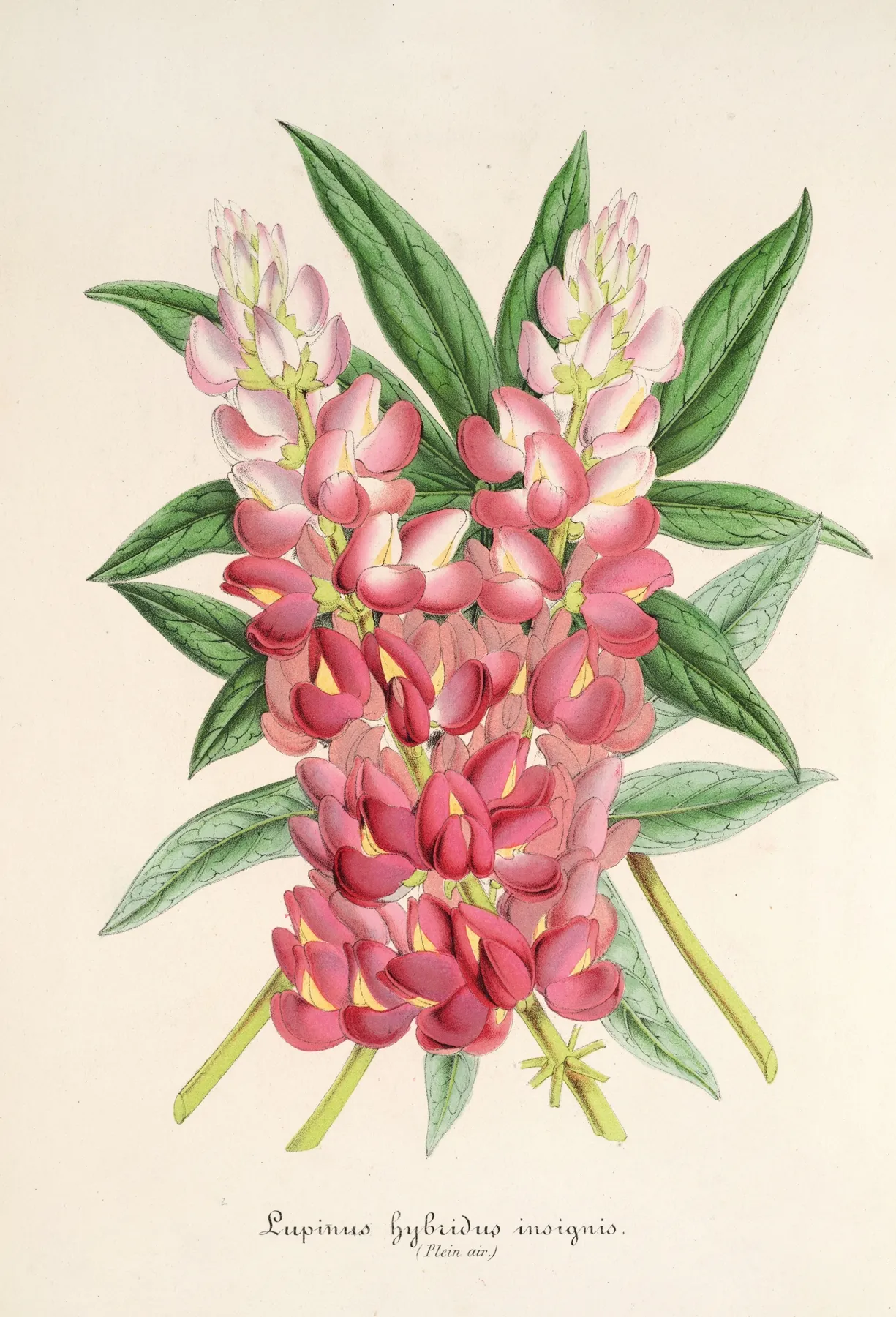
Lupinus insignis (hybridus)
羽扇豆属
Lupinus insignis (hybridus)
Ten ways of seeing
- measured cast red
- upright 1.47 : 1
First Look
搜尽奇峰打草稿。
—— 清·石涛《苦瓜和尚画语录》
Exhaust the strange peaks, and then make the sketch.
The sheet is vertical: the eye climbs and settles in the upper half. Let the plant stand before you look for detail. Then step in close: watch where colour meets line, and whether the line ever breaks. Third, find where the red is deepest: the whole tonal order is measured from that patch.
Name and Thing
The binomial is Lupinus insignis: the first word is the genus it belongs among, the second the epithet that sets it apart. Two words carry a whole provenance. The Chinese name 羽扇豆属 is a modern rendering of the Latin, not an old garden name.
Form and Colour
Measured on this plate: flower colour covers 19.5% of the sheet, foliage 9.6%, the cast red with a second note of yellow-green. No other plate shares exactly this measure. Wildflowers are rarely tidy: small blooms, slender stems, leaves imperfect and often chewed. That untidiness is exactly what records wind, light and soil. Filed under red — a red close to carmine, built in washes from a pale ground. Read the outline, then the colour layers, then the brush.
Composition
The sheet is tall. No details are appended: a plate for looking, not for keying out. The plant takes about 33% of the sheet, centred near the centre — the easy measure most florists kept to.
Line and Colour
In the later nineteenth century chromolithography took over: colour printed rather than painted, line demoted. Craft leaves franker evidence than inscriptions. If you mean to copy it: block in the broad shapes and colours first, detail last; lithographic softness comes from thin washes — two or three pale layers will get you close.
Poetic Resonance
终日白云应自足,明年芳草又何如。
—— 唐·皇甫冉《酬權器》
The poem gives the mood first and the picture supplies the form; set the line beside the plate and the red the corolla becomes its resting point.
Symbolism
In Chinese verse wildflowers bloom unseen, owing nothing to praise; in the West they mark a place — one species, one landscape's character. This plate leans red, which in flower language adds one more degree of feeling. In a flora it is a species first and a symbol second; the order is worth keeping.
Season and Place
By latitude and altitude. Native plants of woodland floor, bog, roadside and rock crevice. The year 1854 on the plate is that of publication, not of flowering — the gathering came a year or two earlier. The bud and the ripe fruit on one branch tell the season; the name in the title often tells the journey.
The Book and the Hand
“L'Illustration horticole” carries only Charles Antoine Lemaire's name. A plate is collective work: drawer, engraver and colourist were different hands, and the unnamed ones decided how good it looks.
What to Take Away
Appreciation is not knowledge but habit — one more look each time. The flower of that year is dust, yet its image on paper has outlived every living cousin.
About this plate
Lupinus insignis (hybridus) is plate 270, from L'Illustration horticole, drawn by Charles Antoine Lemaire. This public-domain plate is reproduced at high resolution, free to view and download. Publication: Gand, Belgium, Imprimerie et lithographie de F. et E. Gyselnyck,1854-1896.