Rose The Isabelle Grey
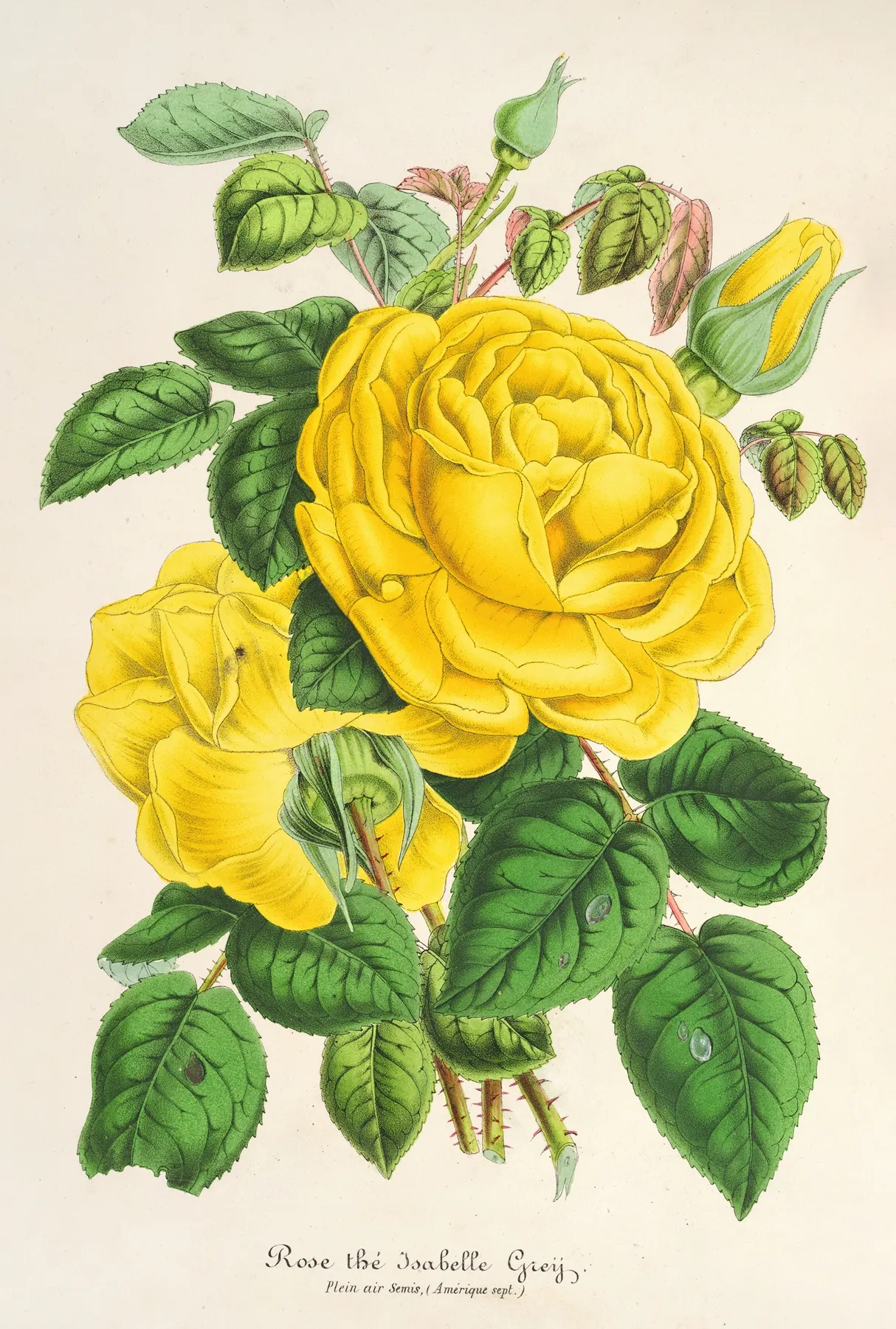
Rose thé Joabelle CGieis): Plein air Semis, ( Amérique sept.).
Rose The Isabelle Grey
Ten ways of seeing
- measured cast yellow-green
- upright 1.48 : 1
- published 1854
- Plate 317
First Look
江馆清秋,晨起看竹,烟光日影露气,皆浮动于疏枝密叶之间。
—— 清·郑板桥《题画竹》
On an autumn morning at the river lodge I looked at the bamboo: mist, sunlight, dew, all drifting among the sparse and dense leaves.
The sheet is vertical: the eye climbs and settles in the upper half. Let the plant stand before you look for detail. Then step in close: watch where colour meets line, and whether the line ever breaks. Third, find where the yellow is deepest: the whole tonal order is measured from that patch.
Name and Thing
No reliable binomial survives, so the printed title must serve. Neither name nor binomial survives: the printed title must do.
Form and Colour
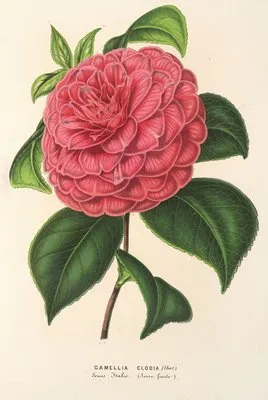
Measured on this plate: flower colour covers 24.2% of the sheet, foliage 27.1%, the cast yellow-green. No other plate shares exactly this measure. Roses are shrubs or scramblers with pinnate leaves of three to seven serrated leaflets; the double flowers open in crumpled, inward-curling layers around a small knot of yellow stamens. Filed under yellow — a honey-yellow, built in washes from a pale ground. Three things fix the habit: leaf arrangement, tepal count, and how the flower is borne.
Composition
Tall and narrow, the plant rising in one movement with generous margins — the upright format of most floras. (about 1.48 : 1) No details are appended: a plate for looking, not for keying out. The plant fills 52% of the sheet, centred near the centre — the herbarium way, drawn to be read whole. Cover the margins with your thumb and the plate suffocates; uncover them and the flower breathes again.
Line and Colour
In the later nineteenth century chromolithography took over: colour printed rather than painted, line demoted. Craft leaves franker evidence than inscriptions. If you mean to copy it: block in the broad shapes and colours first, detail last; lithographic softness comes from thin washes — two or three pale layers will get you close.
Poetic Resonance
水沉山麝蔷薇露,漱作香云喷出来。
—— 唐·杨万里《正月五日以送伴借官侍宴集英殿十口号 其三》
The poem gives the mood first and the picture supplies the form; set the line beside the plate and the yellow the corolla becomes its resting point.
Symbolism
In Europe the rose means love and secrecy ('sub rosa'); in Chinese verse the rambling rose leans and clings — lingering attachment rather than ardour. This plate leans yellow, which in flower language adds one more degree of feeling. In a flora it is a species first and a symbol second; the order is worth keeping.
Season and Place
Late spring into early summer, peaking in May — the first flush of the garden year. Widespread in the temperate north. Chinese gardeners knew roses since the Han. The year 1854 on the plate is that of publication, not of flowering — the gathering came a year or two earlier. The volume was made in 1854-1896, when most of this knowledge came from living plants under glass.
The Book and the Hand
“L'Illustration horticole” was drawn by Charles Antoine Lemaire and published 1854-1896. This plate is Plate 317. The image is public domain; the hand-colouring is still one person's hand.
What to Take Away
Next time you stand before a flowering plant, give it three minutes: leaf arrangement, direction of the flower, the darkest patch. The flower of that year is dust, yet its image on paper has outlived every living cousin.
About this plate
Rose The Isabelle Grey is plate 317, from L'Illustration horticole, drawn by Charles Antoine Lemaire. This public-domain plate is reproduced at high resolution, free to view and download. Publication: Gand, Belgium, Imprimerie et lithographie de F. et E. Gyselnyck,1854-1896.