Cattleya eldorado
蕾丽兰亚族
Cattleya eldorado
About this plate
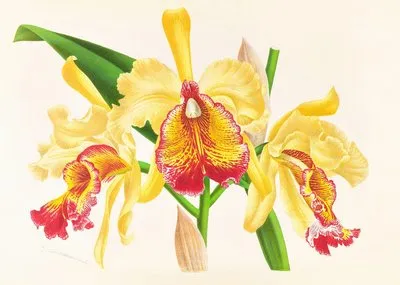
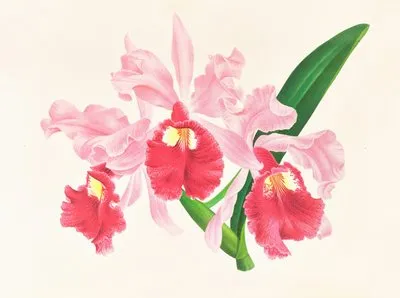
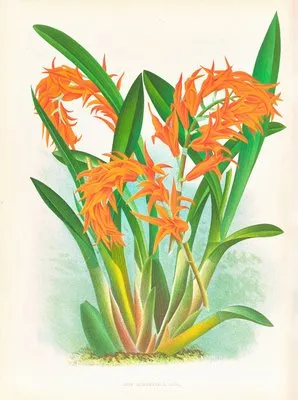
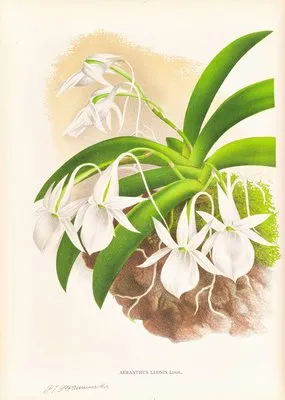
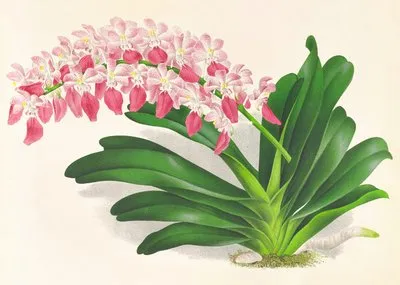
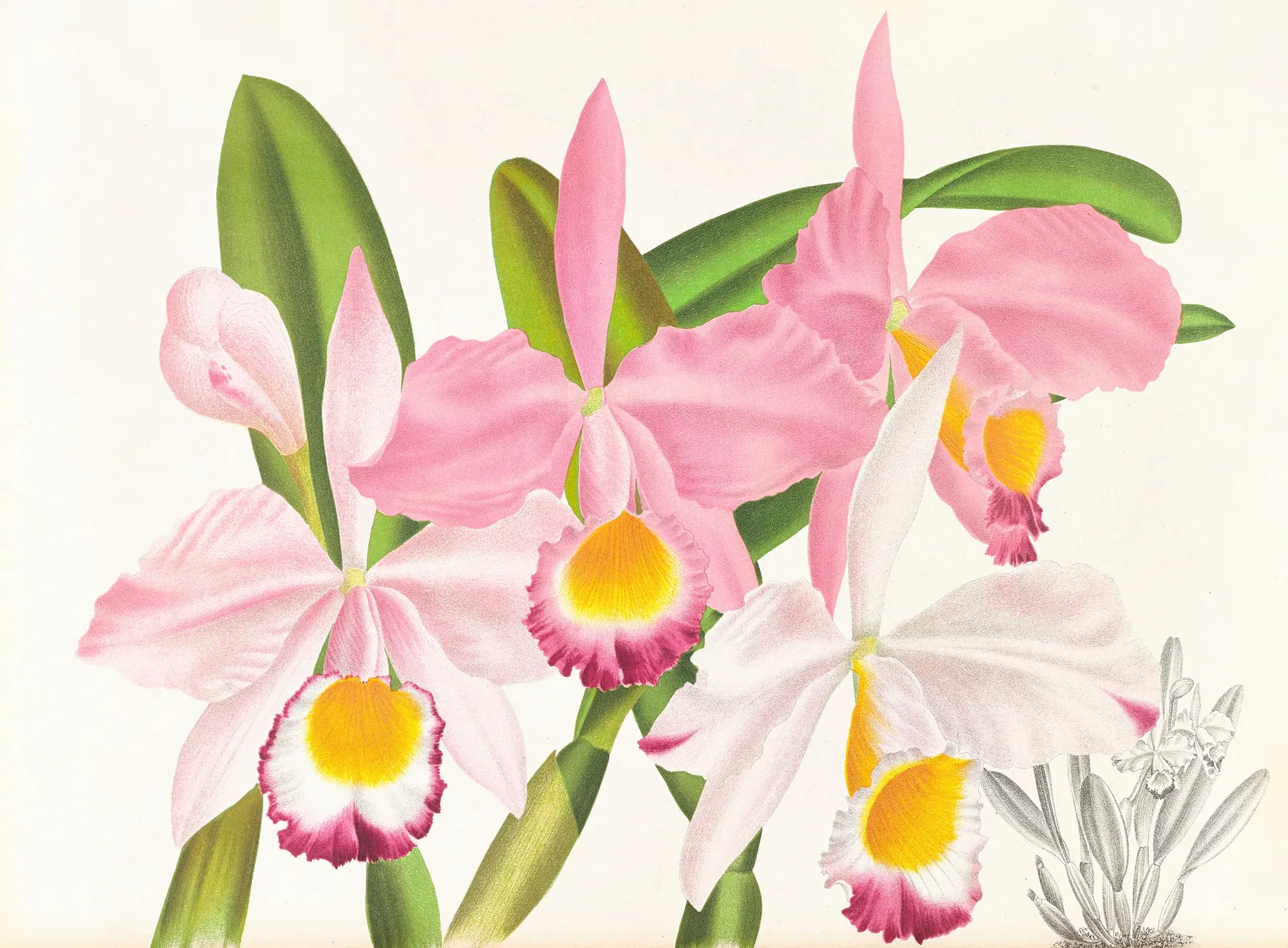
Cattleya eldorado is plate 28, from Lindenia: Iconography of the Orchids, drawn by Jean Jules Linden. This public-domain plate is reproduced at high resolution, free to view and download. Publication: Gand [Belgium] :Impr. F. Meyer-van Loo,1885-1906.
Twelve ways of seeing
- measured cast red
- broad 0.74 : 1
- published 1885
- Plate 28
Not a catalogue entry but a way of looking: how to stand, what to notice, how the line was cut, when it flowers, where it came from, who made it — and then the poems and the classics that taught China to see the same flower. Read the twelve in order and the plate opens.
-
First Look
论画以形似,见与儿童邻。
—— 宋·苏轼《书鄢陵王主簿所画折枝》
To judge painting by likeness alone is the view of a child.
Broad and horizontal: the eye travels side to side. Find where it stops. Then step in close: watch where colour meets line, and whether the line ever breaks. Third, find where the red is deepest: the whole tonal order is measured from that patch.
-
Name and Thing
The binomial is Cattleya eldorado: the first word is the genus it belongs among, the second the epithet that sets it apart. The genus name Cattleya: Cattleya honours William Cattley, who first flowered the plant in England. The Chinese name 蕾丽兰亚族 is a modern rendering of the Latin, not an old garden name.
-
Form and Colour
Measured on this plate: flower colour covers 21.7% of the sheet, foliage 8.2%, the cast red with a second note of yellow-green. No other plate shares exactly this measure. Orchids carry pseudobulbs or fleshy roots; six tepals, one modified into a lip that serves as a landing stage, and a column uniting stamens and pistil — a structure unique to the family. Filed under red — a red close to carmine, built in washes from a pale ground. Read the outline, then the colour layers, then the brush.
-
Composition
Broad and horizontal — the format for groups or a whole plant with its roots. (about 0.74 : 1) No details are appended: a plate for looking, not for keying out. The plant takes about 34% of the sheet, centred near the centre — the easy measure most florists kept to. Blank paper is not unfinished work: it is where the eye rests.
-
Line and Colour
In the later nineteenth century chromolithography took over: colour printed rather than painted, line demoted. Decide first whether it was printed or painted; only then discuss whether it is beautiful.
-
Season
Varies by genus: temperate terrestrials flower in spring and summer, tropical epiphytes almost year-round. The year 1885 on the plate is that of publication, not of flowering — the gathering came a year or two earlier. Note the season. Phenology is the most practical tool of appreciation.
-
Provenance
Worldwide, richest on tropical mountains. Chinese cymbidiums come from the hills of the south; the orchids drawn for European portfolios came largely from the cloud forests of Central America and Southeast Asia. The localities on the plate are those of a century ago; plants travel and places change their names.
-
The Book and the Hand
“Lindenia: Iconography of the Orchids” was drawn by Jean Jules Linden and published 1885-1906. This plate is Plate 28. The image is public domain; the hand-colouring is still one person's hand.
-
Poetic Resonance
玉白兰芳不相顾,倡楼一笑轻千金。
—— 唐·温庭筠《相和歌辞 懊恼曲》
The poem gives the mood first and the picture supplies the form; set the line beside the plate and the red the corolla becomes its resting point.
-
The Written Tradition
芝兰生于深林,不以无人而不芳;君子修道立德,不为穷困而改节。
—— 《孔子家语·在厄》
The orchid grows deep in the forest and is fragrant though no one comes; so the gentleman cultivates virtue and does not alter it in hardship.
Confucius, finding an orchid flowering alone in a valley, is said to have composed the 'Lament for the Orchid'; in the Li Sao, orchids are worn as a girdle of virtue. You need not parse every word: take the line, and the flower acquires a second face.
-
Symbolism
In China the orchid is the gentleman who blooms unseen; in Victorian Europe it was luxury and obsession, a single new species worth a fortune. This plate leans red, which in flower language adds one more degree of feeling. Meanings change their tune: the same flower can say opposite things within a century.
-
What to Take Away
Carry three rules away: whole before detail; line before colour; picture before book. A flora exists to be consulted; look long enough and you forget to consult — someone in 1885 gave a whole day to a single flower.