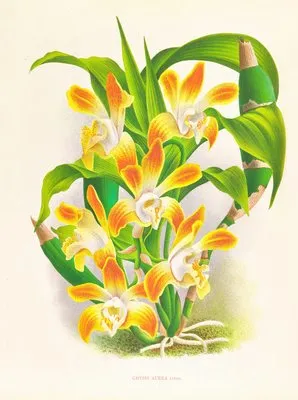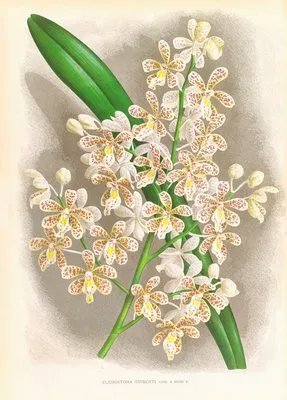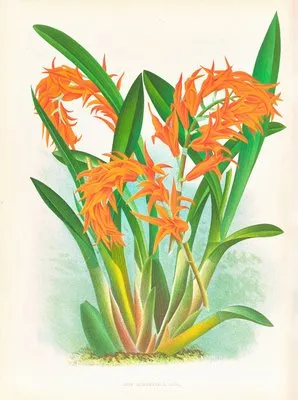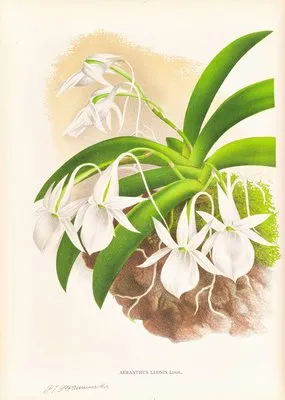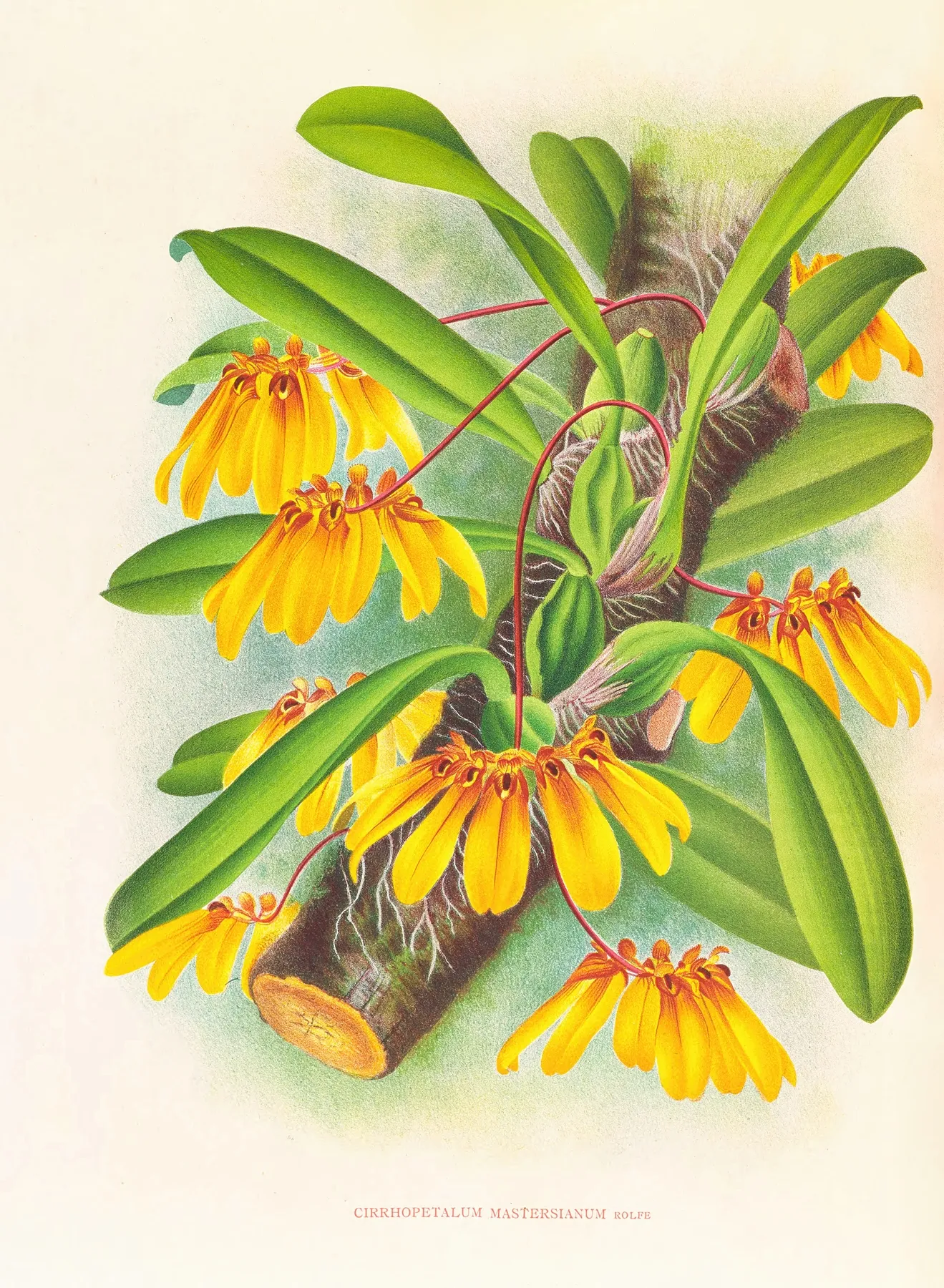
Cirrhopetalum mastersianum
单叶卷瓣兰组
Cirrhopetalum mastersianum
Ten ways of seeing
- measured cast yellow-green
- upright 1.36 : 1
First Look
真山水之川谷,远望之以取其势,近看之以取其质。
—— 宋·郭熙《林泉高致·山水训》
Mountains and valleys: from afar take their momentum, up close take their texture — the two distances from which any picture is read.
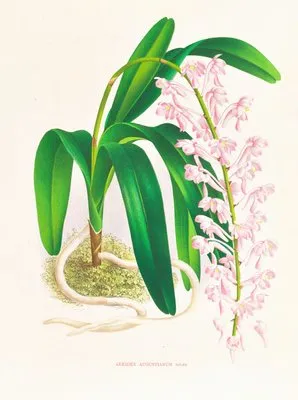
The sheet is vertical: the eye climbs and settles in the upper half. Let the plant stand before you look for detail. Then step in close: watch where colour meets line, and whether the line ever breaks. Third, find where the green is deepest: the whole tonal order is measured from that patch.
Name and Thing
The binomial is Cirrhopetalum mastersianum: the first word is the genus it belongs among, the second the epithet that sets it apart. Two words carry a whole provenance. The Chinese name 单叶卷瓣兰组 is a modern rendering of the Latin, not an old garden name.
Form and Colour
Measured on this plate: flower colour covers 23.1% of the sheet, foliage 24.6%, the cast yellow-green with a second note of amber. No other plate shares exactly this measure. Chrysanthemums are herbaceous with deeply lobed, downy leaves. Each 'flower' is a head — ray florets around the rim, disc florets in the centre, hundreds of small flowers in one. a moss green. Read the outline, then the colour layers, then the brush.
Composition
The sheet is tall. No details are appended: a plate for looking, not for keying out. The plant fills 54% of the sheet, centred a little right of centre — the herbarium way, drawn to be read whole.
Line and Colour
In the later nineteenth century chromolithography took over: colour printed rather than painted, line demoted. Craft leaves franker evidence than inscriptions. If you mean to copy it: block in the broad shapes and colours first, detail last; lithographic softness comes from thin washes — two or three pale layers will get you close.
Poetic Resonance
对郑子真岩石卧,趁陶元亮菊花期。
—— 《浣溪沙·泉湖道中赴闽宪别诸君》
The poem gives the mood first and the picture supplies the form; set the line beside the plate and the green the corolla becomes its resting point.
Symbolism
in Japan, imperial authority; in Europe, the last warmth of the year. In a flora it is a species first and a symbol second; the order is worth keeping.
Season and Place
Deep autumn, around the Double Ninth in the ninth month — after the first frost, when everything else is gone. Native to China, adopted in Japan as the imperial crest, carried to Europe by the Dutch in the seventeenth century and remade by Victorian breeders. The year 1885 on the plate is that of publication, not of flowering — the gathering came a year or two earlier. See this kind of plate in the flowering season if you can: once you have met the living flower, you stop reading only colour.
The Book and the Hand
“Lindenia: Iconography of the Orchids” carries only Jean Jules Linden's name. The image is public domain; the hand-colouring is still one person's hand.
What to Take Away
Carry three rules away: whole before detail; line before colour; picture before book. The flower of that year is dust, yet its image on paper has outlived every living cousin.
About this plate
Cirrhopetalum mastersianum is plate 46, from Lindenia: Iconography of the Orchids, drawn by Jean Jules Linden. This public-domain plate is reproduced at high resolution, free to view and download. Publication: Gand [Belgium] :Impr. F. Meyer-van Loo,1885-1906.