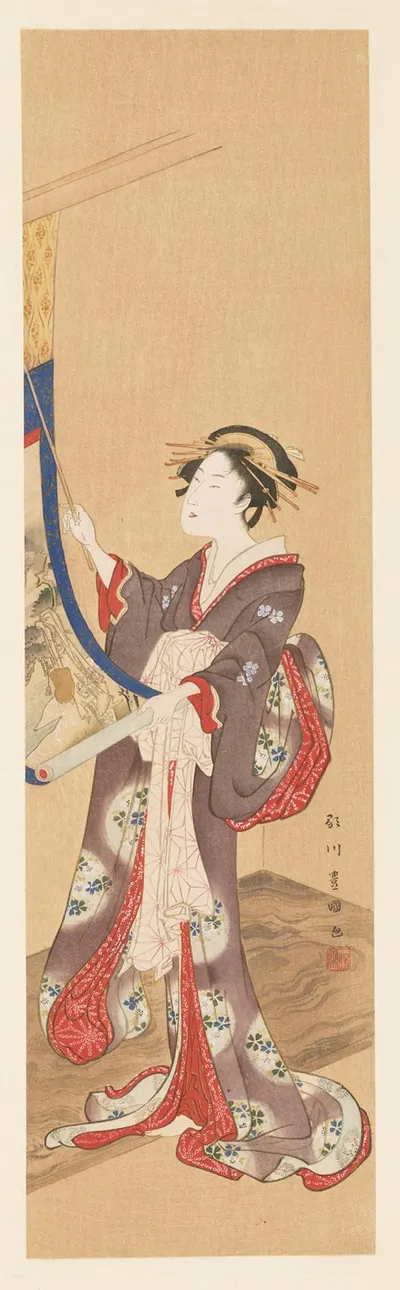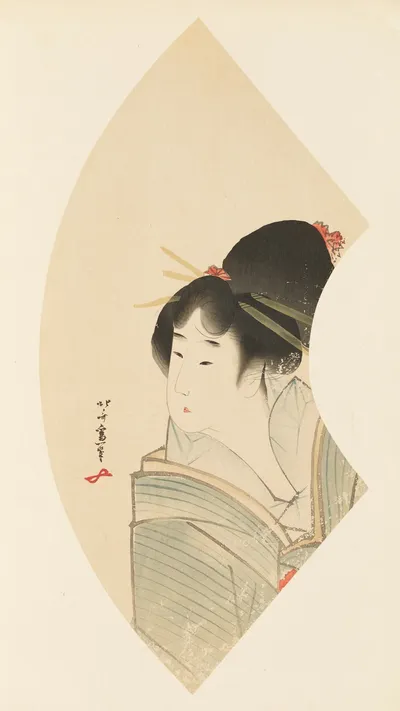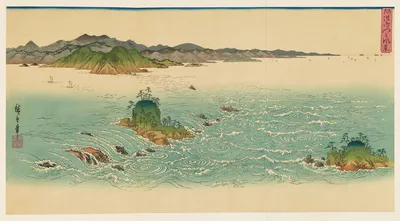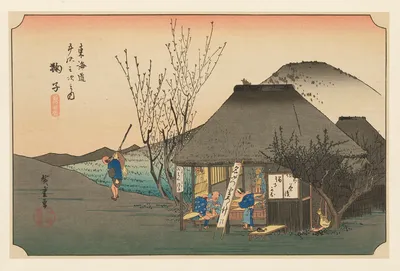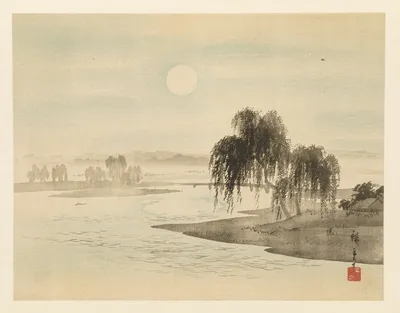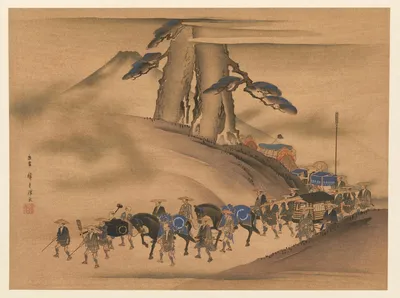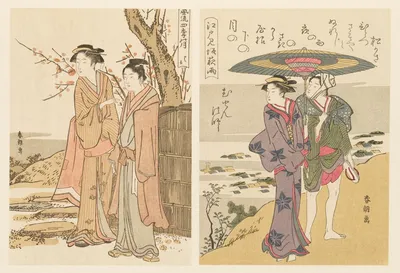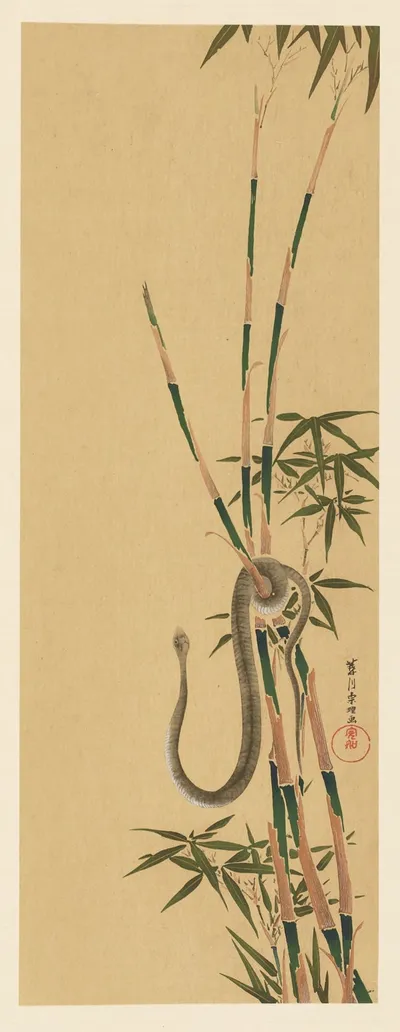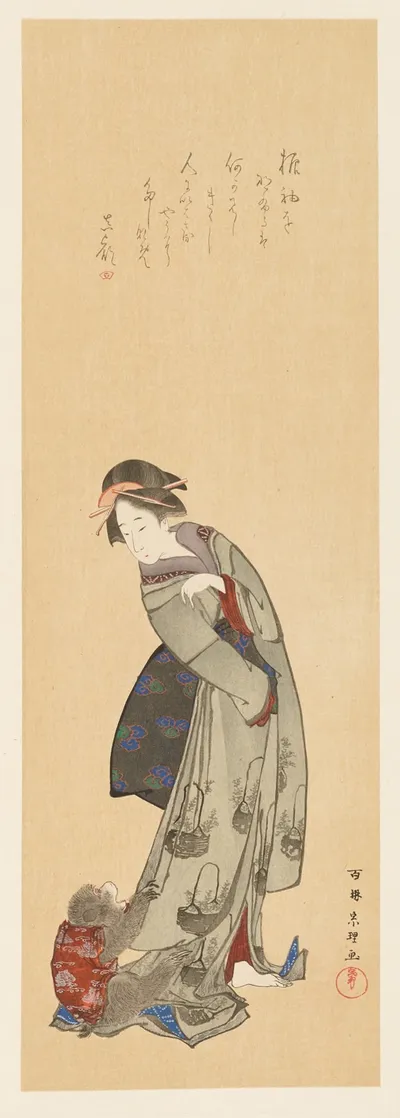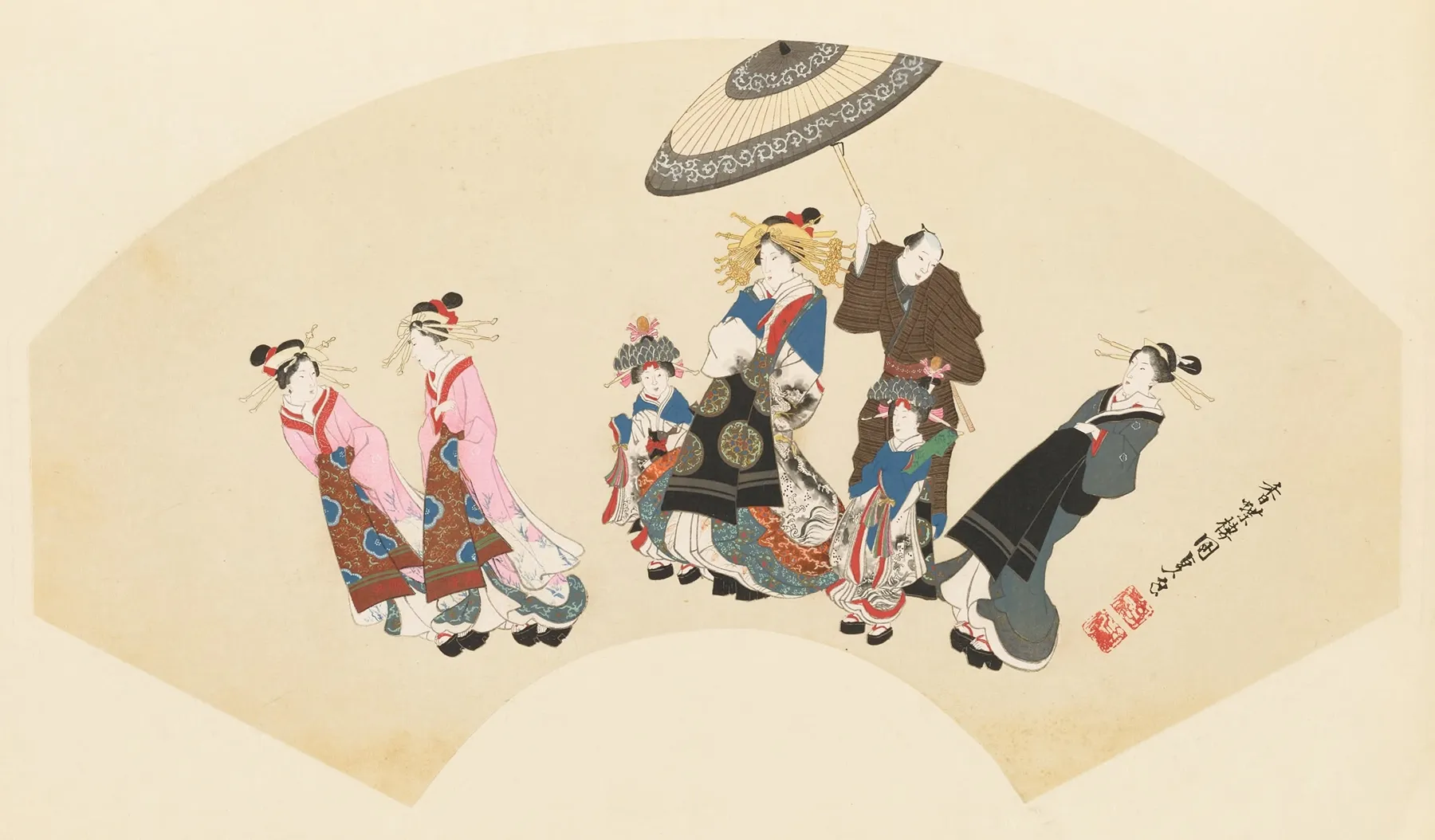
Masterpieces selected from the Ukiyoyé School, Pl.18 (1906)
Ten ways of seeing
- broad 0.59 : 1
First Look
六法者何?一、气韵生动是也;二、骨法用笔是也;三、应物象形是也;四、随类赋彩是也;五、经营位置是也;六、传移模写是也。
—— 南齐·谢赫《古画品录》
The six laws: spirit resonance alive; bone-method in the brush; matching form; colour by kind; planning the placing; copying the masters.
Broad and horizontal: the eye travels side to side. Find where it stops. Then step in close: watch where colour meets line, and whether the line ever breaks. Third, find the darkest small patch: the whole tonal order is measured from there.
Name and Thing
No reliable binomial survives, so the printed title must serve. Neither name nor binomial survives: the printed title must do.
Form and Colour
Chrysanthemums are herbaceous with deeply lobed, downy leaves. Each 'flower' is a head — ray florets around the rim, disc florets in the centre, hundreds of small flowers in one.No colour group is recorded. A single plant, laid out with nothing hidden.
Composition
Broad and horizontal — the format for groups or a whole plant with its roots. No details are appended: a plate for looking, not for keying out. Old plates set the plant slightly off centre, with unequal margins — that small imbalance is what keeps it alive.
Line and Colour
After 1900 photography and colour reproduction ran alongside watercolour: accuracy rose, the cut of the burin disappeared. Take a loupe to three places: petal edge, leaf vein, caption. An unbroken line means engraving; colour crossing the outline means a hand. If you mean to copy it: this is a photomechanical record — match the colours directly, do not imitate the printing grain.
Poetic Resonance
不是花中偏爱菊,此花开尽更无花。
—— 唐·元稹《菊花》
It is not that I favour the chrysanthemum among flowers; when it has bloomed, there are no more flowers.
The poem gives the mood first and the picture supplies the form; set the line beside the plate and the corolla becomes its resting point.
Symbolism
in Japan, imperial authority; in Europe, the last warmth of the year. In a flora it is a species first and a symbol second; the order is worth keeping.
Season and Place
Deep autumn, around the Double Ninth in the ninth month — after the first frost, when everything else is gone. Native to China, adopted in Japan as the imperial crest, carried to Europe by the Dutch in the seventeenth century and remade by Victorian breeders. The year 1906 on the plate is that of publication, not of flowering — the gathering came a year or two earlier. See this kind of plate in the flowering season if you can: once you have met the living flower, you stop reading only colour.
The Book and the Hand
“Masterpieces selected from the Ukiyoyé School” carries only Shiichi Tajima's name. The image is public domain; the hand-colouring is still one person's hand.
What to Take Away
Carry three rules away: whole before detail; line before colour; picture before book. The flower of that year is dust, yet its image on paper has outlived every living cousin.