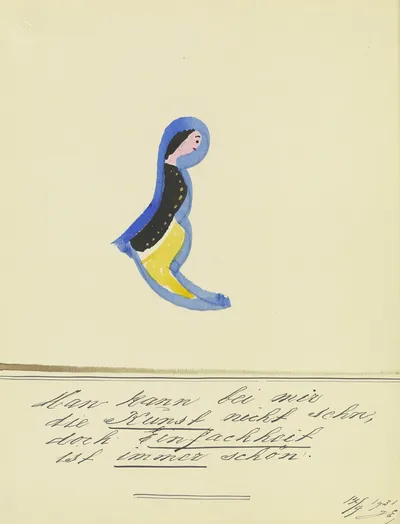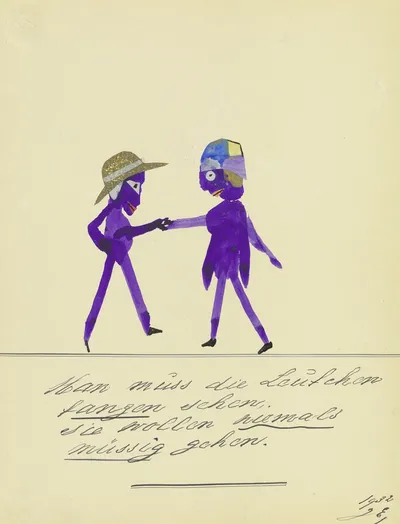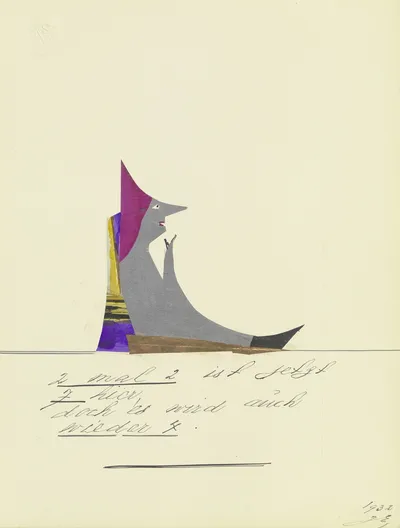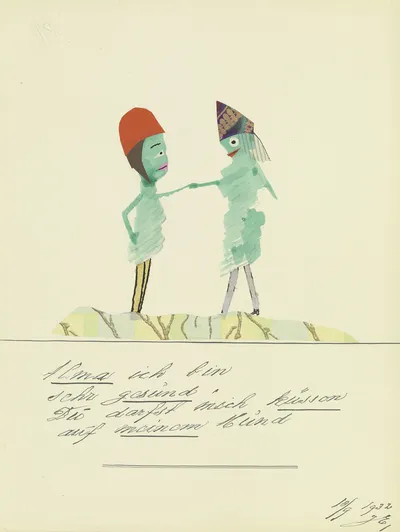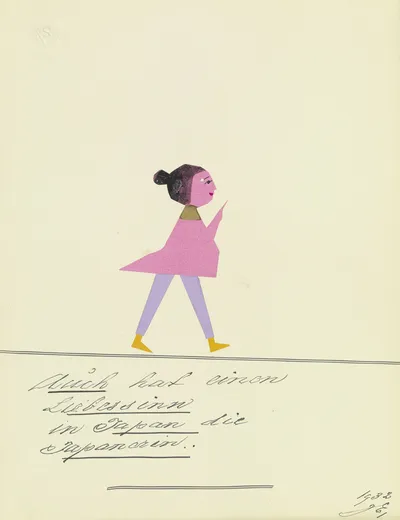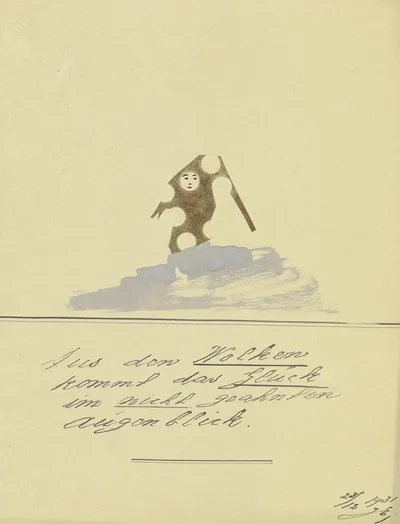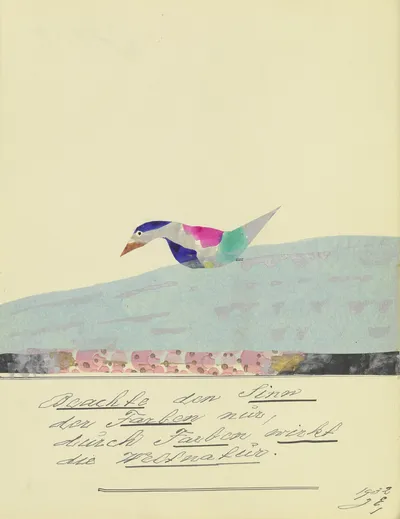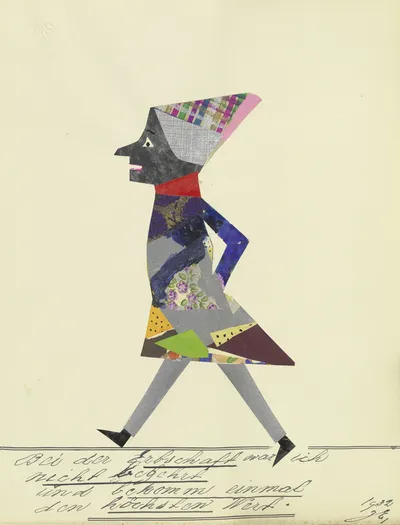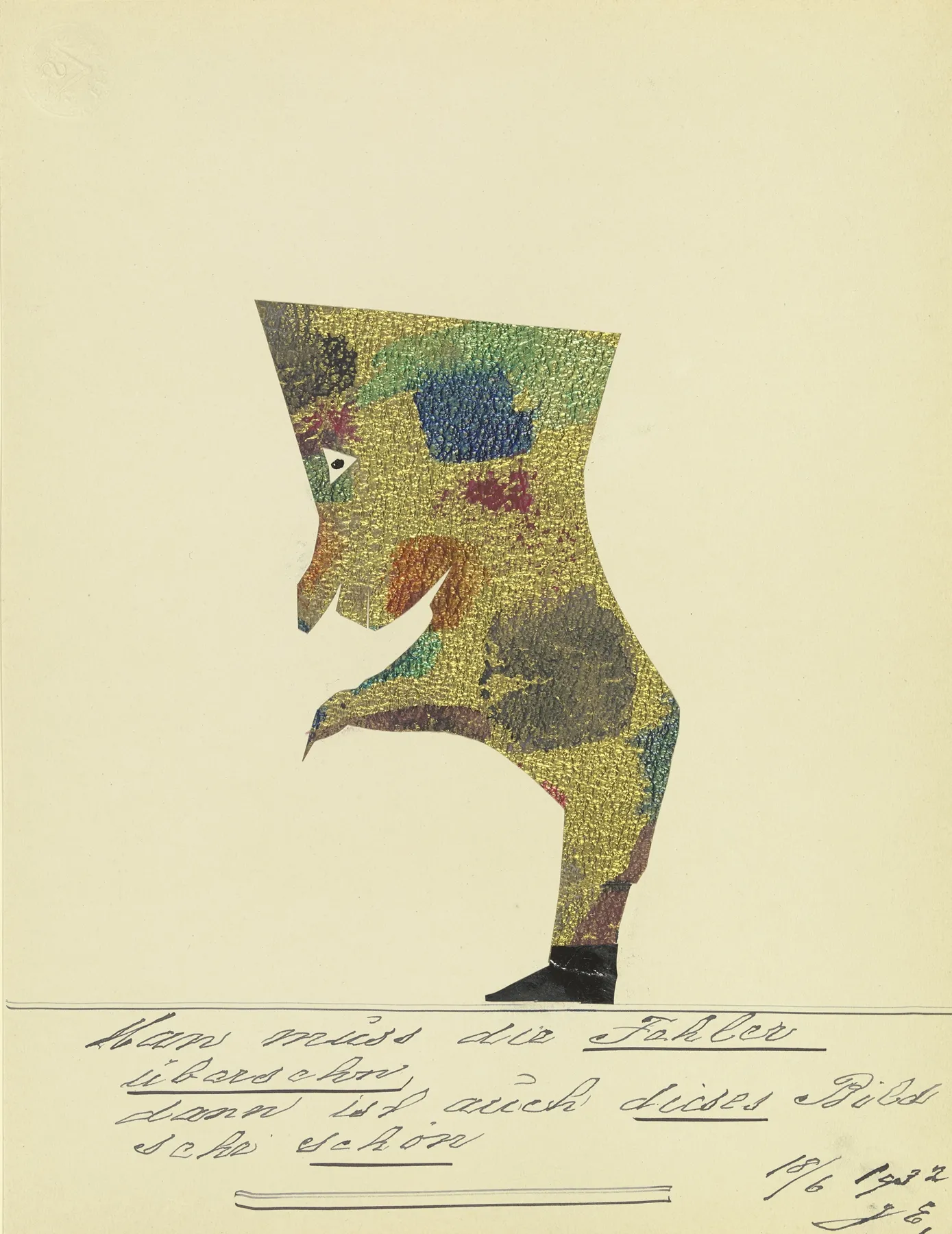
‘Man muss die Fehler übersehen …’ (1932)
Ten ways of seeing
- slightly upright 1.30 : 1
First Look
夫象物必在于形似,形似须全其骨气。
—— 唐·张彦远《历代名画记》
Likeness is the threshold; bone-and-breath is the point.
Slightly taller than wide; the eye lands above centre. Then step in close: watch where colour meets line, and whether the line ever breaks. Third, find the darkest small patch: the whole tonal order is measured from there.
Name and Thing
No reliable binomial survives, so the printed title must serve. Neither name nor binomial survives: the printed title must do.
Form and Colour
A botanical plate: one plant lifted from field or glasshouse and set at the centre of the sheet, root, stem, leaf, flower and fruit in turn, made legible, citable, transmissible.No colour group is recorded. A single plant, laid out with nothing hidden.
Composition
Slightly taller than wide, the plant set a little above centre. No details are appended: a plate for looking, not for keying out. Cover the margins with your thumb and the plate suffocates; uncover them and the flower breathes again.
Line and Colour
After 1900 photography and colour reproduction ran alongside watercolour: accuracy rose, the cut of the burin disappeared. There is evidence on the back too: the plate mark pressed into the paper, the slight relief of the pigment, lines worn shallow in a later printing. If you mean to copy it: this is a photomechanical record — match the colours directly, do not imitate the printing grain.
Poetic Resonance
天地有大美而不言,四时有明法而不议。
—— 《庄子·知北游》
Heaven and earth have great beauty and do not speak.
The poem gives the mood first and the picture supplies the form; set the line beside the plate and the corolla becomes its resting point.
Symbolism
The symbolism of such a plate lies not in flower lore but in record: the belief that a plant deserves to be drawn accurately — the plainest ethic of the scientific age. Flower language was added later; the flower knows nothing of it, and that innocence is part of its power.
Season and Place
Plates usually record flowering, the fortnight when a plant is most identifiable. Various: local hillside or a plant brought from overseas. The nineteenth-century botanic garden and glasshouse were their first address away from home. The year 1932 on the plate is that of publication, not of flowering — the gathering came a year or two earlier. Read the locality and the flowering season both with a discount: one is hearsay, the other a ten-day peak.
The Book and the Hand
“My Pictures Become Wilder and Wilder” carries only John Elsas's name. The image is public domain; the hand-colouring is still one person's hand.
What to Take Away
Appreciation is not knowledge but habit — one more look each time. The flower of that year is dust, yet its image on paper has outlived every living cousin.