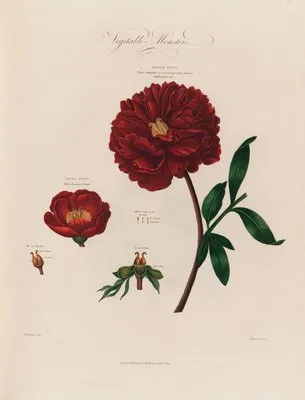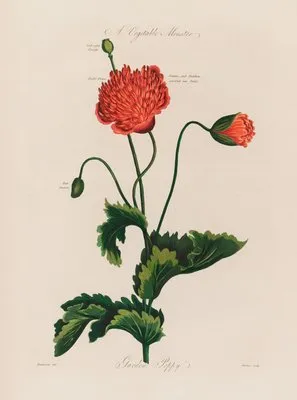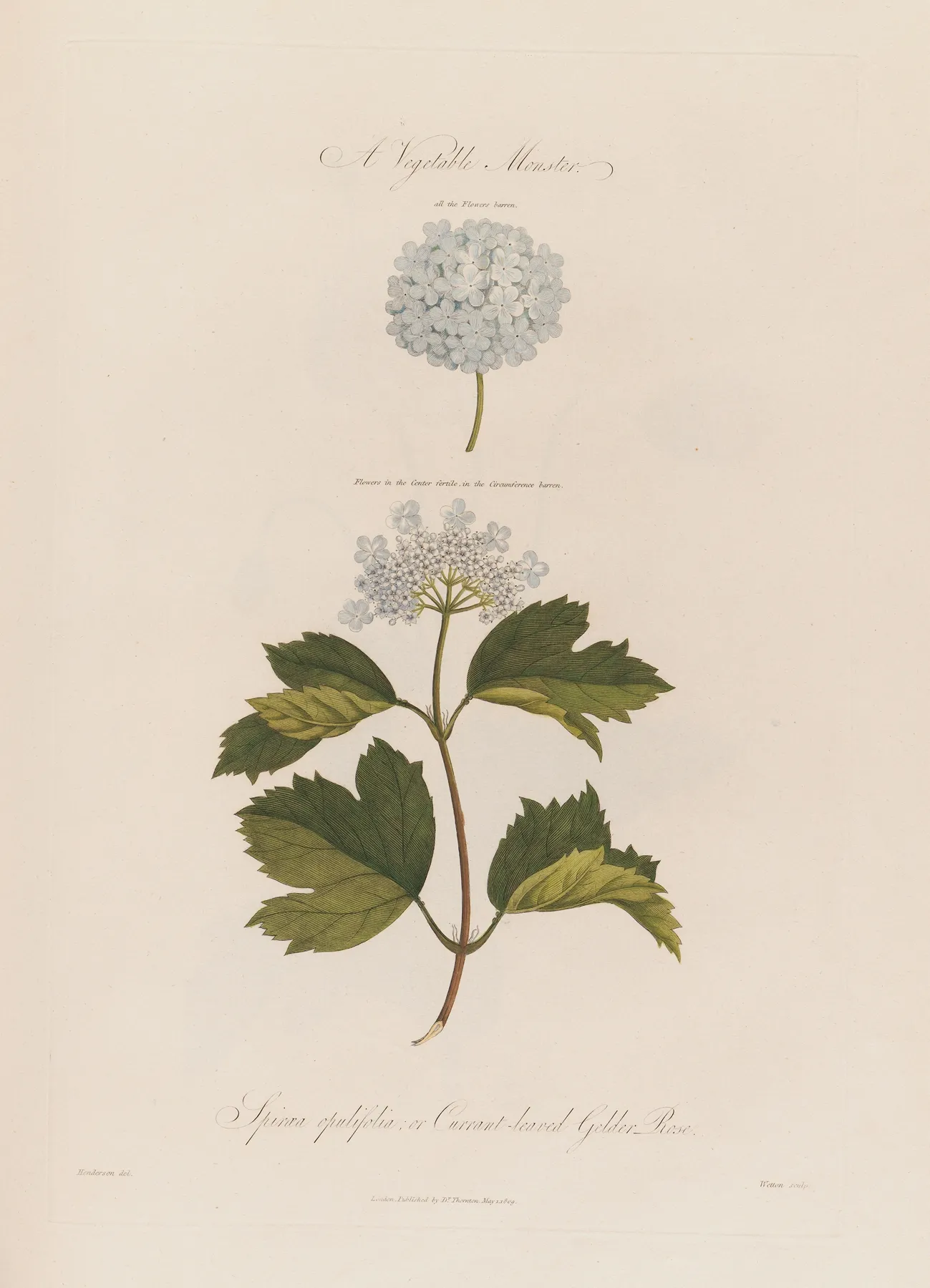
A Vegetable Monster. Spiraea opulifolia ; or Currant-leaved Gelder Rose
Gllr hse adon|绣线菊属
A Vegetable Monster. Spiraea opulifolia ; or Currant-leaved Gelder Rose
Ten ways of seeing
- measured cast yellow-green
- upright 1.39 : 1
First Look
论画以形似,见与儿童邻。
—— 宋·苏轼《书鄢陵王主簿所画折枝》
To judge painting by likeness alone is the view of a child.
The sheet is vertical: the eye climbs and settles in the upper half. Let the plant stand before you look for detail. Then step in close: watch where colour meets line, and whether the line ever breaks. Third, find the darkest small patch: the whole tonal order is measured from there.
Name and Thing
No reliable binomial survives, so the printed title must serve. The Chinese name 绣线菊属 is a modern rendering of the Latin, not an old garden name.
Form and Colour
Measured on this plate: flower colour covers 6.3% of the sheet, foliage 0.6%, the cast yellow-green. No other plate shares exactly this measure. Roses are shrubs or scramblers with pinnate leaves of three to seven serrated leaflets; the double flowers open in crumpled, inward-curling layers around a small knot of yellow stamens.No colour group is recorded. Read the outline, then the colour layers, then the brush.
Composition
The sheet is tall. No details are appended: a plate for looking, not for keying out. The plant covers only 9% of the sheet, centred near the centre; the emptiness is where the eye rests.
Line and Colour
Eighteenth-century plates are mostly copper engraving: hatched lines for shadow, then hand-colouring by another hand. Decide first whether it was printed or painted; only then discuss whether it is beautiful. If you mean to copy it: take its skeleton, its margins and the order of its colours; the burin's hatching is the language of copper — suggest it with pencil density, do not imitate it stroke for stroke.
Poetic Resonance
蔷薇乱发多临水,㶉𫛶双游不避船。
—— 唐·刘禹锡《和牛相公游南庄醉后寓言戏赠乐天兼见示》
The poem gives the mood first and the picture supplies the form; set the line beside the plate and the corolla becomes its resting point.
Symbolism
In Europe the rose means love and secrecy ('sub rosa'); in Chinese verse the rambling rose leans and clings — lingering attachment rather than ardour. Meanings change their tune: the same flower can say opposite things within a century.
Season and Place
Late spring into early summer, peaking in May — the first flush of the garden year. the ever-blooming modern rose is a nineteenth-century crossing of European and Chinese stock. The year 1799 on the plate is that of publication, not of flowering — the gathering came a year or two earlier. See this kind of plate in the flowering season if you can: once you have met the living flower, you stop reading only colour.
The Book and the Hand
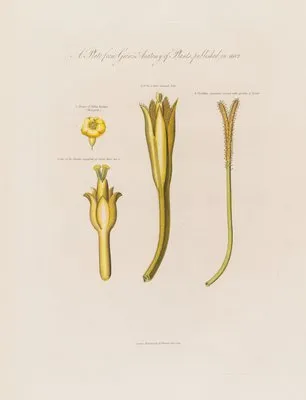
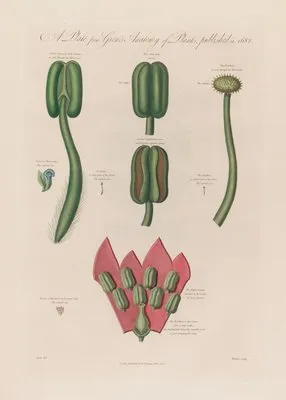
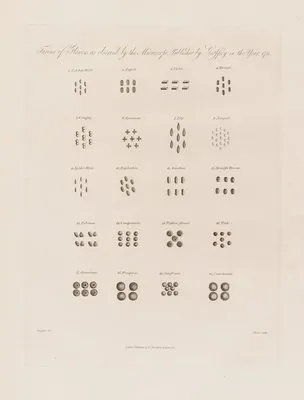
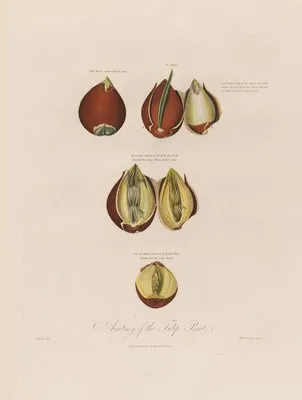
“New illustration of the sexual system of Carolus von Linnaeus” carries only Robert John Thornton, Carl von Linné's name. From drawing to plate the sheet passed through several hands — the engraver aimed at accuracy, the colourist at speed, and between them lies each plate's unevenness.
What to Take Away
Next time you stand before a flowering plant, give it three minutes: leaf arrangement, direction of the flower, the darkest patch. A flora exists to be consulted; look long enough and you forget to consult — someone in 1799 gave a whole day to a single flower.
About this plate
A Vegetable Monster. Spiraea opulifolia ; or Currant-leaved Gelder Rose is plate 16, from New illustration of the sexual system of Carolus von Linnaeus, drawn by Robert John Thornton, Carl von Linné. This public-domain plate is reproduced at high resolution, free to view and download. Publication: London, T. Bensley, 1799–1810.