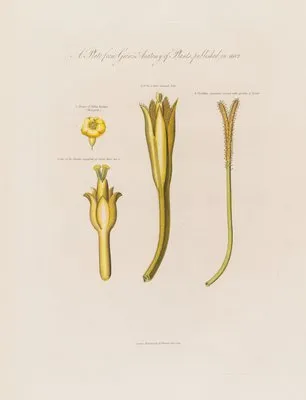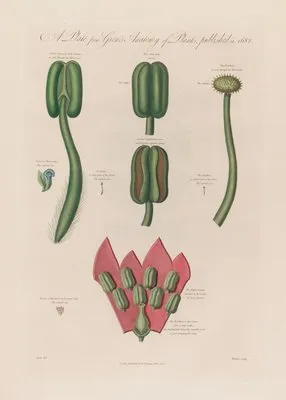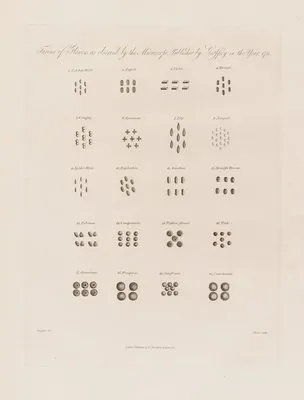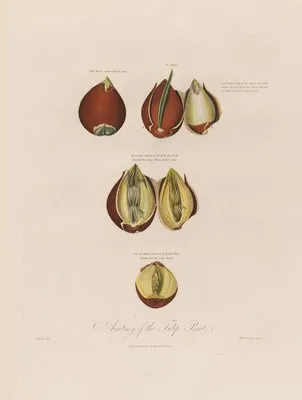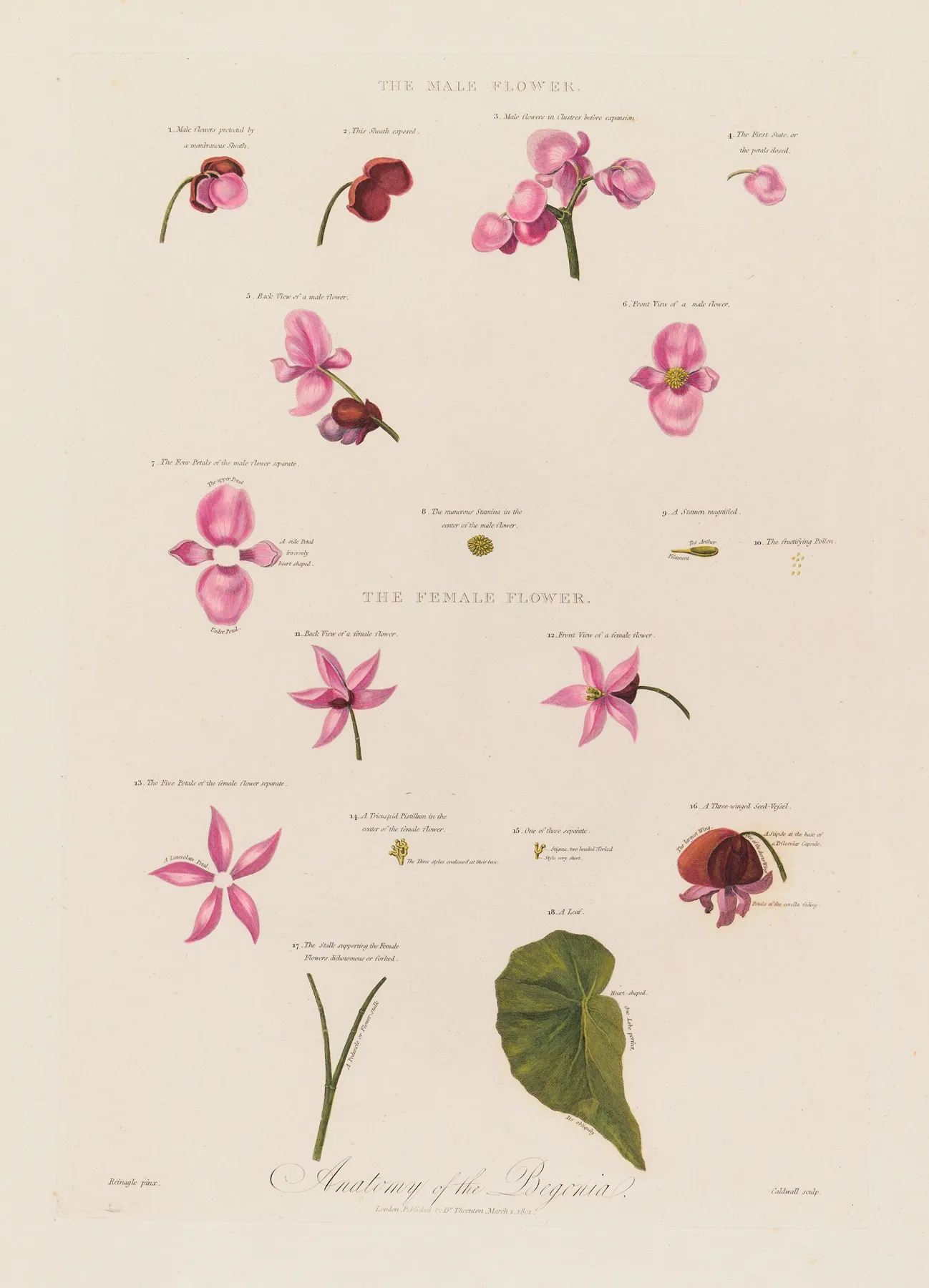
Anatomy of the Begonia
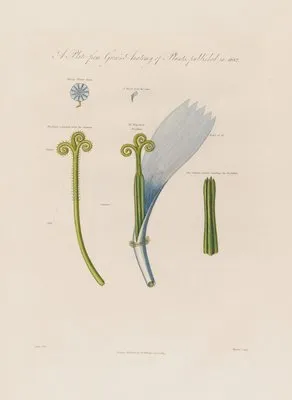
HTMOTI TTVN aHL 3. Male torers in Cuwres beóre cxpmrion 1.Male flowrs potetasl dy 2. IThis Sheath exporad. 4. TThe First sute, or wwes sheath the pals ctosed. . Back: Vicw 6. Front View of a mule
Anatomy of the Begonia
Ten ways of seeing
- measured cast red
- upright 1.39 : 1
First Look
六法者何?一、气韵生动是也;二、骨法用笔是也;三、应物象形是也;四、随类赋彩是也;五、经营位置是也;六、传移模写是也。
—— 南齐·谢赫《古画品录》
The six laws: spirit resonance alive; bone-method in the brush; matching form; colour by kind; planning the placing; copying the masters.
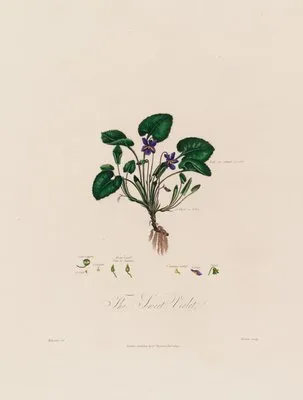
The sheet is vertical: the eye climbs and settles in the upper half. Let the plant stand before you look for detail. Then step in close: watch where colour meets line, and whether the line ever breaks. Third, find the darkest small patch: the whole tonal order is measured from there. The pose leans left: the upper half carries 9 points further left than the lower — a living thing, not a diagram.
Name and Thing
Only the genus Begonia is given; species-level names came later. No established Chinese name exists, so it is cited by its binomial alone.
Form and Colour
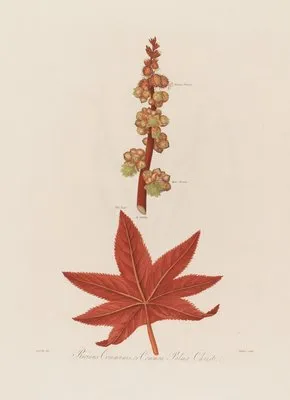
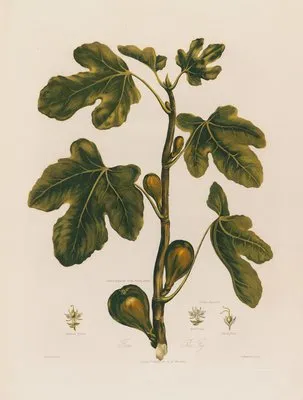
Measured on this plate: flower colour covers 6.3% of the sheet, foliage 0.2%, the cast red with a second note of yellow-green. No other plate shares exactly this measure. Garden annuals and low perennials: many small, brilliantly coloured flowers to a stem, with leaves palmately lobed, pinnate or entire — the mainstay of the Victorian bedding scheme.No colour group is recorded. Read the outline, then the colour layers, then the brush.
Composition
The sheet is tall. No details are appended: a plate for looking, not for keying out. The plant covers only 7% of the sheet, centred near the centre; the emptiness is where the eye rests.
Line and Colour
Eighteenth-century plates are mostly copper engraving: hatched lines for shadow, then hand-colouring by another hand. There is evidence on the back too: the plate mark pressed into the paper, the slight relief of the pigment, lines worn shallow in a later printing. If you mean to copy it: take its skeleton, its margins and the order of its colours; the burin's hatching is the language of copper — suggest it with pencil density, do not imitate it stroke for stroke.
Poetic Resonance
小园新种红樱树,闲绕花行便当游。
—— 唐·白居易《酬韓侍郎張博士雨後遊曲江見寄》
The poem gives the mood first and the picture supplies the form; set the line beside the plate and the corolla becomes its resting point.
Symbolism
Bedding plants carry no imperial weight; they mean the everyday — window sill, border, festival, gift. Victorian floriography grew up among exactly these flowers. In a flora it is a species first and a symbol second; the order is worth keeping.
Season and Place
under glass they could be had from March. Gathered from everywhere by plant hunters and the glasshouse trade: pelargoniums from South Africa, campanulas from European mountains, lobelias from North America, fuchsias from Chile. The year 1799 on the plate is that of publication, not of flowering — the gathering came a year or two earlier. Read the locality and the flowering season both with a discount: one is hearsay, the other a ten-day peak.
The Book and the Hand
“New illustration of the sexual system of Carolus von Linnaeus” carries only Robert John Thornton, Carl von Linné's name. The image is public domain; the hand-colouring is still one person's hand.
What to Take Away
Next time you stand before a flowering plant, give it three minutes: leaf arrangement, direction of the flower, the darkest patch. Two centuries on, the plant may still flower in some garden; the one on this sheet stopped in the season of 1799.
About this plate
Anatomy of the Begonia is plate 74, from New illustration of the sexual system of Carolus von Linnaeus, drawn by Robert John Thornton, Carl von Linné. This public-domain plate is reproduced at high resolution, free to view and download. Publication: London, T. Bensley, 1799–1810.