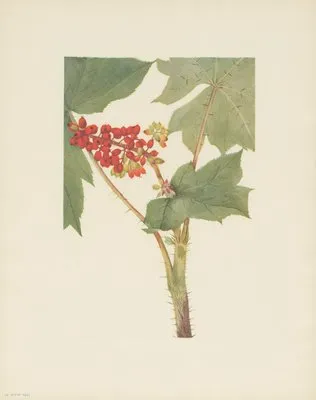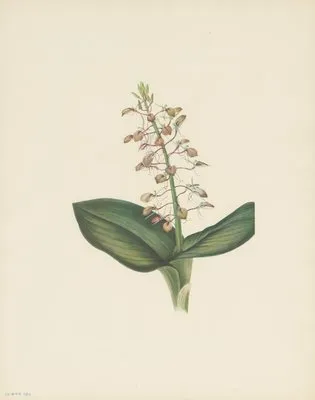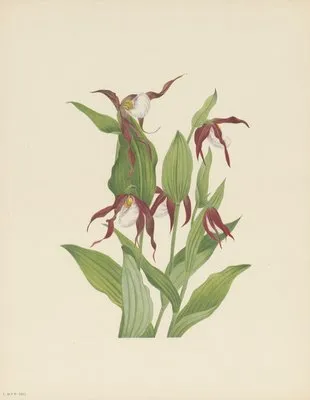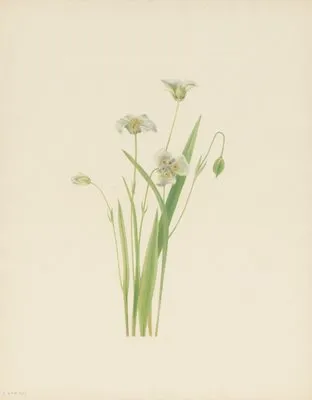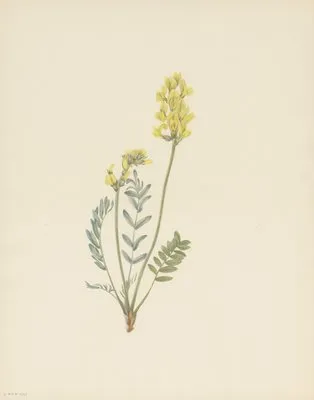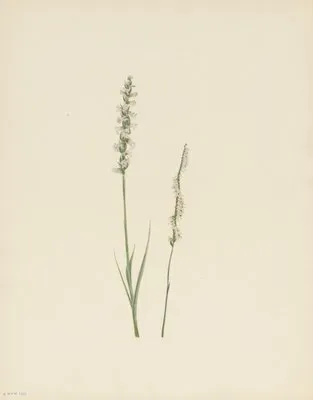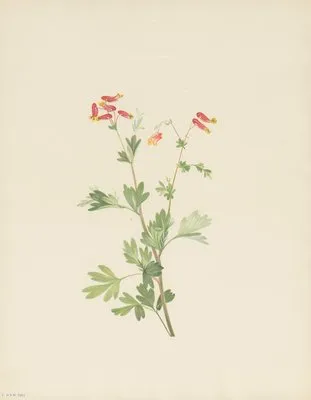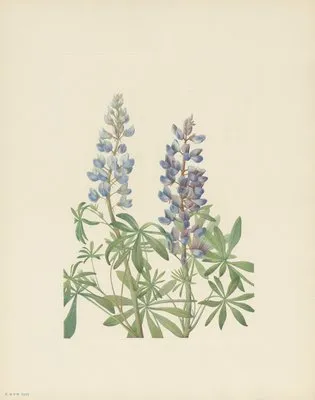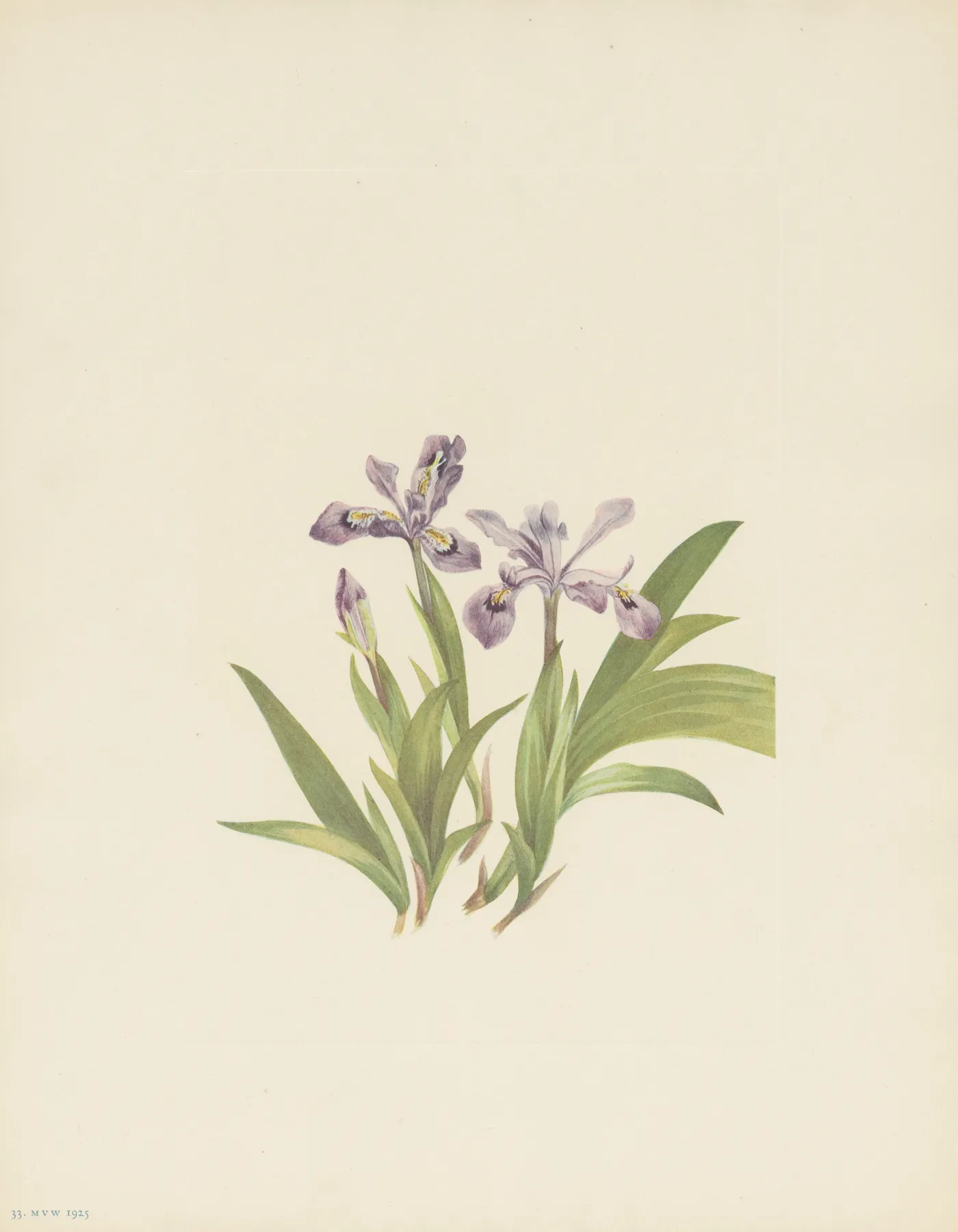
Crested Iris (Iris cristata) (1925)
饰冠鸢尾
Crested Iris (Iris cristata) (1925)
Ten ways of seeing
- measured cast yellow-green
- slightly upright 1.29 : 1
First Look
搜尽奇峰打草稿。
—— 清·石涛《苦瓜和尚画语录》
Exhaust the strange peaks, and then make the sketch.
Slightly taller than wide; the eye lands above centre. Then step in close: watch where colour meets line, and whether the line ever breaks. Third, find the darkest small patch: the whole tonal order is measured from there.
Name and Thing
The binomial is Crested iris: the first word is the genus it belongs among, the second the epithet that sets it apart. Two words carry a whole provenance. The Chinese name 饰冠鸢尾 is a modern rendering of the Latin, not an old garden name.
Form and Colour
Measured on this plate: flower colour covers 4.3% of the sheet, foliage 1.7%, the cast yellow-green. No other plate shares exactly this measure. Irises carry rhizomes or bulbs, sword-shaped leaves in two ranks, and six tepals — three falls drooping, often bearded or speckled, three standards erect.No colour group is recorded. A single plant, laid out with nothing hidden.
Composition
The sheet is slightly tall. No details are appended: a plate for looking, not for keying out. The plant covers only 8% of the sheet, centred below centre; the emptiness is where the eye rests.
Line and Colour
After 1900 photography and colour reproduction ran alongside watercolour: accuracy rose, the cut of the burin disappeared. Craft leaves franker evidence than inscriptions. If you mean to copy it: this is a photomechanical record — match the colours directly, do not imitate the printing grain.
Poetic Resonance
尔去掇仙草,菖蒲花紫茸。
—— 唐·李白《送楊山人歸嵩山》
The poem gives the mood first and the picture supplies the form; set the line beside the plate and the corolla becomes its resting point.
Symbolism
In China sweet flag hung at the door wards off evil at midsummer; in Europe the iris is the messenger, since Iris was the rainbow goddess who carried divine words. Flower language was added later; the flower knows nothing of it, and that innocence is part of its power.
Season and Place
Late spring to early summer, peaking in April and May, before the summer rains. in Europe Iris germanica gave the perfume trade its orris root. The year 1925 on the plate is that of publication, not of flowering — the gathering came a year or two earlier. See this kind of plate in the flowering season if you can: once you have met the living flower, you stop reading only colour.
The Book and the Hand
“North American wild flowers” carries only Mary Vaux Walcott's name. The image is public domain; the hand-colouring is still one person's hand.
What to Take Away
Carry three rules away: whole before detail; line before colour; picture before book. A flora exists to be consulted; look long enough and you forget to consult — someone in 1925 gave a whole day to a single flower.
About this plate
Crested Iris (Iris cristata) (1925) is plate 35, from North American wild flowers, drawn by Mary Vaux Walcott. This public-domain plate is reproduced at high resolution, free to view and download. Publication: Washington, D.C., The Smithsonian Institution, 1925.