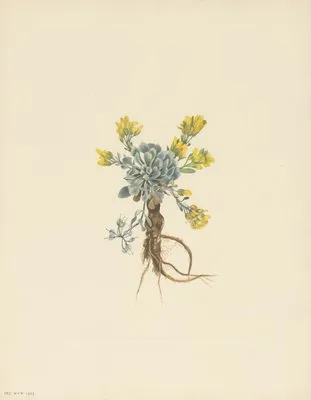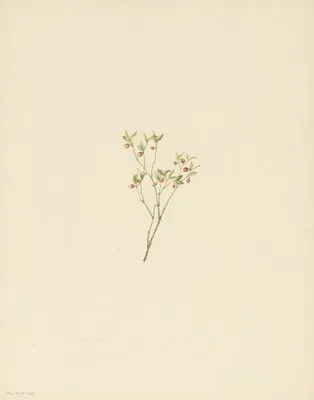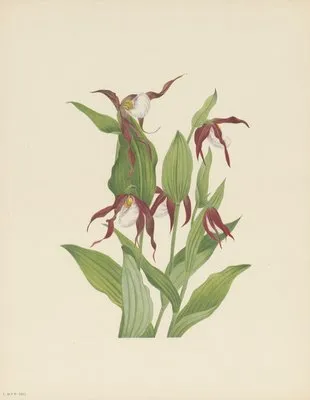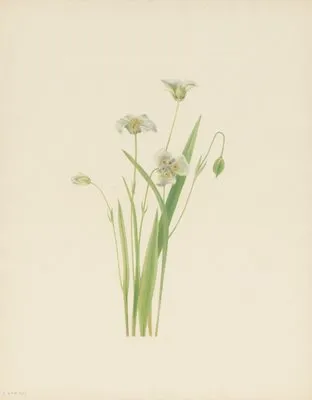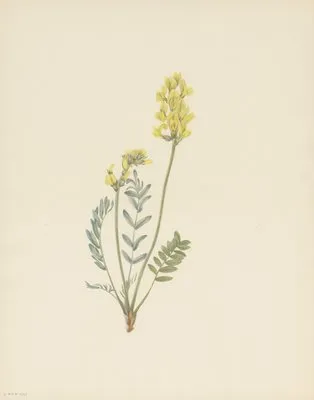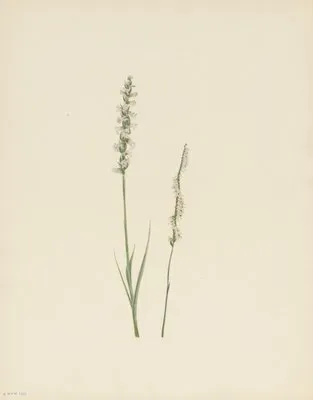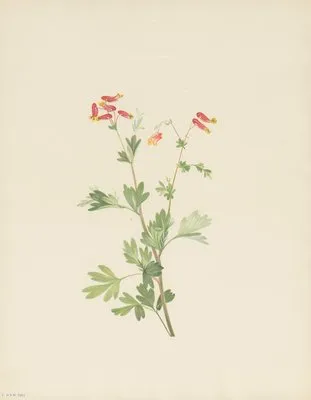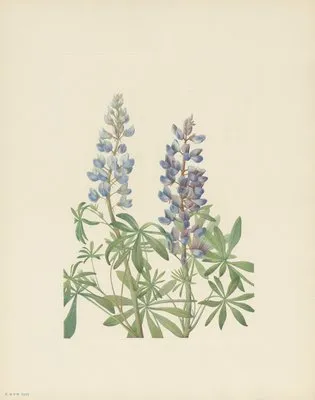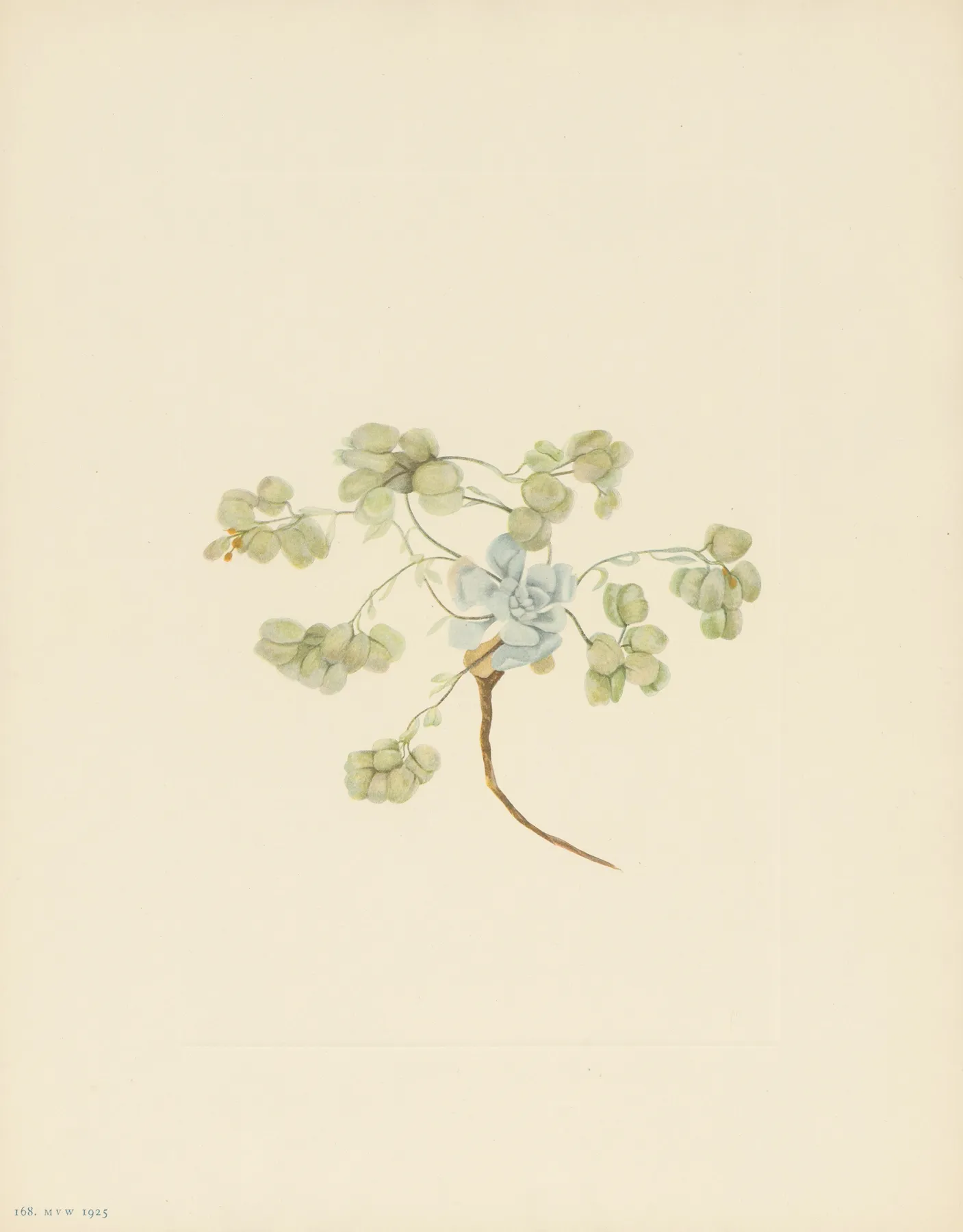
Double Bladderpod (fruit) (Physaria didymocarpa) (1925)
Double Bladderpod (fruit) (Physaria didymocarpa) (1925)
Double Bladderpod (fruit) (Physaria didymocarpa) (1925)
About this plate
Double Bladderpod (fruit) (Physaria didymocarpa) (1925) is plate 168, from North American wild flowers, drawn by Mary Vaux Walcott. This public-domain plate is reproduced at high resolution, free to view and download. Publication: Washington, D.C., The Smithsonian Institution, 1925.
Twelve ways of seeing
- measured cast yellow-green
- slightly upright 1.28 : 1
- published 1925
- Plate 168
Not a catalogue entry but a way of looking: how to stand, what to notice, how the line was cut, when it flowers, where it came from, who made it — and then the poems and the classics that taught China to see the same flower. Read the twelve in order and the plate opens.
-
First Look
论画以形似,见与儿童邻。
—— 宋·苏轼《书鄢陵王主簿所画折枝》
To judge painting by likeness alone is the view of a child.
Slightly taller than wide; the eye lands above centre. Then step in close: watch where colour meets line, and whether the line ever breaks. Third, find the darkest small patch: the whole tonal order is measured from there.
-
Name and Thing
The binomial is Double bladderpod: the first word is the genus it belongs among, the second the epithet that sets it apart. Two words carry a whole provenance. No established Chinese name exists, so it is cited by its binomial alone.
-
Form and Colour
Measured on this plate: flower colour covers 2.6% of the sheet, foliage 0.0%, the cast yellow-green. No other plate shares exactly this measure. Fruit plates pair the whole fruit with a section: the outline identifies the variety, the cut reveals skin thickness, core size and seed arrangement — the evidence of registration.No colour group is recorded. Three things fix the habit: leaf arrangement, tepal count, and how the flower is borne.
-
Composition
Slightly taller than wide, the plant set a little above centre. (about 1.28 : 1) No details are appended: a plate for looking, not for keying out. The plant covers only 3% of the sheet, centred near the centre; the emptiness is where the eye rests. Blank paper is not unfinished work: it is where the eye rests.
-
Line and Colour
After 1900 photography and colour reproduction ran alongside watercolour: accuracy rose, the cut of the burin disappeared. There is evidence on the back too: the plate mark pressed into the paper, the slight relief of the pigment, lines worn shallow in a later printing.
-
Season
Late summer into autumn, variety by variety; a fruit portfolio spans the whole harvest. The year 1925 on the plate is that of publication, not of flowering — the gathering came a year or two earlier. Note the season. Phenology is the most practical tool of appreciation.
-
Provenance
Temperate fruits came mostly from Eurasia, later from the Americas. Nineteenth-century nurseries printed varietal albums for trade and exhibition: every fruit on the page was a saleable claim. The volume was made in 1925, when most of this knowledge came from living plants under glass.
-
The Book and the Hand
“North American wild flowers” was drawn by Mary Vaux Walcott and published 1925. This plate is Plate 168. The image is public domain; the hand-colouring is still one person's hand.
-
Poetic Resonance
玳瑁筵,葡萄酒,殷勤红袖,莫惜捧金瓯。
—— 《正宫·小梁州·春怀》
The poem gives the mood first and the picture supplies the form; set the line beside the plate and the fruit becomes its resting point.
-
The Written Tradition
后皇嘉树,橘徕服兮。受命不迁,生南国兮。
—— 战国·屈原《九章·橘颂》
O lovely tree, the orange, sent to serve here below; you take your charge and will not move, born in the southern land.
The Book of Songs has a quince given and a jade pendant returned — fruit as ritual gift already in pre-Qin China. Keep the line; it will surface the next time you meet the same plant.
-
Symbolism
In China the pomegranate means many sons, the peach long life, the orange good fortune; in Europe the apple is temptation and knowledge, the grape abundance and sacrifice. In a flora it is a species first and a symbol second; the order is worth keeping.
-
What to Take Away
If you keep one line, keep Guo Xi's: from afar its momentum, up close its texture. A flora exists to be consulted; look long enough and you forget to consult — someone in 1925 gave a whole day to a single flower.