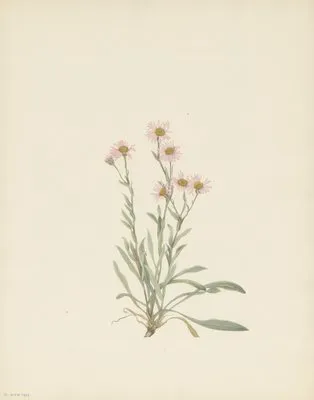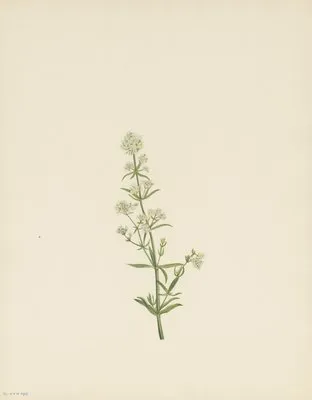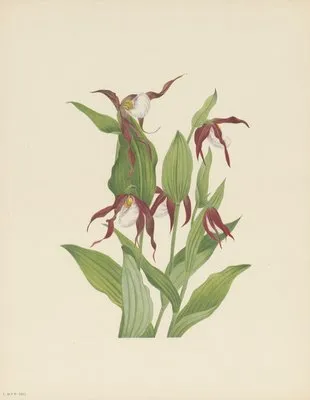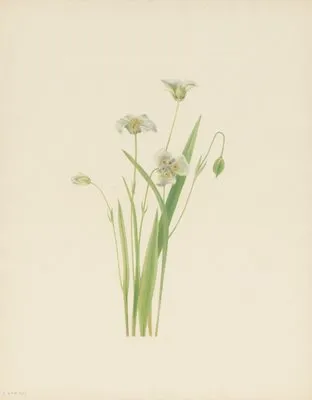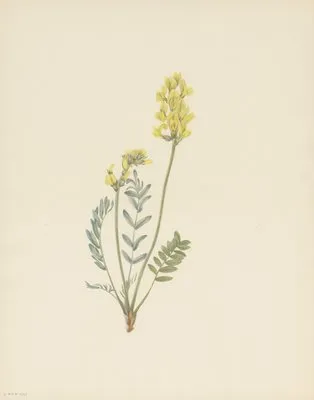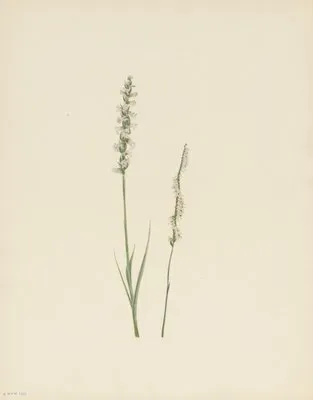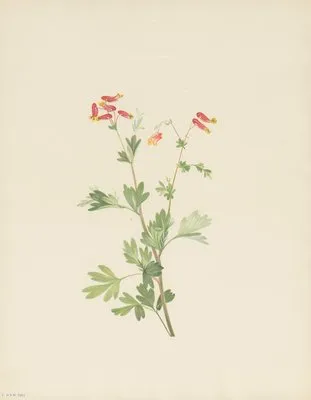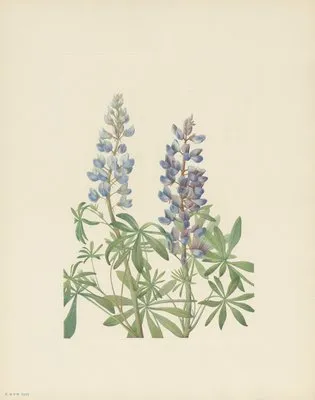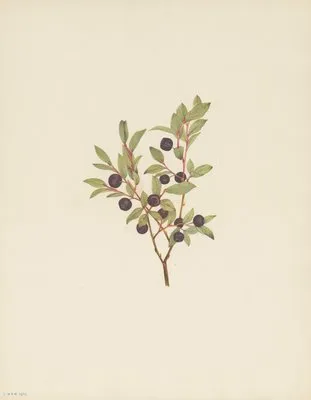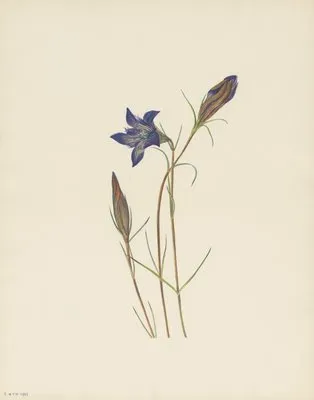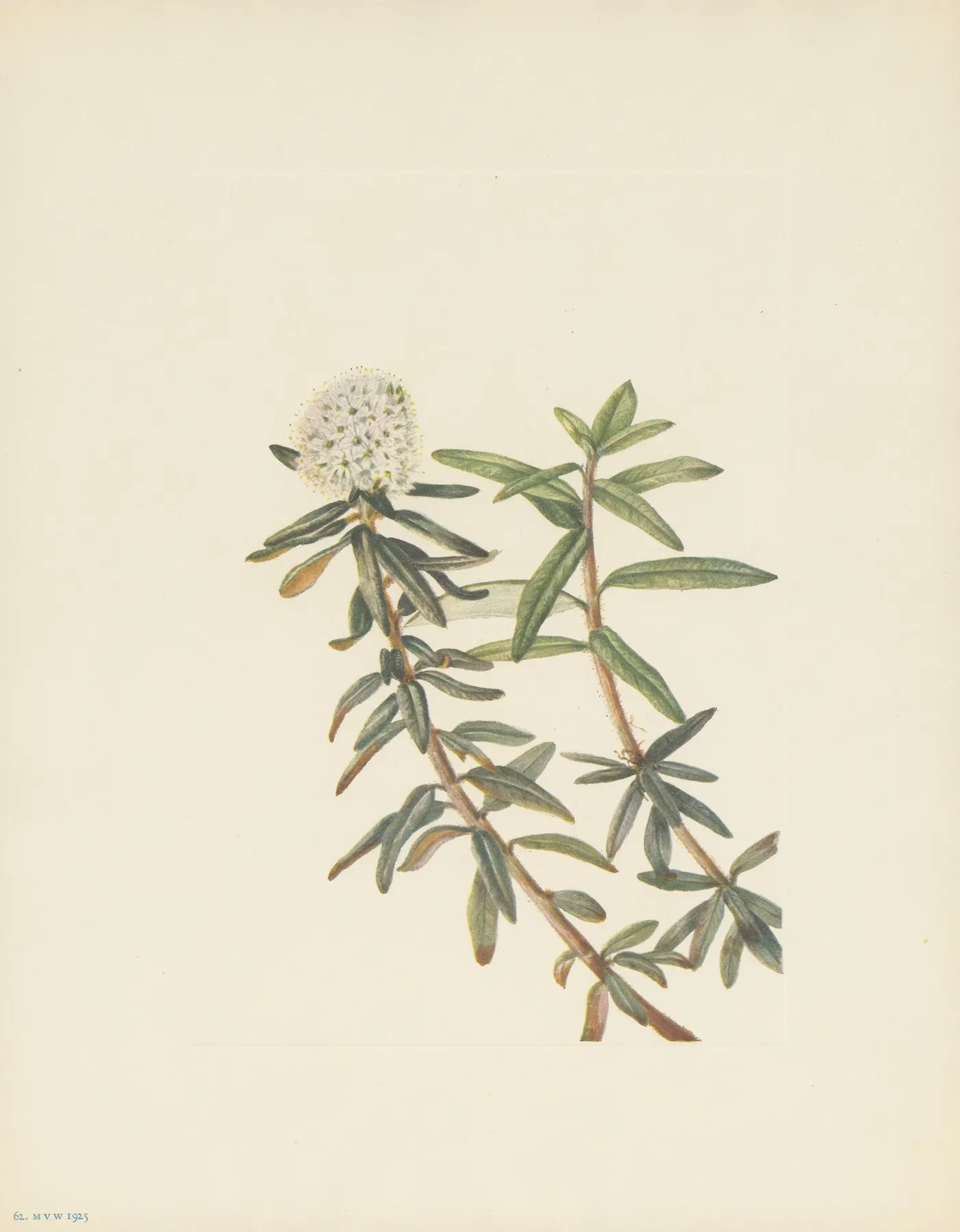
Labrador-tea (Ledum groenlandicum) (1925)
拉不拉多茶
Labrador-tea (Ledum groenlandicum) (1925)
Ten ways of seeing
- measured cast yellow-green
- slightly upright 1.28 : 1
First Look
搜尽奇峰打草稿。
—— 清·石涛《苦瓜和尚画语录》
Exhaust the strange peaks, and then make the sketch.
Slightly taller than wide; the eye lands above centre. Then step in close: watch where colour meets line, and whether the line ever breaks. Third, find the darkest small patch: the whole tonal order is measured from there.
Name and Thing
No reliable binomial survives, so the printed title must serve. The Chinese name 拉不拉多茶 is a modern rendering of the Latin, not an old garden name.
Form and Colour
Measured on this plate: flower colour covers 3.9% of the sheet, foliage 0.9%, the cast yellow-green with a second note of amber. No other plate shares exactly this measure. Camellias are evergreen shrubs with thick, waxen, serrate leaves; the double flowers overlap like roof tiles and fall whole, petals still attached.No colour group is recorded. A single plant, laid out with nothing hidden.
Composition
The sheet is slightly tall. No details are appended: a plate for looking, not for keying out. The plant covers only 9% of the sheet, centred below centre; the emptiness is where the eye rests.
Line and Colour
After 1900 photography and colour reproduction ran alongside watercolour: accuracy rose, the cut of the burin disappeared. Take a loupe to three places: petal edge, leaf vein, caption. An unbroken line means engraving; colour crossing the outline means a hand. If you mean to copy it: this is a photomechanical record — match the colours directly, do not imitate the printing grain.
Poetic Resonance
东园三日雨兼风,桃李飘零扫地空。惟有山茶偏耐久,绿丛又放数枝红。
—— 宋·陆游《山茶》
Three days of wind and rain in the east garden: peach and plum are swept away. Only the camellia endures, putting out a few more red sprays from the green.
The poem gives the mood first and the picture supplies the form; set the line beside the plate and the corolla becomes its resting point.
Symbolism
In China the camellia is the friend that endures; in Europe it became Eastern beauty and unattainability, and after La Dame aux Camélias, a token of brief life. Flower language was added later; the flower knows nothing of it, and that innocence is part of its power.
Season and Place
a single flower may last a fortnight. when it reached Europe in the nineteenth century it was hailed as 'the rose of the East'. The year 1925 on the plate is that of publication, not of flowering — the gathering came a year or two earlier. The bud and the ripe fruit on one branch tell the season; the name in the title often tells the journey.
The Book and the Hand
“North American wild flowers” carries only Mary Vaux Walcott's name. From drawing to plate the sheet passed through several hands — the engraver aimed at accuracy, the colourist at speed, and between them lies each plate's unevenness.
What to Take Away
If you keep one line, keep Guo Xi's: from afar its momentum, up close its texture. A flora exists to be consulted; look long enough and you forget to consult — someone in 1925 gave a whole day to a single flower.
About this plate
Labrador-tea (Ledum groenlandicum) (1925) is plate 65, from North American wild flowers, drawn by Mary Vaux Walcott. This public-domain plate is reproduced at high resolution, free to view and download. Publication: Washington, D.C., The Smithsonian Institution, 1925.