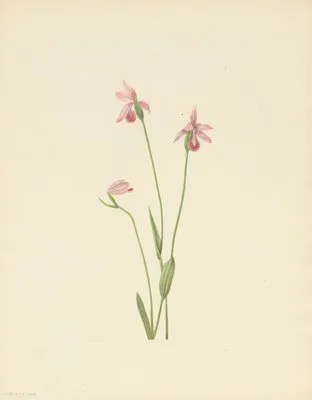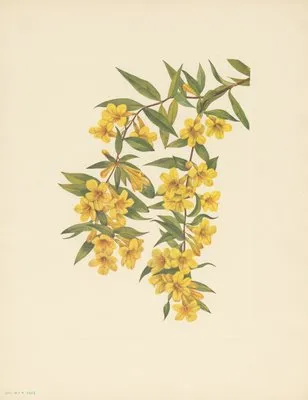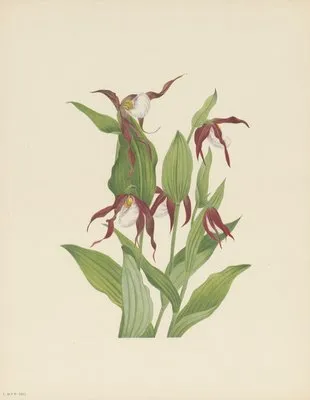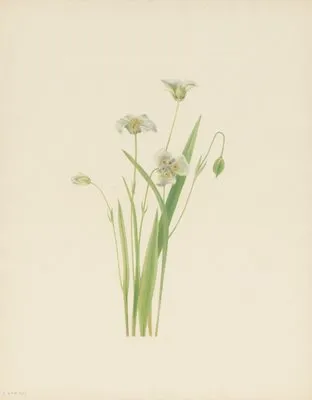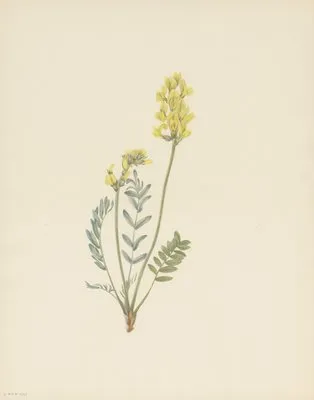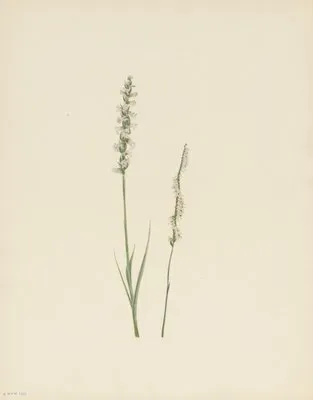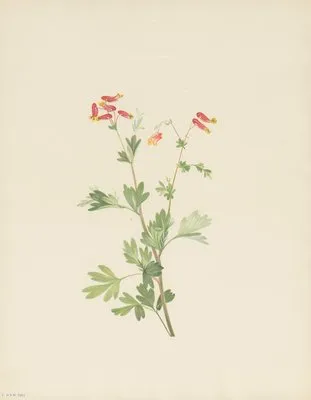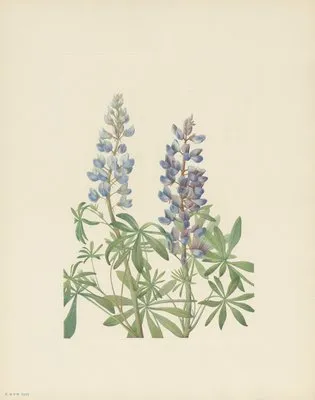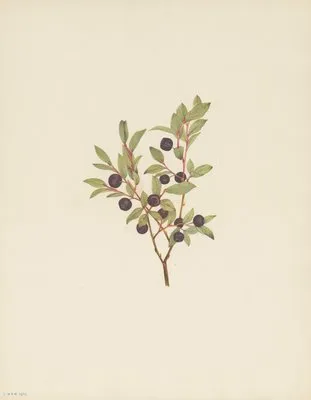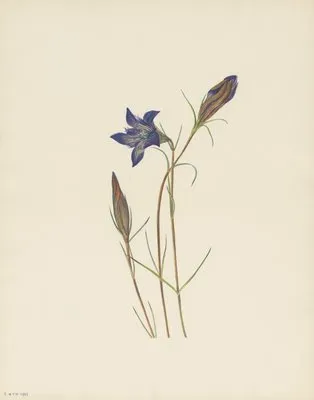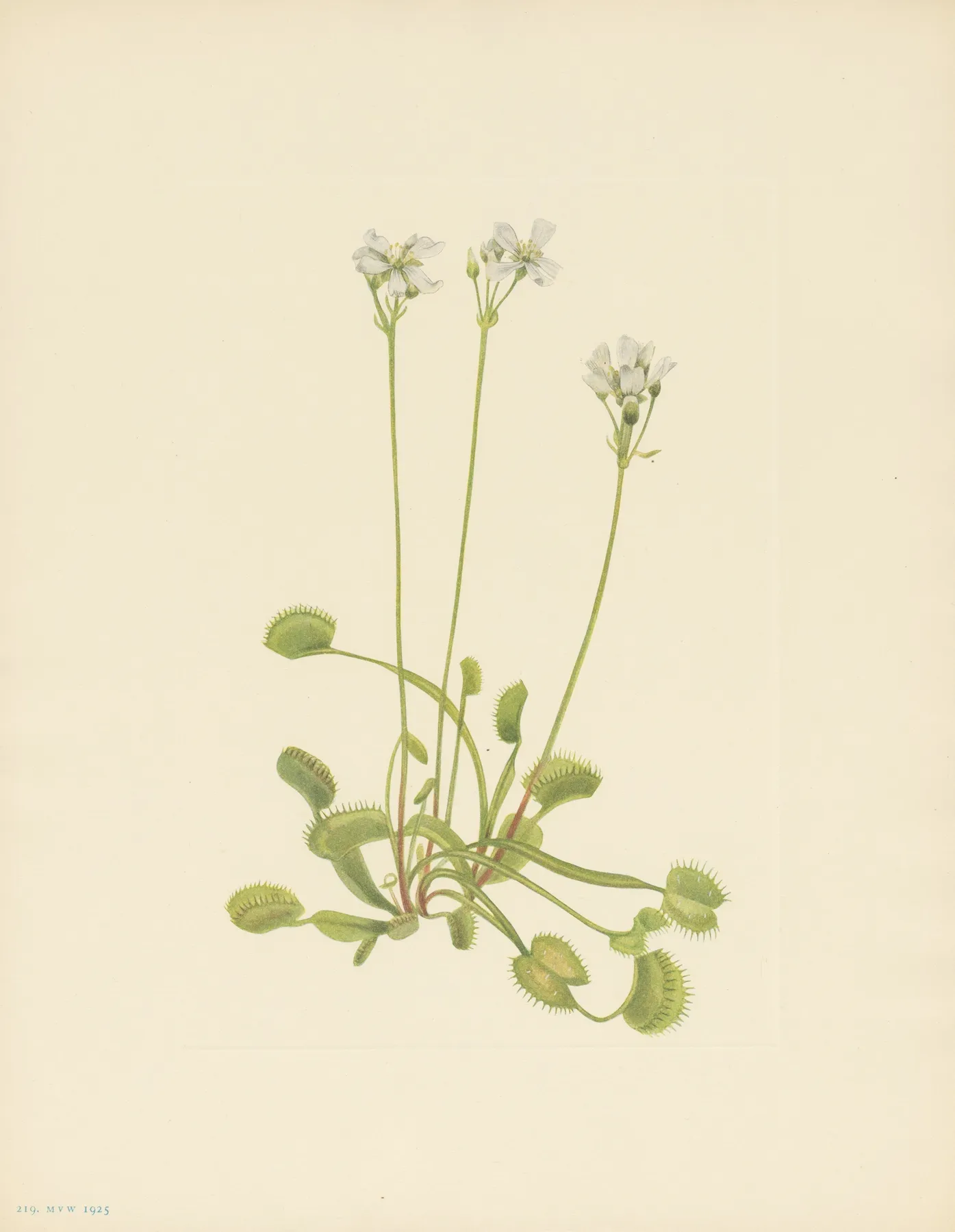
Venus Flytrap (Dionaea muscipula) (1925)
捕蝇草
Venus Flytrap (Dionaea muscipula) (1925)
About this plate
Venus Flytrap (Dionaea muscipula) (1925) is plate 219, from North American wild flowers, drawn by Mary Vaux Walcott. This public-domain plate is reproduced at high resolution, free to view and download. Publication: Washington, D.C., The Smithsonian Institution, 1925.
Twelve ways of seeing
One plate, read twelve times over: its name, its colour, the burin and the brush, the shape of the sheet, the season, the soil it came from, the book it belongs to, its language of flowers, the poem it answers to, the lore behind it, how to look, and what remains.
-
The Name
The plate is titled “Venus Flytrap (Dionaea muscipula)”, numbered Plate 219. Its binomial is Venus flytrap: the genus places it among its kin, the epithet records a place, a shape or a person. The Chinese name 捕蝇草 is a modern rendering of the Latin, not an old garden name — between a plant and its names there is always translation.
-
Form and Colour
Insect plates show the host plant and all four stages at once — egg, larva, pupa, adult — with wing venation, scales and antennal segments accounted for: the most technical branch of natural-history art. No colour group is recorded for this plate, but the palette still belongs to its season. Three things fix the habit: leaf arrangement, tepal count, and how the flower is borne.
-
Line and Colour
After 1900 photography and colour reproduction ran alongside watercolour: accuracy rose, the cut of the burin disappeared. Look closely at the line and the colour: an unbroken line means engraving, colour crossing the outline by half a millimetre means hand-colouring. Craft leaves franker evidence than inscriptions.
-
Composition
Slightly taller than wide, the plant set a little above centre so the eye lands on the flower. (about 1.29 : 1). No details are appended: this is a plate for looking, not for keying out.
-
Season
Set by life stage: butterflies in spring and summer, moths into autumn, beetles from May to July. Four stages on one sheet span a whole year. The year 1925 on the plate is the year of publication, not of flowering — the gathering came a year or two earlier.
-
Provenance
Merian's Metamorphosis Insectorum Surinamensium (1705) first showed insect stages with their host plants — the result of raising caterpillars in the Surinam forest with her daughters. The volume was made in 1925, when most of this knowledge came from living plants under glass rather than from the wild.
-
The Book
“North American wild flowers” was drawn by Mary Vaux Walcott and published 1925. This plate is Plate 219. The image is in the public domain; the hand-colouring on the paper is still one person's hand, two centuries ago.
-
Symbolism
In China the butterfly is dream and lovers, the cicada purity, the firefly a lamp for reading; in Europe the insect began as specimen before it became symbol. Meanings change their tune: the same flower can say opposite things within a century.
-
Poetic Resonance
穿花蛱蝶深深见,点水蜻蜓款款飞。
—— 唐·杜甫《曲江二首》
Butterflies thread the flowers, seen deep within; dragonflies touch the water and fly on, slow and deliberate.
The poem gives the mood first and the picture supplies the form; set the line beside the plate and the bird itself becomes its resting point.
-
Classical Lore
The Book of Songs notes which insects stir in which month — one of the earliest phenologies; the Bencao Gangmu lists a hundred insects under medicine. Chinese flower books ranked plants by character; European floras described them by form and name. This plate belongs to the second tradition, yet bears reading by the first. Printed in 1925, at the moment the two traditions began to see each other.
-
How to Look
Read the venation: it separates butterflies from moths and identifies genera. Then the chewed edge of the host leaf — a bitten margin means the artist watched the caterpillar feed. Finally, the edge of the sheet: where the plant is cropped tells you how it was seen — specimen, garden plant, or wild thing.
-
Afterword
A flora exists to be consulted; look long enough and you forget to consult — someone in 1925 gave a whole day to a single flower.