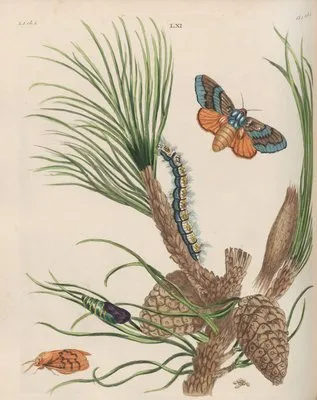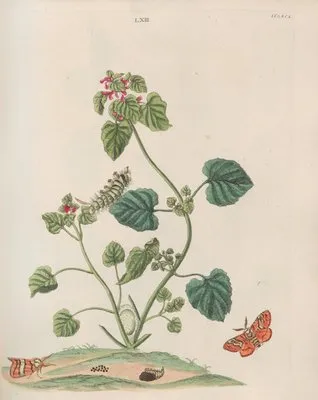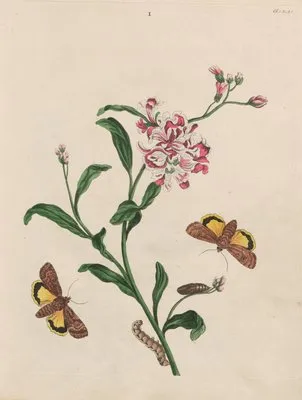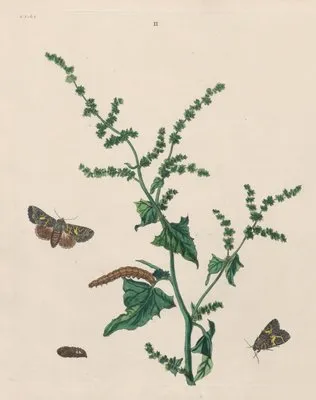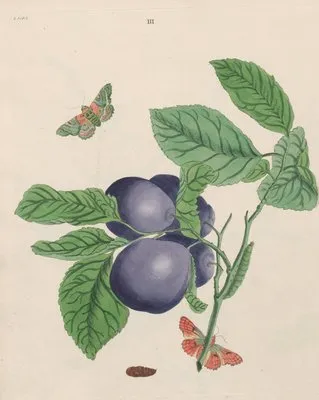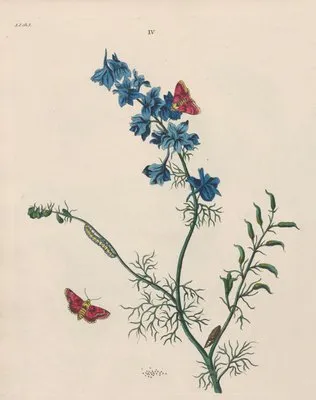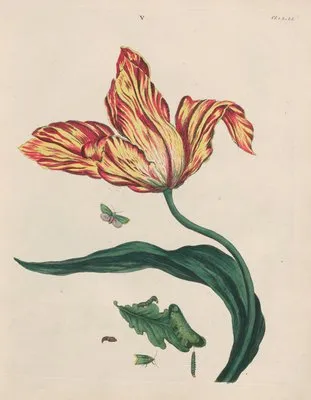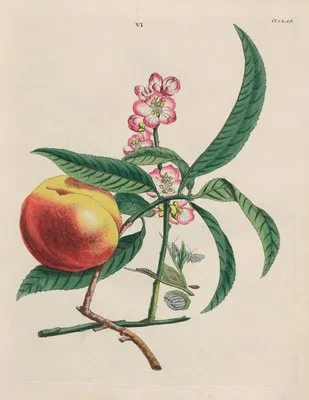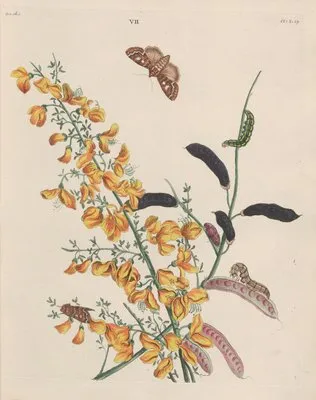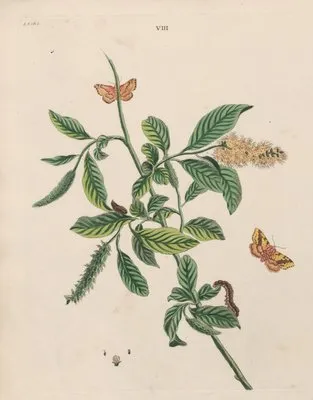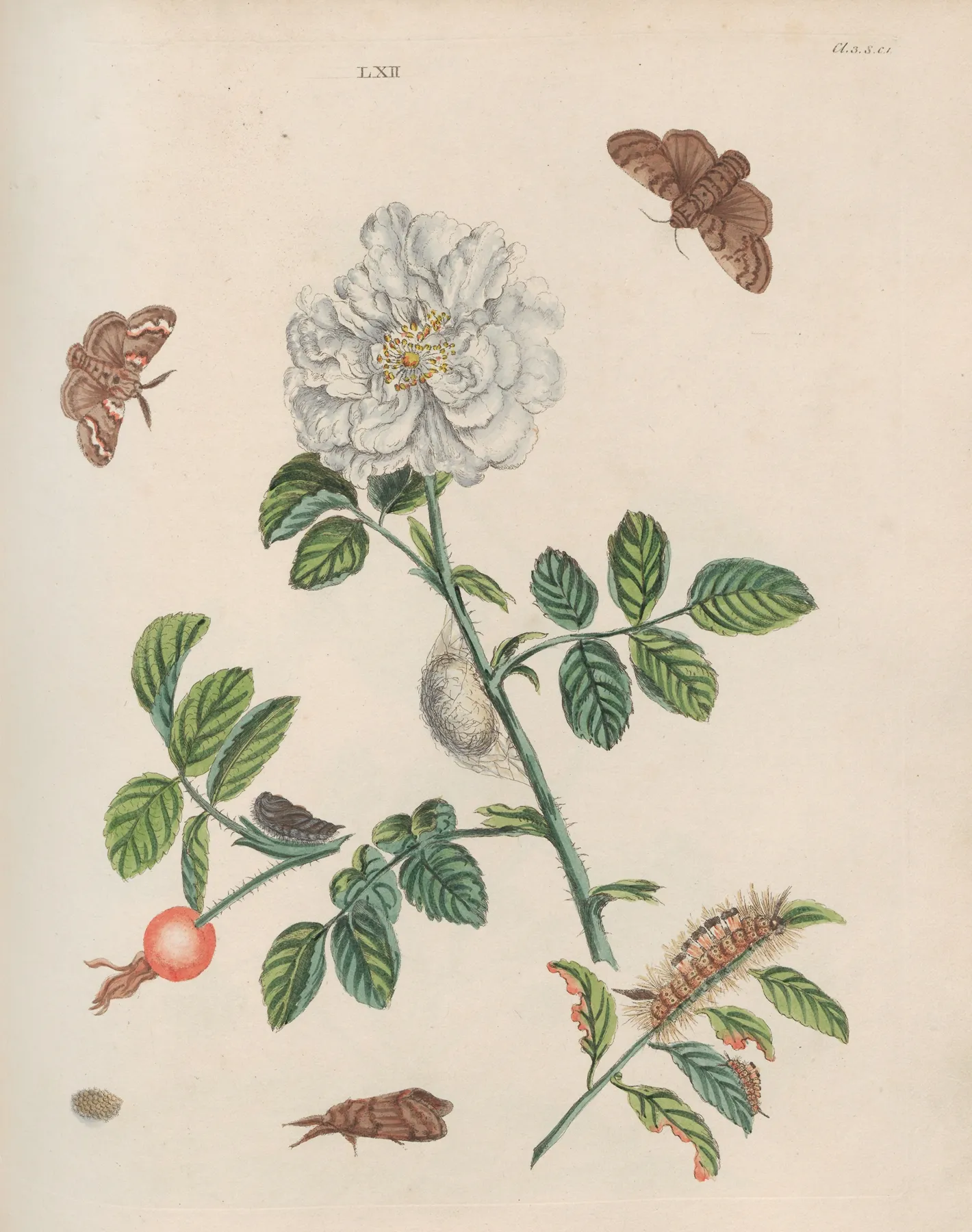
The black Tussock-Moth (Phalæna fascellina), The white double Rose (Rosa alba) (1773)
兽亚纲、白色絢孔菌、伊比利亚芍药
Ten ways of seeing
- measured cast amber
- slightly upright 1.27 : 1
First Look
夫象物必在于形似,形似须全其骨气。
—— 唐·张彦远《历代名画记》
Likeness is the threshold; bone-and-breath is the point.
Slightly taller than wide; the eye lands above centre. Then step in close: watch where colour meets line, and whether the line ever breaks. Third, find the darkest small patch: the whole tonal order is measured from there.
Name and Thing
Only the genus Rosa is given; species-level names came later. No established Chinese name exists, so it is cited by its binomial alone.
Form and Colour
Measured on this plate: flower colour covers 4.8% of the sheet, foliage 5.6%, the cast amber with a second note of yellow-green. No other plate shares exactly this measure. Roses are shrubs or scramblers with pinnate leaves of three to seven serrated leaflets; the double flowers open in crumpled, inward-curling layers around a small knot of yellow stamens.No colour group is recorded. Three things fix the habit: leaf arrangement, tepal count, and how the flower is borne.
Composition
The sheet is slightly tall. No details are appended: a plate for looking, not for keying out. The plant covers only 16% of the sheet, centred below centre; the emptiness is where the eye rests.
Line and Colour
Eighteenth-century plates are mostly copper engraving: hatched lines for shadow, then hand-colouring by another hand. Craft leaves franker evidence than inscriptions. If you mean to copy it: take its skeleton, its margins and the order of its colours; the burin's hatching is the language of copper — suggest it with pencil density, do not imitate it stroke for stroke.
Poetic Resonance
暗香一阵连风起,知有蔷薇涧底花。
—— 宋·王安石《同熊伯通自定林过悟真二首》
The poem gives the mood first and the picture supplies the form; set the line beside the plate and the corolla becomes its resting point.
Symbolism
In Europe the rose means love and secrecy ('sub rosa'); in Chinese verse the rambling rose leans and clings — lingering attachment rather than ardour. In a flora it is a species first and a symbol second; the order is worth keeping.
Season and Place
Late spring into early summer, peaking in May — the first flush of the garden year. the ever-blooming modern rose is a nineteenth-century crossing of European and Chinese stock. The year 1773 on the plate is that of publication, not of flowering — the gathering came a year or two earlier. See this kind of plate in the flowering season if you can: once you have met the living flower, you stop reading only colour.
The Book and the Hand
“One hundred and twenty copper-plates of English moths and butterflies” carries only Benjamin Wilkes's name. The image is public domain; the hand-colouring is still one person's hand.
What to Take Away
Appreciation is not knowledge but habit — one more look each time. A flora exists to be consulted; look long enough and you forget to consult — someone in 1773 gave a whole day to a single flower.
About this plate
The black Tussock-Moth (Phalæna fascellina), The white double Rose (Rosa alba) (1773) is plate 62, from One hundred and twenty copper-plates of English moths and butterflies, drawn by Benjamin Wilkes. This public-domain plate is reproduced at high resolution, free to view and download. Publication: London, Benjamin White at Horace's-Head, 1773.