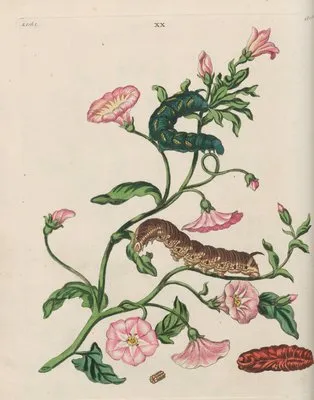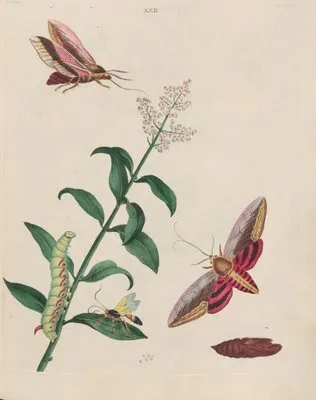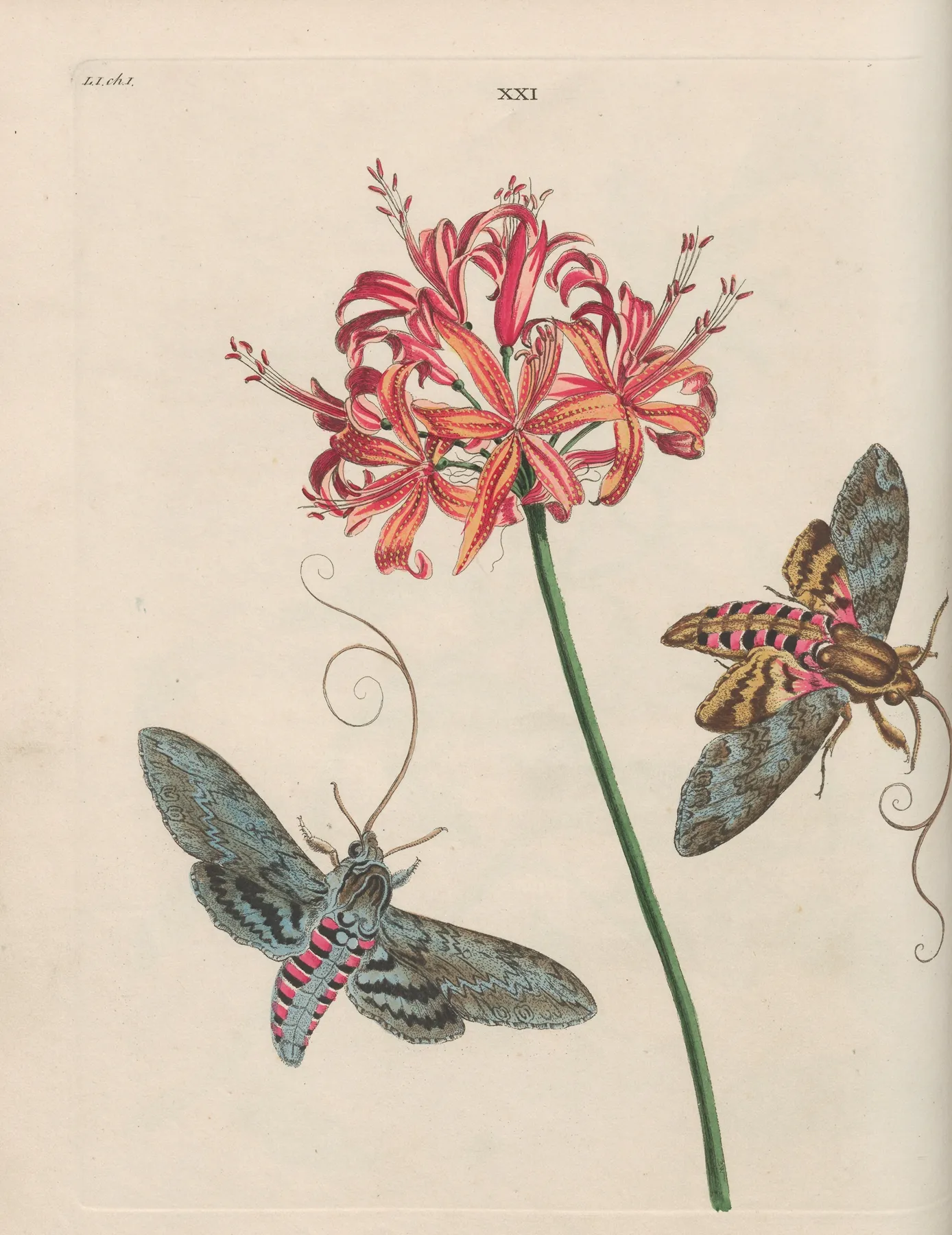
The Unicorn, or Bindweed Hawk-Moth (Sphinx convolvuli), The Guernsey Lily (Amaryllis Sarniensis) (1773)
The Unicorn, or Bindweed Hawk-Moth (Sphinx convolvuli), The Guernsey Lily (Amaryllis Sarniensis) (1773)
The Unicorn, or Bindweed Hawk-Moth (Sphinx convolvuli), The Guernsey Lily (Amaryllis Sarniensis) (1773)
Ten ways of seeing
- measured cast red
- slightly upright 1.30 : 1
First Look
凡画山水,意在笔先。
—— 唐·王维《山水论》
In painting, the intention precedes the brush.
Slightly taller than wide; the eye lands on the bird's head, a little above centre. Then step in close: watch where colour meets line, and whether the line ever breaks. Third, find the darkest small patch: the whole tonal order is measured from there.
Name and Thing
Only the genus Sphinx is given; species-level names came later. No established Chinese name exists, so it is cited by its binomial alone.
Form and Colour
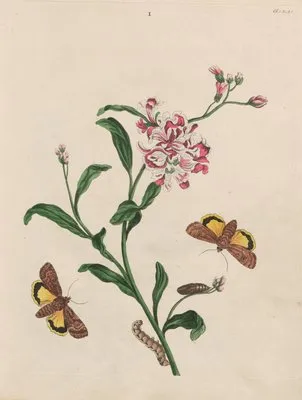
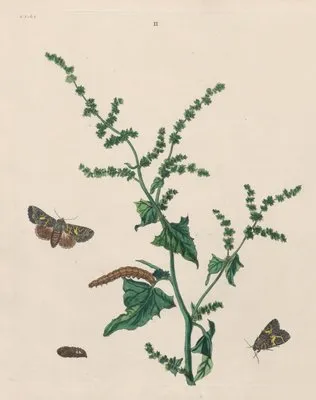
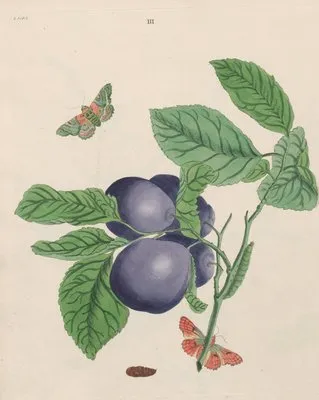
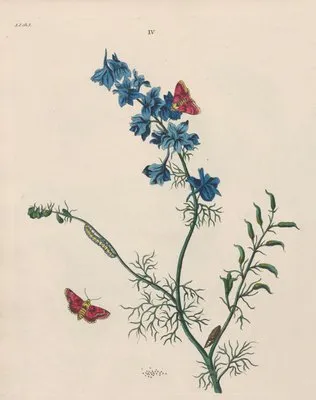
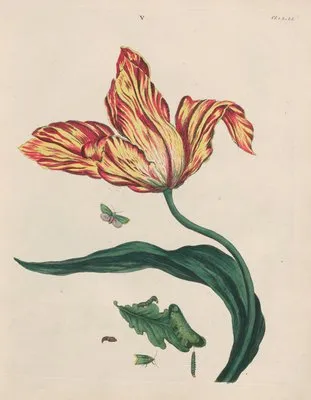
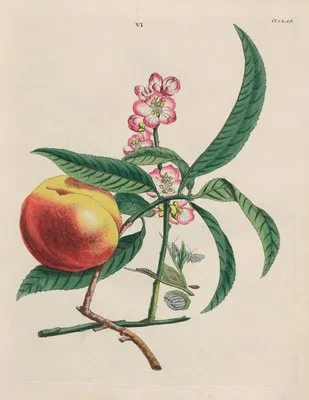
Measured on this plate: flower colour covers 9.6% of the sheet, foliage 1.0%, the cast red with a second note of amber. No other plate shares exactly this measure. Insect plates show the host plant and all four stages at once — egg, larva, pupa, adult — with wing venation, scales and antennal segments accounted for: the most technical branch of natural-history art.No colour group is recorded. Read the outline, then the colour layers, then the brush.
Composition
The sheet is slightly tall. No details are appended: a plate for looking, not for keying out. The plant covers only 17% of the sheet, centred a little right of centre; the emptiness is where the eye rests.
Line and Colour
Eighteenth-century plates are mostly copper engraving: hatched lines for shadow, then hand-colouring by another hand. There is evidence on the back too: the plate mark pressed into the paper, the slight relief of the pigment, lines worn shallow in a later printing. If you mean to copy it: take its skeleton, its margins and the order of its colours; the burin's hatching is the language of copper — suggest it with pencil density, do not imitate it stroke for stroke.
Poetic Resonance
翠蛾恨谁?青鸾信迟,题诗记清明日。
—— 《朝天子·道院中碧桃》
The poem gives the mood first and the picture supplies the form; set the line beside the plate and the bird itself becomes its resting point.
Symbolism
In China the butterfly is dream and lovers, the cicada purity, the firefly a lamp for reading; in Europe the insect began as specimen before it became symbol. Meanings change their tune: the same flower can say opposite things within a century.
Season and Place
Set by life stage: butterflies in spring and summer, moths into autumn, beetles from May to July. Four stages on one sheet span a whole year. Merian's Metamorphosis Insectorum Surinamensium (1705) first showed insect stages with their host plants — the result of raising caterpillars in the Surinam forest with her daughters. The year 1773 on the plate is that of publication, not of flowering — the gathering came a year or two earlier. The bud and the ripe fruit on one branch tell the season; the name in the title often tells the journey.
The Book and the Hand
“One hundred and twenty copper-plates of English moths and butterflies” carries only Benjamin Wilkes's name. From drawing to plate the sheet passed through several hands — the engraver aimed at accuracy, the colourist at speed, and between them lies each plate's unevenness.
What to Take Away
If you keep one line, keep Guo Xi's: from afar its momentum, up close its texture. A flora exists to be consulted; look long enough and you forget to consult — someone in 1773 gave a whole day to a single flower.
About this plate
The Unicorn, or Bindweed Hawk-Moth (Sphinx convolvuli), The Guernsey Lily (Amaryllis Sarniensis) (1773) is plate 21, from One hundred and twenty copper-plates of English moths and butterflies, drawn by Benjamin Wilkes. This public-domain plate is reproduced at high resolution, free to view and download. Publication: London, Benjamin White at Horace's-Head, 1773.