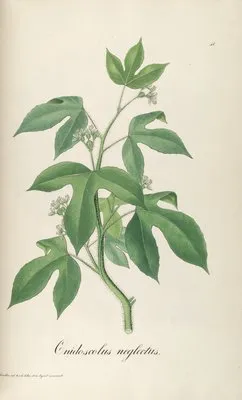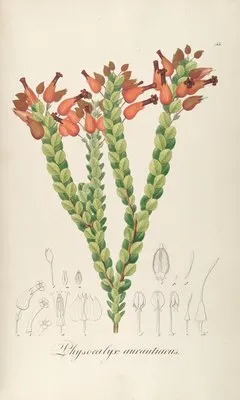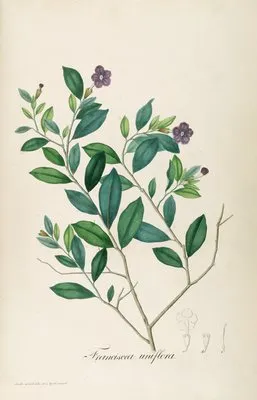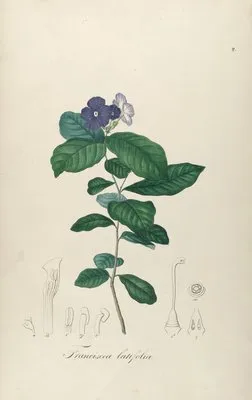
Cnidoscolus vitifolius (1827)
花棘麻属·Cnidoscolus vitifolins|花棘麻属
Cnidoscolus vitifolius (1827)
Ten ways of seeing
- measured cast yellow-green
- upright 1.65 : 1
First Look
凡画山水,意在笔先。
—— 唐·王维《山水论》
In painting, the intention precedes the brush.
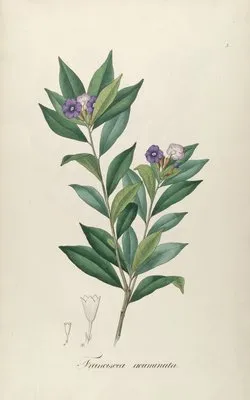
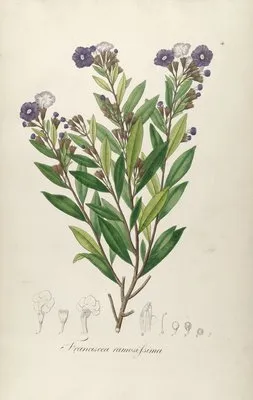
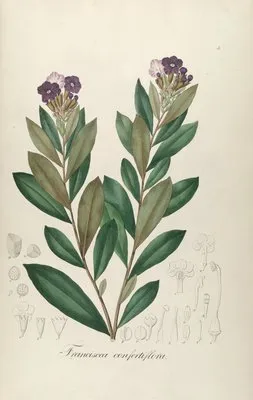
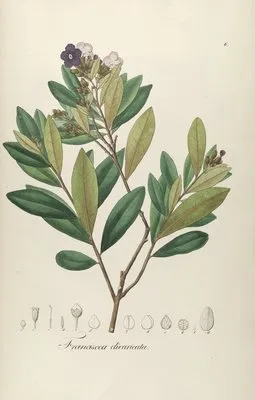
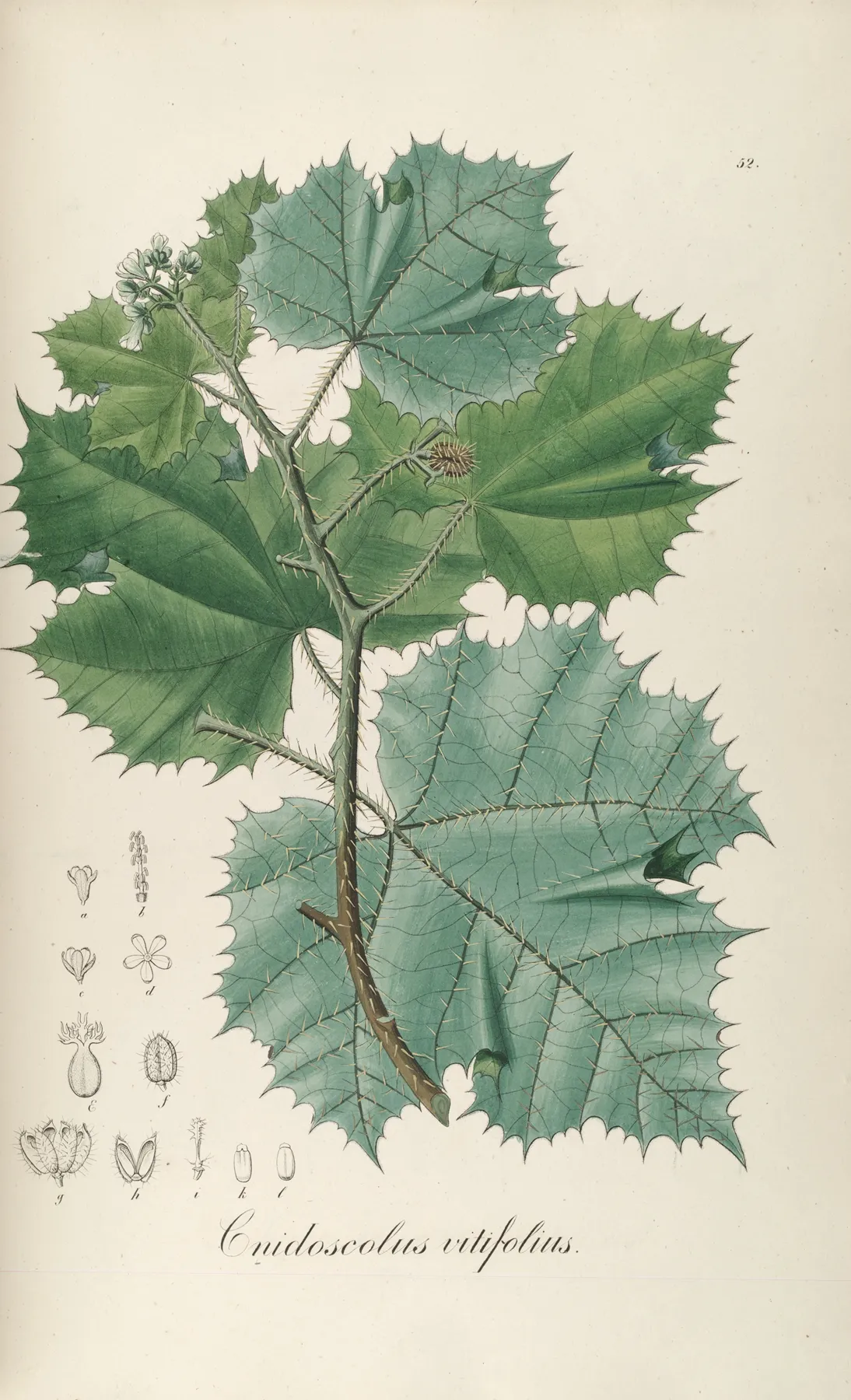
The sheet is vertical: the eye climbs and settles in the upper half. Let the plant stand before you look for detail. Then step in close: watch where colour meets line, and whether the line ever breaks. Third, find the darkest small patch: the whole tonal order is measured from there. The pose leans left: the upper half carries 13 points further left than the lower — a living thing, not a diagram.
Name and Thing
The binomial is Cnidoscolus vitifolius: the first word is the genus it belongs among, the second the epithet that sets it apart. Two words carry a whole provenance. The Chinese name 花棘麻属 is a modern rendering of the Latin, not an old garden name.
Form and Colour
Measured on this plate: flower colour is sparing, 0.8% of the sheet against 21.1% of foliage, the cast tending yellow-green — as with pale or white blooms, outline and tone do the talking. Tropical plants defy temperate habits: heavy, saturated flowers with strong scent, leathery or dissected leaves, stems that climb, swell, or reduce to spines.No colour group is recorded. Read the outline, then the colour layers, then the brush.
Composition
The sheet is tall. No details are appended: a plate for looking, not for keying out. The plant fills 42% of the sheet, centred near the centre — the herbarium way, drawn to be read whole.
Line and Colour
The first half of the nineteenth century moved from copper to steel to lithography; stipple could render the softest transition. Take a loupe to three places: petal edge, leaf vein, caption. An unbroken line means engraving; colour crossing the outline means a hand. If you mean to copy it: take its skeleton, its margins and the order of its colours; the burin's hatching is the language of copper — suggest it with pencil density, do not imitate it stroke for stroke.
Poetic Resonance
山城过雨百花尽,榕叶满庭莺乱啼。
—— 唐·柳宗元《柳州二月榕葉落盡偶題》
The poem gives the mood first and the picture supplies the form; set the line beside the plate and the corolla becomes its resting point.
Symbolism
In China these plants carry no classical symbolism; their meaning is newness — new worlds, new species, new trade routes. They show natural history's expanding edge. Meanings change their tune: the same flower can say opposite things within a century.
Season and Place
The tropics have no four seasons, only wet and dry. Central and South America, Southeast Asia, India, Ceylon. Eighteenth- and nineteenth-century artists either sailed with the ships or drew from living specimens under glass. The year 1827 on the plate is that of publication, not of flowering — the gathering came a year or two earlier. Read the locality and the flowering season both with a discount: one is hearsay, the other a ten-day peak.
The Book and the Hand
“Plantarum Brasiliae icones et descriptiones hactenus ineditae” carries only Johann Baptist Emanuel Pohl's name. A plate is collective work: drawer, engraver and colourist were different hands, and the unnamed ones decided how good it looks.
What to Take Away
Carry three rules away: whole before detail; line before colour; picture before book. Two centuries on, the plant may still flower in some garden; the one on this sheet stopped in the season of 1827.
About this plate
Cnidoscolus vitifolius (1827) is plate 52, from Plantarum Brasiliae icones et descriptiones hactenus ineditae, drawn by Johann Baptist Emanuel Pohl. This public-domain plate is reproduced at high resolution, free to view and download. Publication: Vienna, Antonii Strauss, 1827.