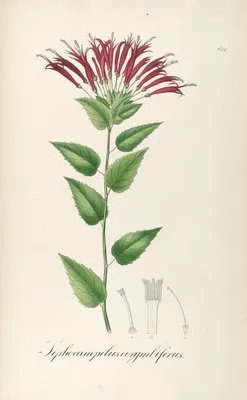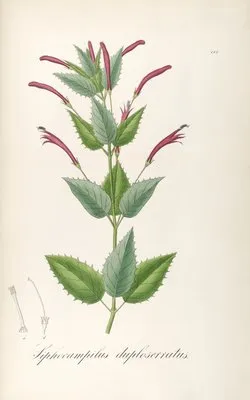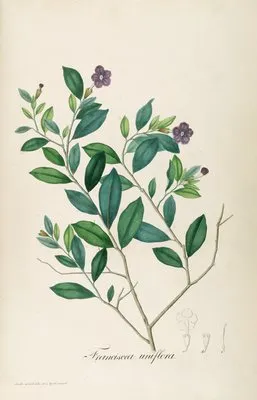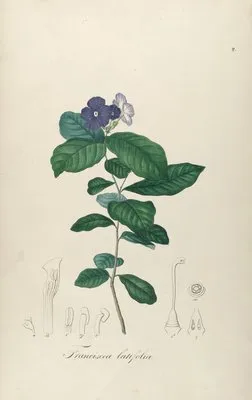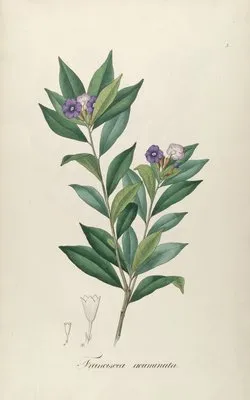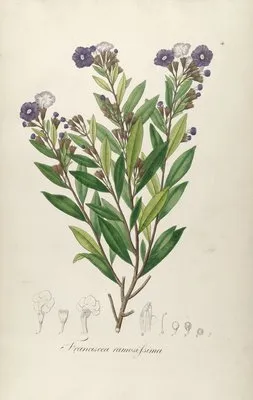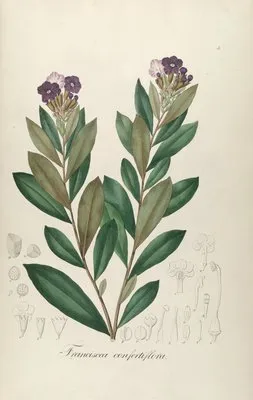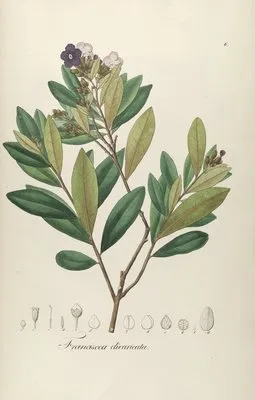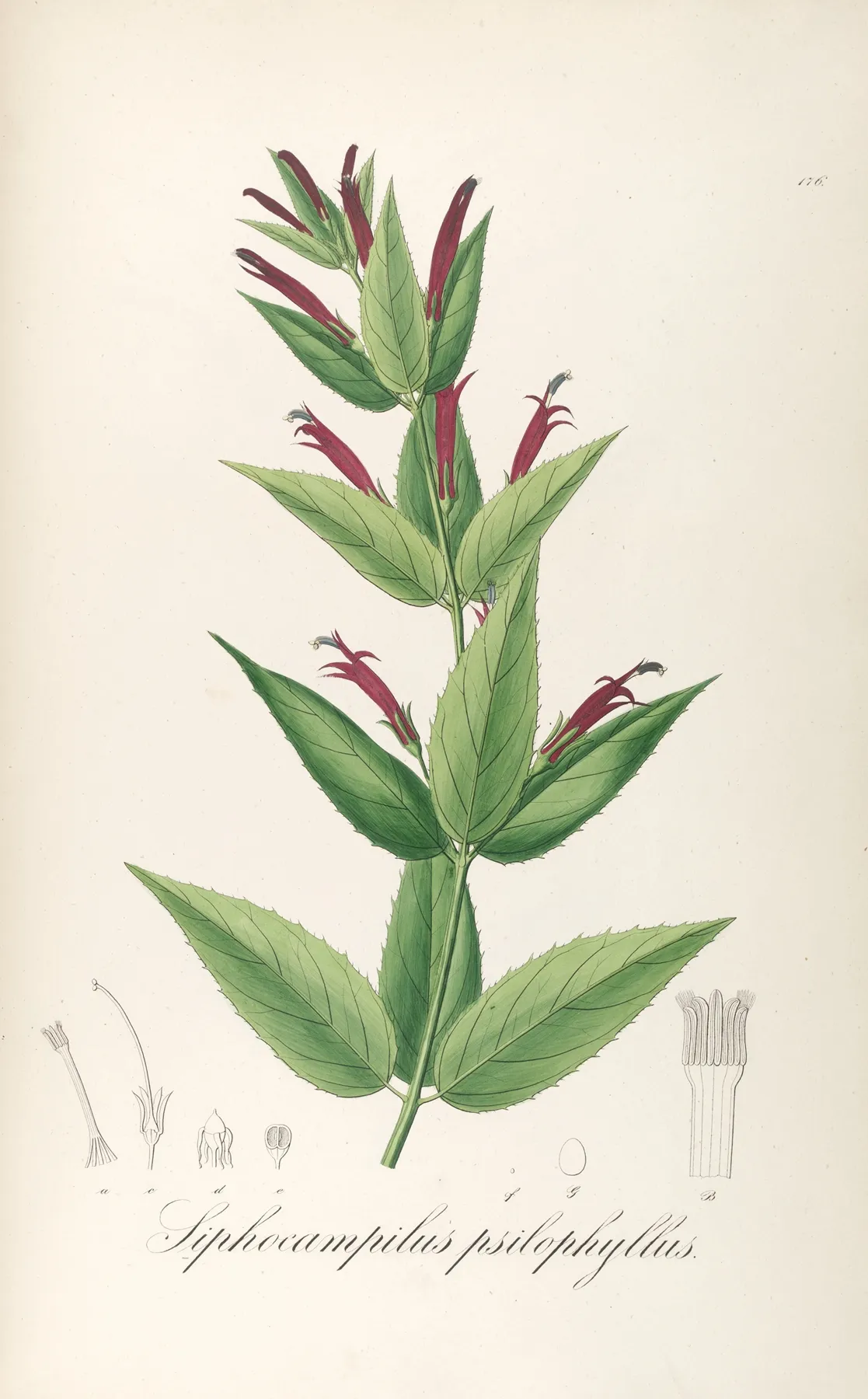
Siphocampylus psilophyllus (1827)
Iipthovampitas pstepiylths|蝰齿花属
Siphocampylus psilophyllus (1827)
Ten ways of seeing
- measured cast red
- upright 1.61 : 1
First Look
江馆清秋,晨起看竹,烟光日影露气,皆浮动于疏枝密叶之间。
—— 清·郑板桥《题画竹》
On an autumn morning at the river lodge I looked at the bamboo: mist, sunlight, dew, all drifting among the sparse and dense leaves.
The sheet is vertical: the eye climbs and settles in the upper half. Let the plant stand before you look for detail. Then step in close: watch where colour meets line, and whether the line ever breaks. Third, find the darkest small patch: the whole tonal order is measured from there.
Name and Thing
The binomial is Siphocampylus psilophyllus: the first word is the genus it belongs among, the second the epithet that sets it apart. Two words carry a whole provenance. The Chinese name 蝰齿花属 is a modern rendering of the Latin, not an old garden name.
Form and Colour
Measured on this plate: flower colour covers 1.6% of the sheet, foliage 14.6%, the cast red. No other plate shares exactly this measure. Tropical plants defy temperate habits: heavy, saturated flowers with strong scent, leathery or dissected leaves, stems that climb, swell, or reduce to spines.No colour group is recorded. Three things fix the habit: leaf arrangement, tepal count, and how the flower is borne.
Composition
The sheet is tall. No details are appended: a plate for looking, not for keying out. The plant covers only 17% of the sheet, centred near the centre; the emptiness is where the eye rests.
Line and Colour
The first half of the nineteenth century moved from copper to steel to lithography; stipple could render the softest transition. There is evidence on the back too: the plate mark pressed into the paper, the slight relief of the pigment, lines worn shallow in a later printing. If you mean to copy it: take its skeleton, its margins and the order of its colours; the burin's hatching is the language of copper — suggest it with pencil density, do not imitate it stroke for stroke.
Poetic Resonance
十年结子知谁在,自向庭中种荔枝。
—— 唐·白居易《種荔枝》
The poem gives the mood first and the picture supplies the form; set the line beside the plate and the corolla becomes its resting point.
Symbolism
In China these plants carry no classical symbolism; their meaning is newness — new worlds, new species, new trade routes. They show natural history's expanding edge. Meanings change their tune: the same flower can say opposite things within a century.
Season and Place
The tropics have no four seasons, only wet and dry. Central and South America, Southeast Asia, India, Ceylon. Eighteenth- and nineteenth-century artists either sailed with the ships or drew from living specimens under glass. The year 1827 on the plate is that of publication, not of flowering — the gathering came a year or two earlier. The bud and the ripe fruit on one branch tell the season; the name in the title often tells the journey.
The Book and the Hand
“Plantarum Brasiliae icones et descriptiones hactenus ineditae” carries only Johann Baptist Emanuel Pohl's name. A plate is collective work: drawer, engraver and colourist were different hands, and the unnamed ones decided how good it looks.
What to Take Away
If you keep one line, keep Guo Xi's: from afar its momentum, up close its texture. A flora exists to be consulted; look long enough and you forget to consult — someone in 1827 gave a whole day to a single flower.
About this plate
Siphocampylus psilophyllus (1827) is plate 176, from Plantarum Brasiliae icones et descriptiones hactenus ineditae, drawn by Johann Baptist Emanuel Pohl. This public-domain plate is reproduced at high resolution, free to view and download. Publication: Vienna, Antonii Strauss, 1827.