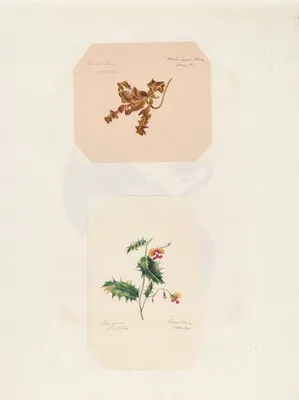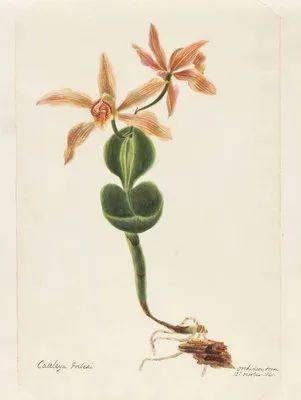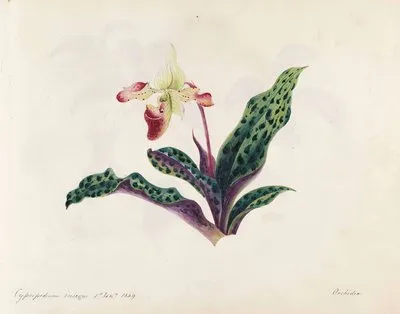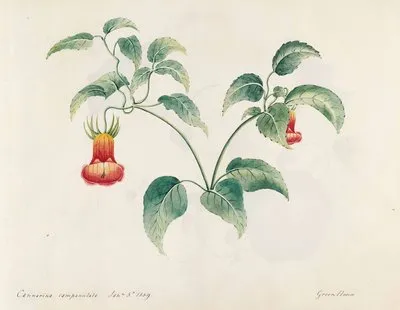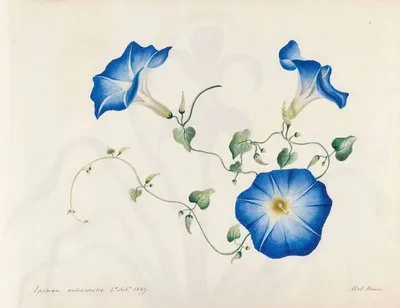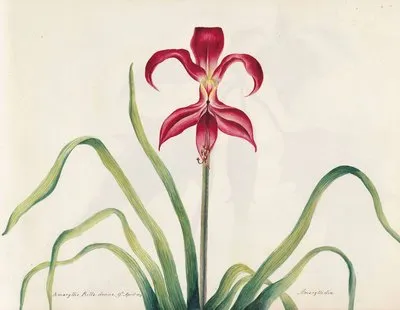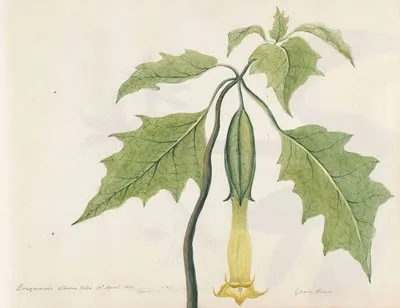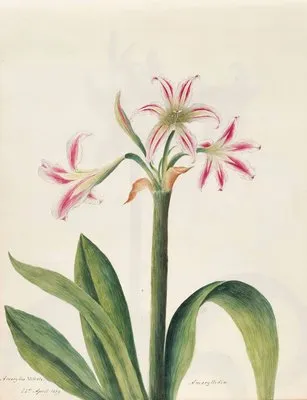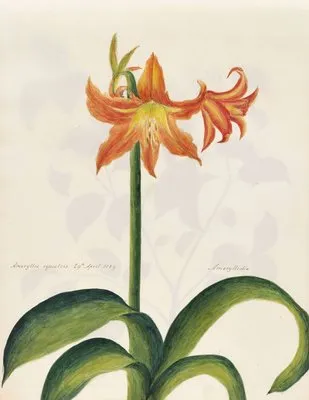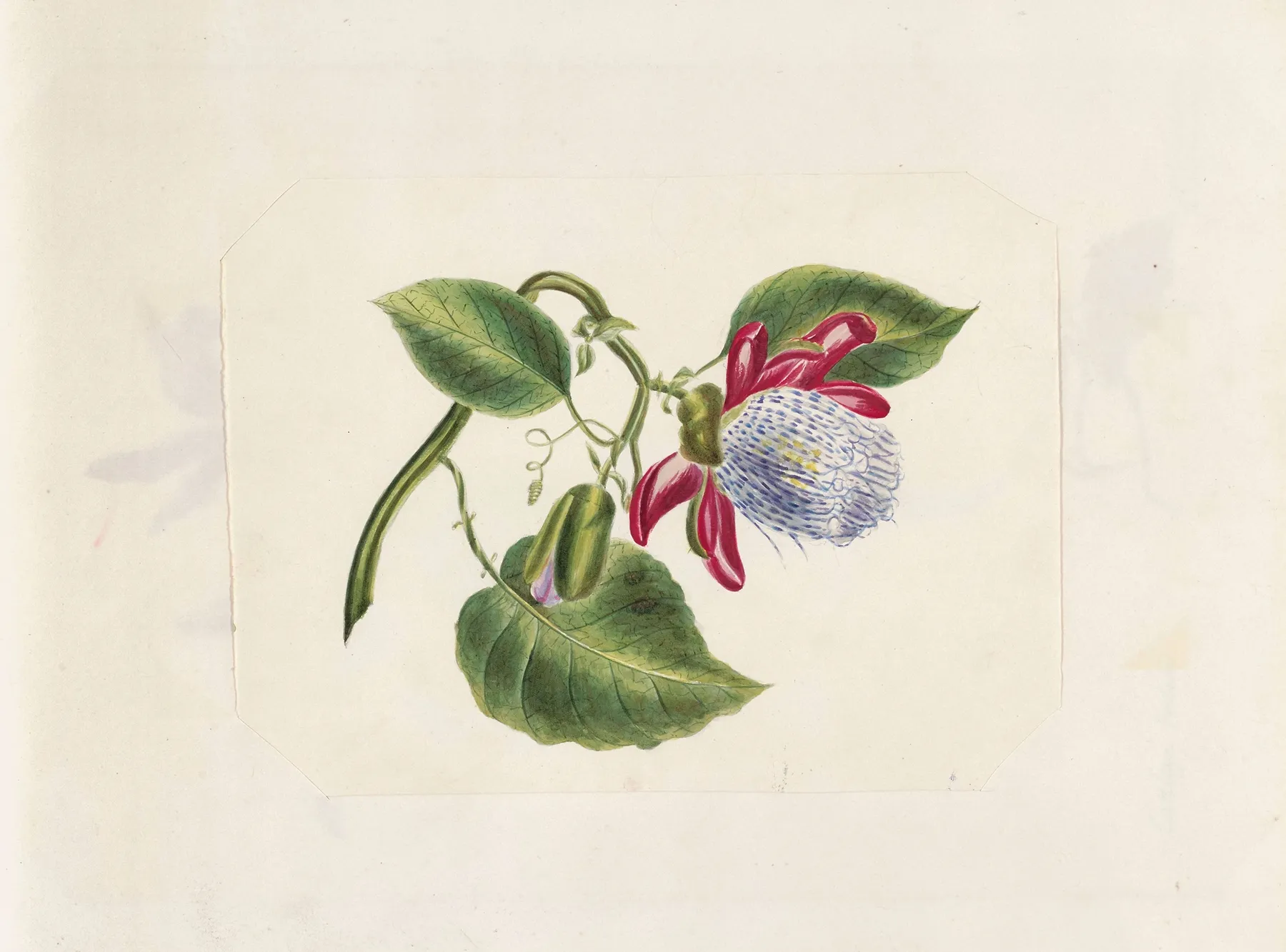
Plants drawn by Miss Brooks from living specimens Pl.31
黄昏锡嘴雀
Plants drawn by Miss Brooks from living specimens Pl.31
Ten ways of seeing
- measured cast yellow-green
- broad 0.74 : 1
First Look
六法者何?一、气韵生动是也;二、骨法用笔是也;三、应物象形是也;四、随类赋彩是也;五、经营位置是也;六、传移模写是也。
—— 南齐·谢赫《古画品录》
The six laws: spirit resonance alive; bone-method in the brush; matching form; colour by kind; planning the placing; copying the masters.
Broad and horizontal: the eye travels side to side. Find where it stops. Then step in close: watch where colour meets line, and whether the line ever breaks. Third, find the darkest small patch: the whole tonal order is measured from there.
Name and Thing
No reliable binomial survives, so the printed title must serve. The Chinese name 黄昏锡嘴雀 is a modern rendering of the Latin, not an old garden name.
Form and Colour
Measured on this plate: flower colour covers 3.6% of the sheet, foliage 6.0%, the cast yellow-green with a second note of red. No other plate shares exactly this measure. Bird plates usually choose the perched pose: one foot gripping, one loose, the flight feathers laid in first, coverts over them, then the horny gleam of bill and eye.No colour group is recorded. Read the outline, then the colour layers, then the brush.
Composition
The sheet is broad. No details are appended: a plate for looking, not for keying out. The plant covers only 11% of the sheet, centred near the centre; the emptiness is where the eye rests.
Line and Colour
The first half of the nineteenth century moved from copper to steel to lithography; stipple could render the softest transition. Craft leaves franker evidence than inscriptions. If you mean to copy it: take its skeleton, its margins and the order of its colours; the burin's hatching is the language of copper — suggest it with pencil density, do not imitate it stroke for stroke.
Poetic Resonance
月出惊山鸟,时鸣春涧中。
—— 唐·王维《鸟鸣涧》
The moon rises and startles the mountain birds; now and then they call in the spring ravine.
The poem gives the mood first and the picture supplies the form; set the line beside the plate and the bird itself becomes its resting point.
Symbolism
In China the crane is longevity, the magpie joy, the wild goose a letter, the eagle prowess; in the Americas each bird carries a different totem. One bird, unrelated meanings. Flower language was added later; the flower knows nothing of it, and that innocence is part of its power.
Season and Place
Bound to migration: north in spring, south in autumn, each species answering to a few weeks. Audubon's plates often read 'adult, spring' — plumage at its height. Audubon's Birds of America (1827–1838) came from specimens he shot himself, wired into lifelike poses and drawn from life — which is why the birds look so alive, and why the method is uncomfortable. The year 1838 on the plate is that of publication, not of flowering — the gathering came a year or two earlier. Read the locality and the flowering season both with a discount: one is hearsay, the other a ten-day peak.
The Book and the Hand
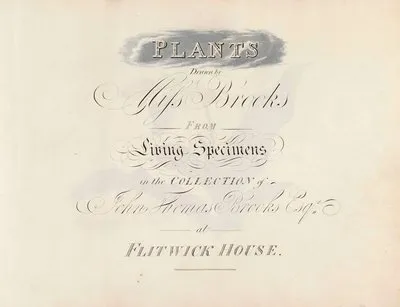
“Plants drawn by Miss Brooks from living specimens in the collection of John Thomas Brooks esq. at Flitwick House” carries only Mary Ann Brooks's name. A plate is collective work: drawer, engraver and colourist were different hands, and the unnamed ones decided how good it looks.
What to Take Away
Carry three rules away: whole before detail; line before colour; picture before book. Two centuries on, the plant may still flower in some garden; the one on this sheet stopped in the season of 1838.
About this plate
Plants drawn by Miss Brooks from living specimens Pl.31 is plate 31, from Plants drawn by Miss Brooks from living specimens in the collection of John Thomas Brooks esq. at Flitwick House, drawn by Mary Ann Brooks. This public-domain plate is reproduced at high resolution, free to view and download. Publication: Bedfordshire, 1838-1848.