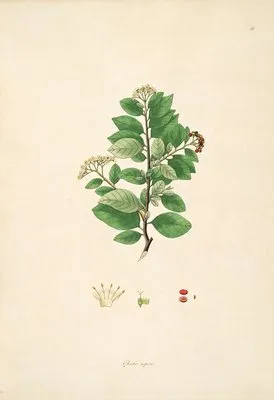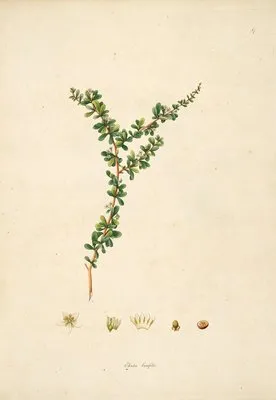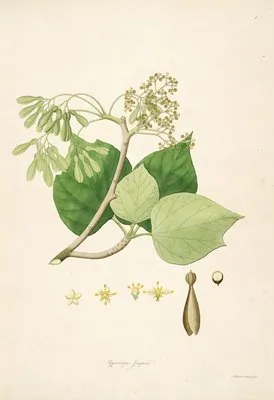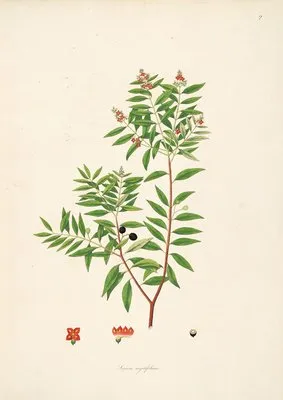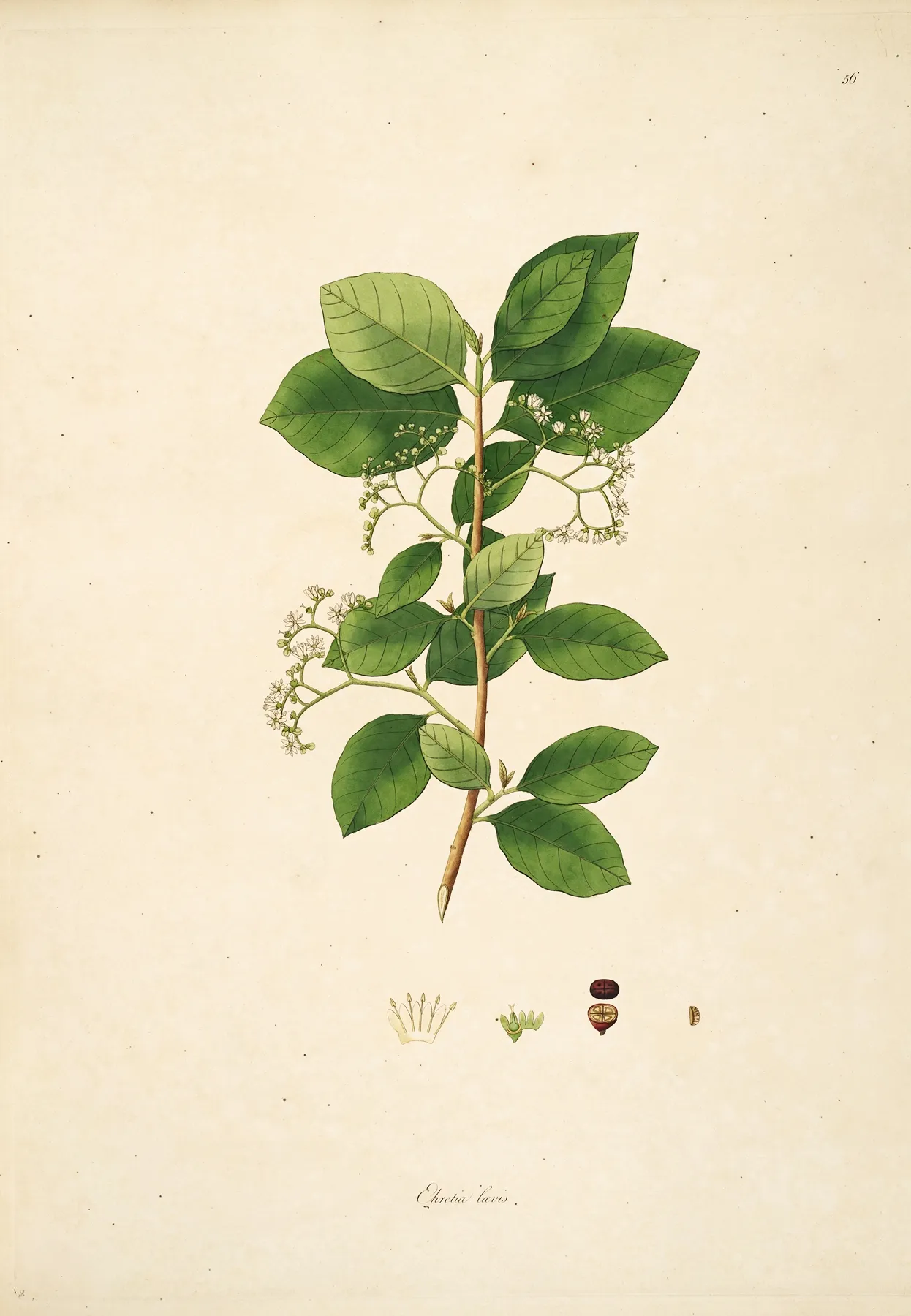
Plants of the coast of Coromandel Pl.056
Chrctia lavis|铃兰族
Plants of the coast of Coromandel Pl.056
Ten ways of seeing
- measured cast yellow-green
- upright 1.44 : 1
First Look
夫象物必在于形似,形似须全其骨气。
—— 唐·张彦远《历代名画记》
Likeness is the threshold; bone-and-breath is the point.
The sheet is vertical: the eye climbs and settles in the upper half. Let the plant stand before you look for detail. Then step in close: watch where colour meets line, and whether the line ever breaks. Third, find the darkest small patch: the whole tonal order is measured from there.
Name and Thing
No reliable binomial survives, so the printed title must serve. The Chinese name 铃兰族 is a modern rendering of the Latin, not an old garden name.
Form and Colour
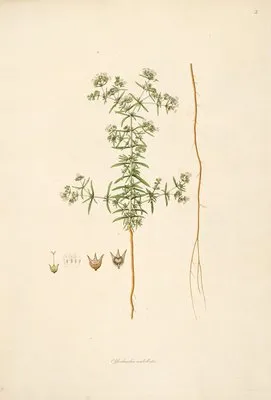
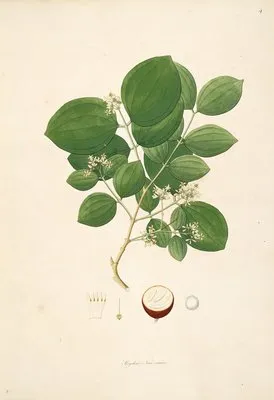
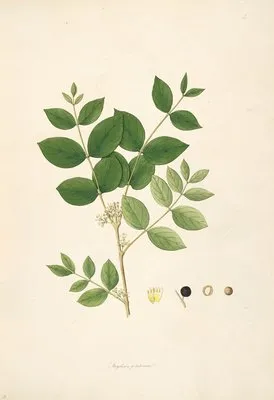
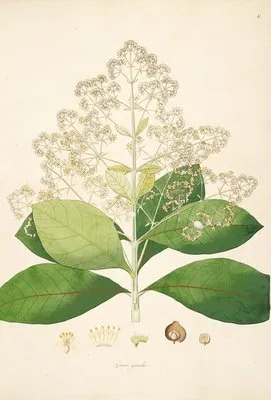
Measured on this plate: flower colour covers 1.9% of the sheet, foliage 9.6%, the cast yellow-green with a second note of amber. No other plate shares exactly this measure. Tropical plants defy temperate habits: heavy, saturated flowers with strong scent, leathery or dissected leaves, stems that climb, swell, or reduce to spines.No colour group is recorded. Read the outline, then the colour layers, then the brush.
Composition
The sheet is tall. No details are appended: a plate for looking, not for keying out. The plant covers only 12% of the sheet, centred above centre; the emptiness is where the eye rests.
Line and Colour
Eighteenth-century plates are mostly copper engraving: hatched lines for shadow, then hand-colouring by another hand. Decide first whether it was printed or painted; only then discuss whether it is beautiful. If you mean to copy it: take its skeleton, its margins and the order of its colours; the burin's hatching is the language of copper — suggest it with pencil density, do not imitate it stroke for stroke.
Poetic Resonance
馆娃宫中春日暮,荔枝木瓜花满树。
—— 唐·王建《舞曲歌辭 白紵歌二首 二》
The poem gives the mood first and the picture supplies the form; set the line beside the plate and the corolla becomes its resting point.
Symbolism
In China these plants carry no classical symbolism; their meaning is newness — new worlds, new species, new trade routes. They show natural history's expanding edge. In a flora it is a species first and a symbol second; the order is worth keeping.
Season and Place
The tropics have no four seasons, only wet and dry. Central and South America, Southeast Asia, India, Ceylon. Eighteenth- and nineteenth-century artists either sailed with the ships or drew from living specimens under glass. The year 1795 on the plate is that of publication, not of flowering — the gathering came a year or two earlier. Read the locality and the flowering season both with a discount: one is hearsay, the other a ten-day peak.
The Book and the Hand
“Plants of the coast of Coromandel” carries only William Roxburgh's name. The image is public domain; the hand-colouring is still one person's hand.
What to Take Away
Carry three rules away: whole before detail; line before colour; picture before book. The flower of that year is dust, yet its image on paper has outlived every living cousin.
About this plate
Plants of the coast of Coromandel Pl.056 is plate 56, from Plants of the coast of Coromandel, drawn by William Roxburgh. This public-domain plate is reproduced at high resolution, free to view and download. Publication: London, Printed by W. Bulmer and Co. for G. Nicol, 1795-1819.