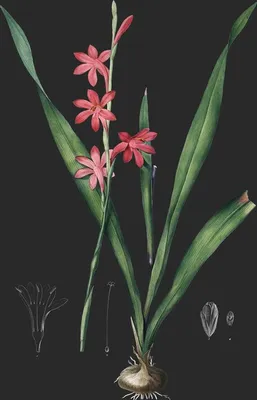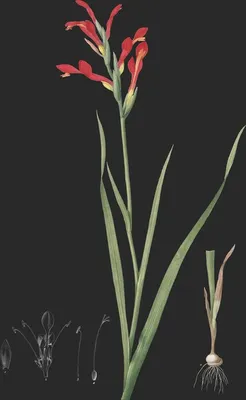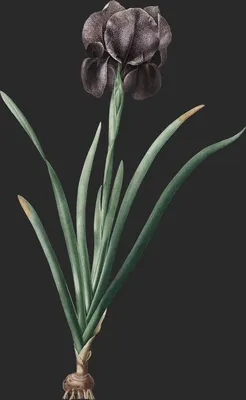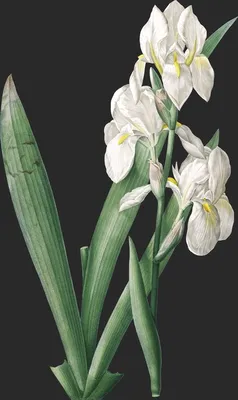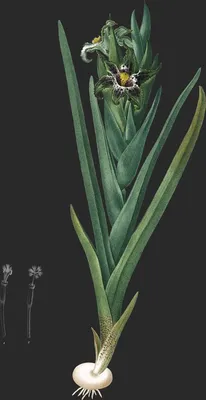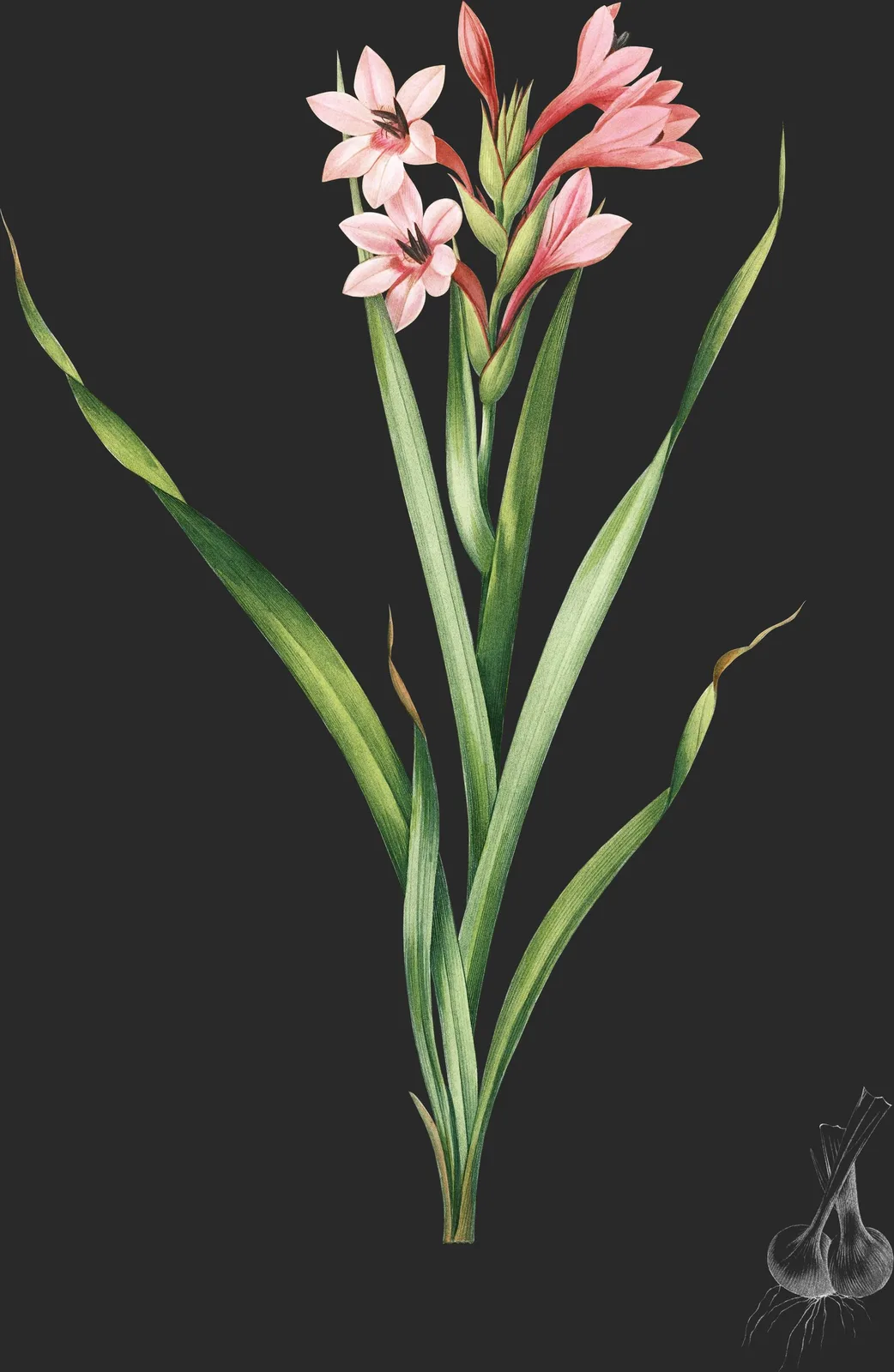
Gladiolus Laccatus
Glayeul Couleur de Lacque
Ten ways of seeing
- measured cast red
- upright 1.54 : 1
First Look
夫象物必在于形似,形似须全其骨气。
—— 唐·张彦远《历代名画记》
Likeness is the threshold; bone-and-breath is the point.
The sheet is vertical: the eye climbs and settles in the upper half. Let the plant stand before you look for detail. Then step in close: watch where colour meets line, and whether the line ever breaks. Third, find where the green is deepest: the whole tonal order is measured from that patch.
Name and Thing
The binomial is Gladiolus laccatus: the first word is the genus it belongs among, the second the epithet that sets it apart. Two words carry a whole provenance. The older system filed it under Iridaceæ by overall affinity; Linnaeus, counting stamens only, placed it in Triandria — two ways of asking what a plant is. No established Chinese name exists, so it is cited by its binomial alone.
Form and Colour
Measured on this plate: flower colour covers 2.9% of the sheet, foliage 8.1%, the cast red with a second note of yellow-green. No other plate shares exactly this measure. Bulbous plants store the year underground — bulb, corm or tuber — then send up a few thick leaves and a single scape, with six tepals in cup, funnel or star. a moss green. Read the outline, then the colour layers, then the brush.
Composition
The sheet is tall. No details are appended: a plate for looking, not for keying out. The plant covers only 14% of the sheet, centred above centre; the emptiness is where the eye rests.
Line and Colour
The first half of the nineteenth century moved from copper to steel to lithography; stipple could render the softest transition. Decide first whether it was printed or painted; only then discuss whether it is beautiful. If you mean to copy it: take its skeleton, its margins and the order of its colours; the burin's hatching is the language of copper — suggest it with pencil density, do not imitate it stroke for stroke.
Poetic Resonance
仙衣才试郁金黄,便觉秋风满院芳。
—— 宋·朱熹《次劉彥集木犀韻三首 其二》
The poem gives the mood first and the picture supplies the form; set the line beside the plate and the green the corolla becomes its resting point.
Symbolism
The tulip was an imperial emblem in Istanbul and a speculative bubble in Amsterdam; the hyacinth sprang from a boy's blood in Greek myth. What bulbs share is concealment: next year kept underground. Flower language was added later; the flower knows nothing of it, and that innocence is part of its power.
Season and Place
Early spring to early summer, genus by genus: tulips and hyacinths first, gladiolus and amaryllis later. Three homelands: the Mediterranean, Central Asia and South Africa. The tulip came from Ottoman gardens and became a Dutch mania. The year 1811 on the plate is that of publication, not of flowering — the gathering came a year or two earlier. Read the locality and the flowering season both with a discount: one is hearsay, the other a ten-day peak.
The Book and the Hand
“The Liliaceae” carries only Pierre-Joseph Redouté's name. From drawing to plate the sheet passed through several hands — the engraver aimed at accuracy, the colourist at speed, and between them lies each plate's unevenness.
What to Take Away
If you keep one line, keep Guo Xi's: from afar its momentum, up close its texture. A flora exists to be consulted; look long enough and you forget to consult — someone in 1811 gave a whole day to a single flower.
About this plate
Description
La racine de ce Glayeul est formée, à l’époque de la floraison, de deux tubercules arrondis, un peu déprimés, couverts de tuniques jaunâtres, situés l’un a côté de l’autre, et égaux entre eux. Elle donne naissance à un faisceau de feuilles lineaires, longues de deux centimètres environ, larges d’un centimètre, glabres, entières, aiguës, contournées en spirale, peu nombreuses, disposées sur deux rangs opposés. Deux ou trois feuilles semblables sortent de la tige qui est verte, cylindrique, et s’élève à peu près à la même hautear que les feuilles radicales.
Les fleurs, au nombre de sept ou huit, et disposées comme les feuilles sur deux rangs opposés, forment un épi court. Elles sont d’un rose vif, et assez semblables à celles du Glayeul de Mérian, quoique plus petites. La valve extérieure de l’espèce de spathe qui accompagne chacune d’elles, est lancéolée-linéaire. comprimée et tranchante sur le dos, simple et aigué au sommet, d’une couleur verte brunatre, avec le bord rouge. Elle est égale en longueur à la partie étroite du tube du périgone. L’intérieure est un peu plus petite, creusée sur le dos d’un sillon profond, et échanerée au sommet.
Le tube du périgone est formé de deux parties distinctes. L’intérieure, qui s’élève presque verticalement, est droite, grele, longue de vingt-cinq millimètres environ. La supérieure, qui forme avec elle un angle très-marqué, est presque horizontale, et a un diamètre beaucoup plus considérable. Sa longueur est d’environ quinze millimètres. Le limbe est en forme de cloche très-evasée, divisé, jusqu’à l’entrée du tube, en six segmenta ovales, aigus, demi-étalés, a peu près égaux, et disposés presque régulièrement. Le supérieur se renserse légèrement en dehors au sommet.
Les étamines sont insérées dans le fond de la partie renflée du tube du péri gone, et atteignent presque la longueur des divisions du limbe. Leurs filaments sont rose, filiformes, déjetés du côté supérieur de la fleur. Les anthères sont linéaires, d’un bleu noirâtre.
L’ovaire est petit, adhérent, surmonté par un style filiforme, rose, aussi long que les étamines. Le stigmate est divisé en trois lobes filiformes, échancrés au sommet.
Histoire
Le Glayeul conleur de lacque est indigène du Cap de Bonne-Espérance. Nous le décrivons d’après des individus provenus de bulbes qui en avaient été apportées directement, et qui ont fleuri au mois de juillet dans le Jardin impérial de Sèvres.
Fam. des Iris. Juss.—Triandrie monogynie. Lin.
- Gladiolus laccatus. G. corollis infundibuliformibus, tubo duplici, laciniis limbi oblongis, scapo geniculato, foliis lineari-ensiformibus glabris. Willd. sp. pl. 215.
- Gladiolas laccatus. G. corollis infundibuliformibus cernais fauce teretibus, laciviis oblongis obtusis, spathis lanecolatis attenuatis. Vahl. enum. pl. 2. p. 94.
- Gladiolus laccatus. G. corollis infundibuliformibus, limbi laciniis æqualibus, fance tereti, foliis angustè-ensiformibos obliquis. Jacq. collect. 4. p. 171. Ic. rar. 232.
- Watsonia laccata. W. corollis infundibuliformibus cernnis, laciniis ovatis planis, foliis lineari-ensiformibus obliquis. Pers. enchir. 1. p. 43.
- Watsonia hamilis. W. folis angustioribus, verticaliter ensiformibus strictis tortiuscalis, spatha tubo fance limboque invicem equalibus, pistillo lacinias pariles acutas regulari-patulas subæquante. Gawl. in Curt. botan. mag. 631.
- Watsonia homilis foliis lineari-ensiformibus, tabo floris longissimo. Mill. ic. p. 198. t. 297. f. 2?