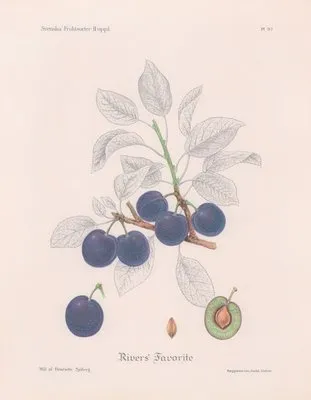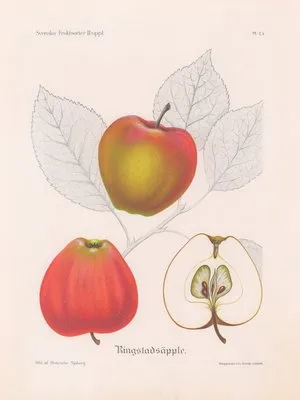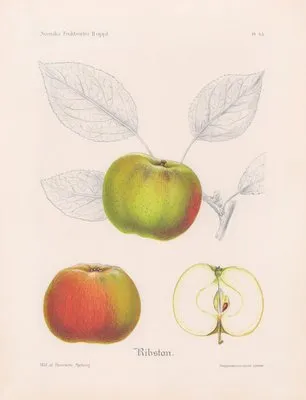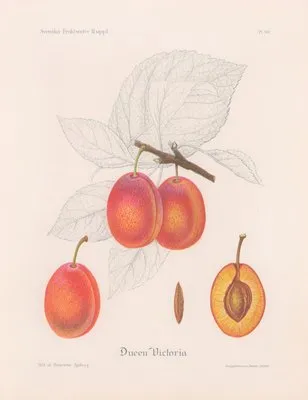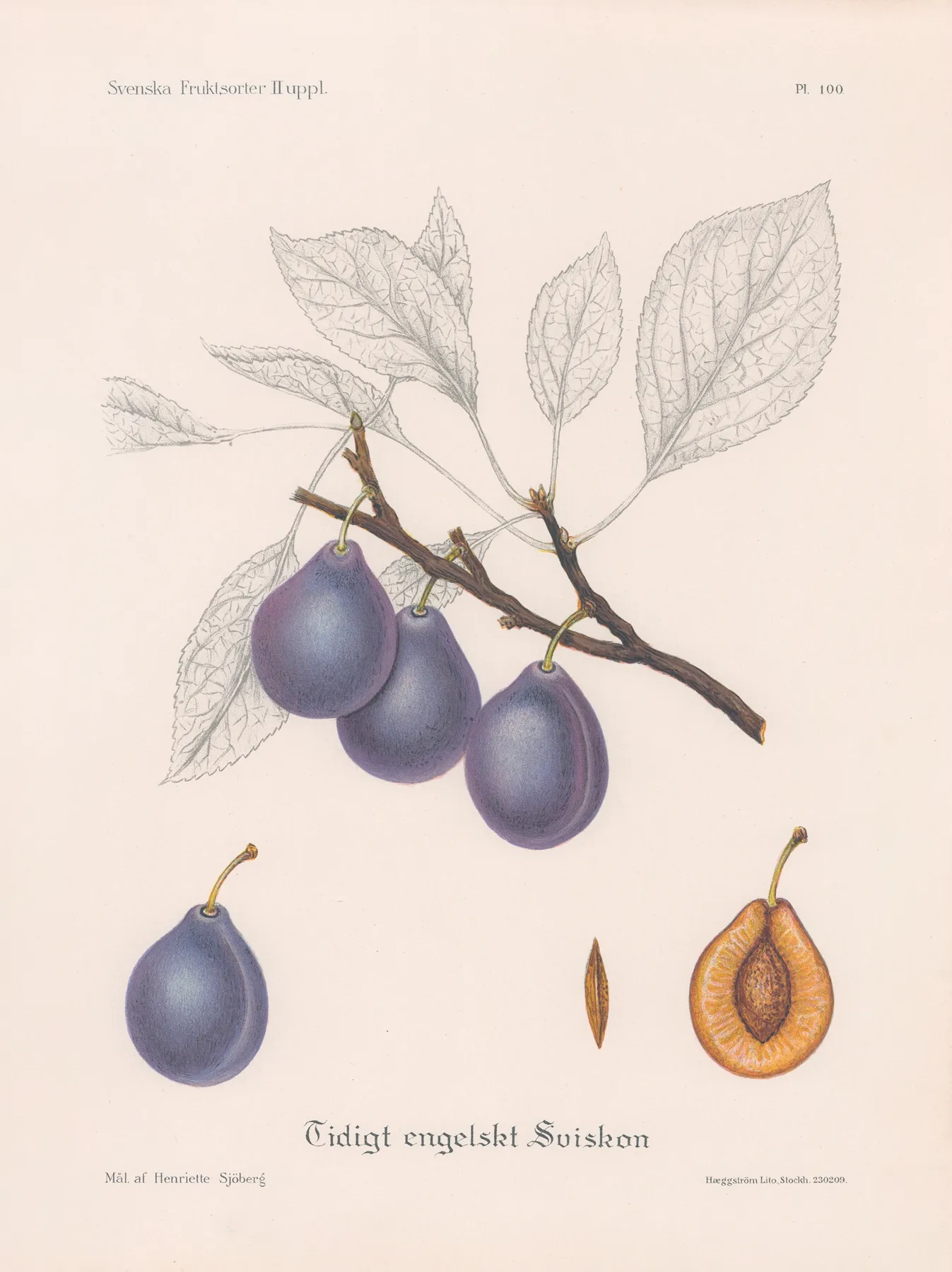
Tidigt engelskt sviskon (1924)
Tidigt engelskt|Svenska Fruktsorter II uppl. PI. 100. Tidigt engelskt Suiskon Mäl. af Henr
Tidigt engelskt sviskon (1924)
Ten ways of seeing
- measured cast amber
- upright 1.34 : 1
First Look
江馆清秋,晨起看竹,烟光日影露气,皆浮动于疏枝密叶之间。
—— 清·郑板桥《题画竹》
On an autumn morning at the river lodge I looked at the bamboo: mist, sunlight, dew, all drifting among the sparse and dense leaves.
The sheet is vertical: the eye climbs and settles in the upper half. Let the plant stand before you look for detail. Then step in close: watch where colour meets line, and whether the line ever breaks. Third, find the darkest small patch: the whole tonal order is measured from there.
Name and Thing
No reliable binomial survives, so the printed title must serve. Neither name nor binomial survives: the printed title must do.
Form and Colour
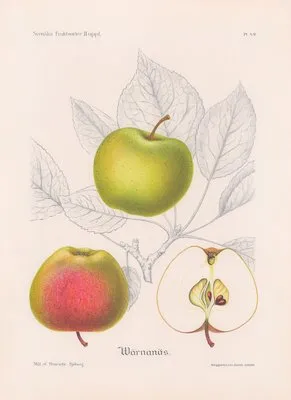
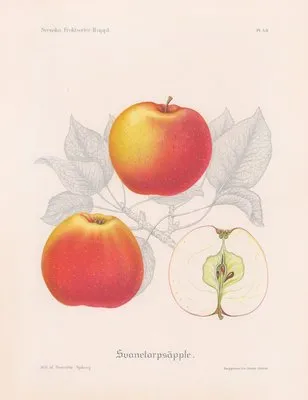
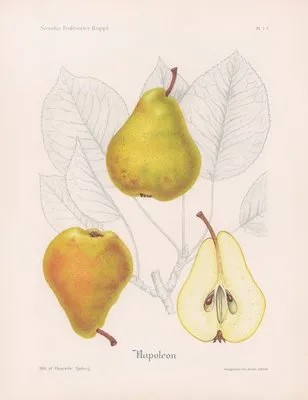
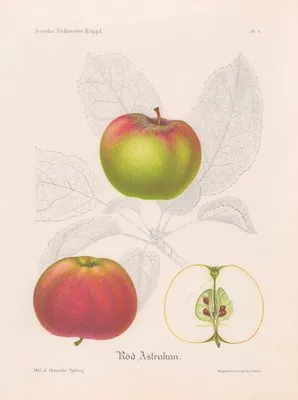
Measured on this plate: flower colour covers 2.5% of the sheet, foliage 0.0%, the cast amber. No other plate shares exactly this measure. Fruit plates pair the whole fruit with a section: the outline identifies the variety, the cut reveals skin thickness, core size and seed arrangement — the evidence of registration.No colour group is recorded. Read the outline, then the colour layers, then the brush.
Composition
The sheet is tall. No details are appended: a plate for looking, not for keying out. The plant covers only 12% of the sheet, centred below centre; the emptiness is where the eye rests.
Line and Colour
After 1900 photography and colour reproduction ran alongside watercolour: accuracy rose, the cut of the burin disappeared. Craft leaves franker evidence than inscriptions. If you mean to copy it: this is a photomechanical record — match the colours directly, do not imitate the printing grain.
Poetic Resonance
秋风门外旌旗动,晓露庭中橘柚香。
—— 唐·刘禹锡《窦朗州见示与澧州元郎中早秋赠荅命同作》
The poem gives the mood first and the picture supplies the form; set the line beside the plate and the fruit becomes its resting point.
Symbolism
In China the pomegranate means many sons, the peach long life, the orange good fortune; in Europe the apple is temptation and knowledge, the grape abundance and sacrifice. In a flora it is a species first and a symbol second; the order is worth keeping.
Season and Place
a fruit portfolio spans the whole harvest. Temperate fruits came mostly from Eurasia, later from the Americas. Nineteenth-century nurseries printed varietal albums for trade and exhibition: every fruit on the page was a saleable claim. The year 1924 on the plate is that of publication, not of flowering — the gathering came a year or two earlier. Read the locality and the flowering season both with a discount: one is hearsay, the other a ten-day peak.
The Book and the Hand
“Swedish fruit varieties (Svenska fruktsorter)” carries only Henriette Sjöberg's name. The image is public domain; the hand-colouring is still one person's hand.
What to Take Away
Appreciation is not knowledge but habit — one more look each time. The flower of that year is dust, yet its image on paper has outlived every living cousin.
About this plate
Tidigt engelskt sviskon (1924) is plate 36, from Swedish fruit varieties (Svenska fruktsorter), drawn by Henriette Sjöberg. This public-domain plate is reproduced at high resolution, free to view and download. Publication: Stockholm, P. A. Norstedt & Söners Förlag, 1924.