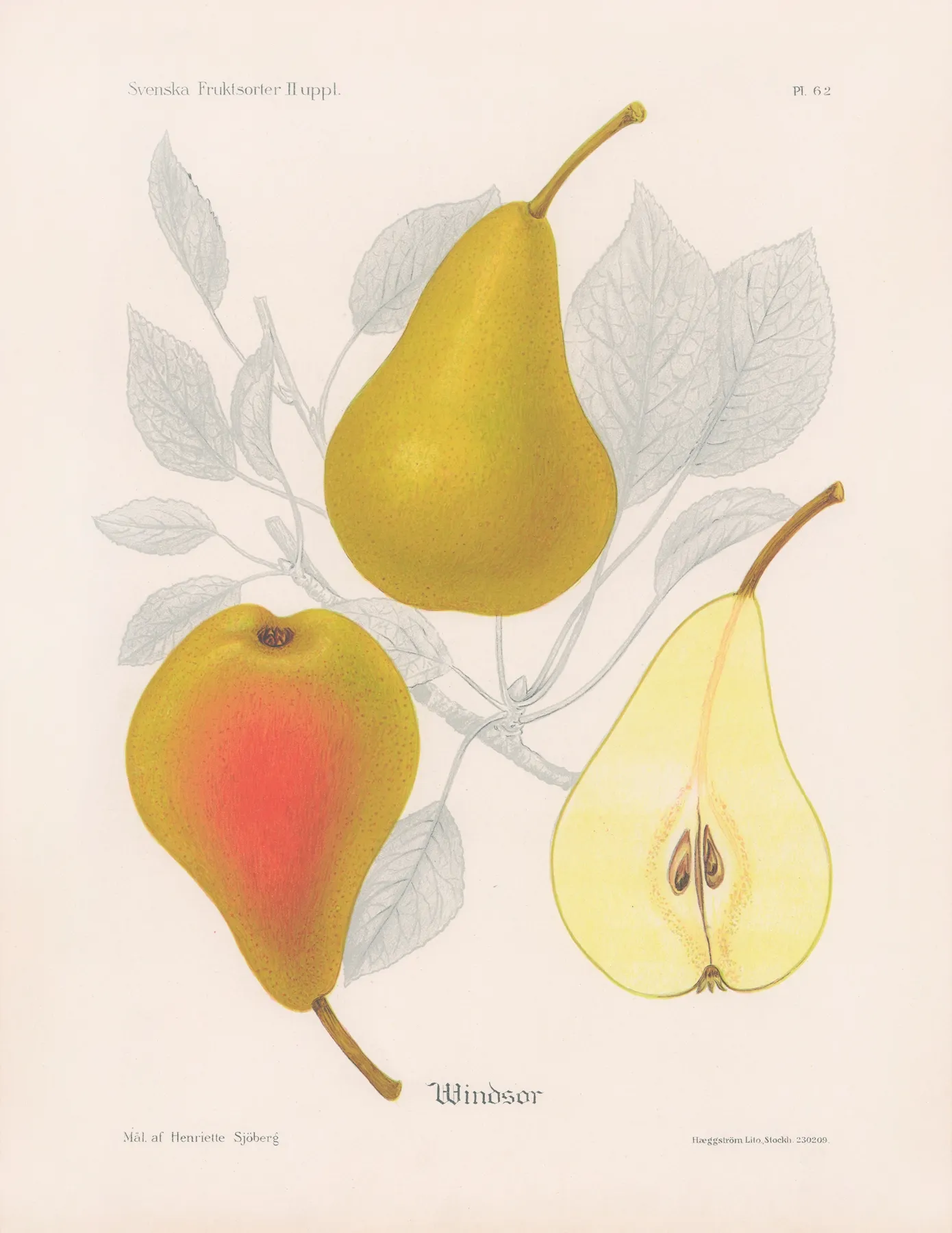
Windsor (1924)
Svenska Fruktsorter II uppl. PI. 62 AWindsar Mäl. af Henriette Sjöberé Haæggström Lito,Stock
Windsor (1924)
About this plate
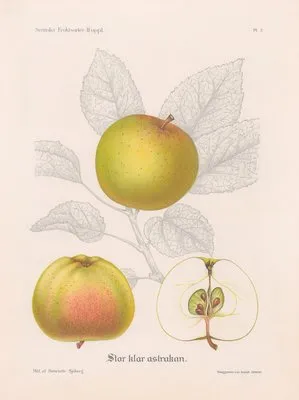
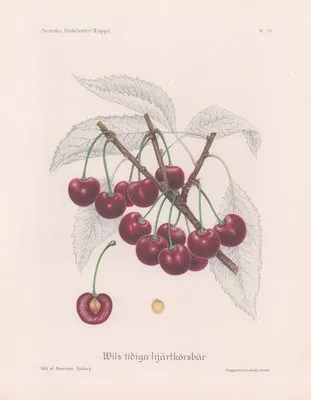
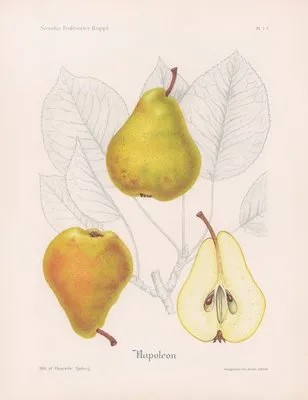
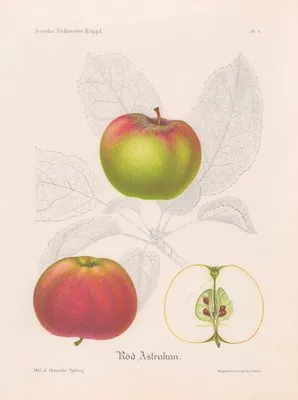
Windsor (1924) is plate 27, from Swedish fruit varieties (Svenska fruktsorter), drawn by Henriette Sjöberg. This public-domain plate is reproduced at high resolution, free to view and download. Publication: Stockholm, P. A. Norstedt & Söners Förlag, 1924.
Twelve ways of seeing
- measured cast yellow-green
- slightly upright 1.29 : 1
- published 1924
- Plate 27
Not a catalogue entry but a way of looking: how to stand, what to notice, how the line was cut, when it flowers, where it came from, who made it — and then the poems and the classics that taught China to see the same flower. Read the twelve in order and the plate opens.
-
First Look
凡画山水,意在笔先。
—— 唐·王维《山水论》
In painting, the intention precedes the brush.
Slightly taller than wide; the eye lands above centre. Then step in close: watch where colour meets line, and whether the line ever breaks. Third, find where the yellow is deepest: the whole tonal order is measured from that patch. The pose leans right: the upper half carries 16 points further right than the lower — a living thing, not a diagram.
-
Name and Thing
No reliable binomial survives, so the printed title must serve. Neither name nor binomial survives: the printed title must do.
-
Form and Colour
Measured on this plate: flower colour covers 15.3% of the sheet, foliage 0.0%, the cast yellow-green with a second note of amber. No other plate shares exactly this measure. Fruit plates pair the whole fruit with a section: the outline identifies the variety, the cut reveals skin thickness, core size and seed arrangement — the evidence of registration. Filed under yellow — a honey-yellow, built in washes from a pale ground. A single plant, laid out with nothing hidden.
-
Composition
Slightly taller than wide, the plant set a little above centre. (about 1.29 : 1) No details are appended: a plate for looking, not for keying out. The plant covers only 18% of the sheet, centred a little left of centre; the emptiness is where the eye rests. Cover the margins with your thumb and the plate suffocates; uncover them and the flower breathes again.
-
Line and Colour
After 1900 photography and colour reproduction ran alongside watercolour: accuracy rose, the cut of the burin disappeared. There is evidence on the back too: the plate mark pressed into the paper, the slight relief of the pigment, lines worn shallow in a later printing.
-
Season
Late summer into autumn, variety by variety; a fruit portfolio spans the whole harvest. The year 1924 on the plate is that of publication, not of flowering — the gathering came a year or two earlier. Note the season. Phenology is the most practical tool of appreciation.
-
Provenance
Temperate fruits came mostly from Eurasia, later from the Americas. Nineteenth-century nurseries printed varietal albums for trade and exhibition: every fruit on the page was a saleable claim. In the same volume the kin are shelved together; set several plates side by side.
-
The Book and the Hand
“Swedish fruit varieties (Svenska fruktsorter)” was drawn by Henriette Sjöberg and published 1924. This plate is Plate 27. The image is public domain; the hand-colouring is still one person's hand.
-
Poetic Resonance
馆娃宫中春日暮,荔枝木瓜花满树。
—— 唐·王建《舞曲歌辞 白纻歌二首 二》
The poem gives the mood first and the picture supplies the form; set the line beside the plate and the yellow the fruit becomes its resting point.
-
The Written Tradition
后皇嘉树,橘徕服兮。受命不迁,生南国兮。
—— 战国·屈原《九章·橘颂》
O lovely tree, the orange, sent to serve here below; you take your charge and will not move, born in the southern land.
The Book of Songs has a quince given and a jade pendant returned — fruit as ritual gift already in pre-Qin China. The difference is not of quality but of question: Europe asks what it is, China asks whom it resembles.
-
Symbolism
In China the pomegranate means many sons, the peach long life, the orange good fortune; in Europe the apple is temptation and knowledge, the grape abundance and sacrifice. This plate leans yellow, which in flower language adds one more degree of feeling. Flower language was added later; the flower knows nothing of it, and that innocence is part of its power.
-
What to Take Away
Appreciation is not knowledge but habit — one more look each time. Two centuries on, the plant may still flower in some garden; the one on this sheet stopped in the season of 1924.