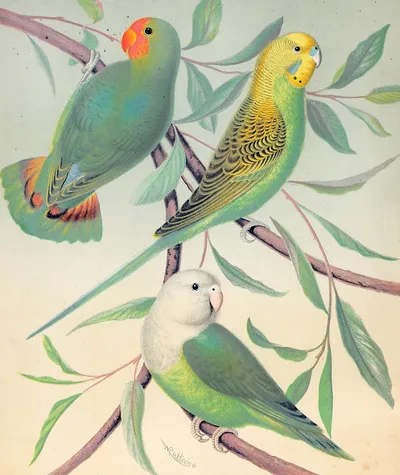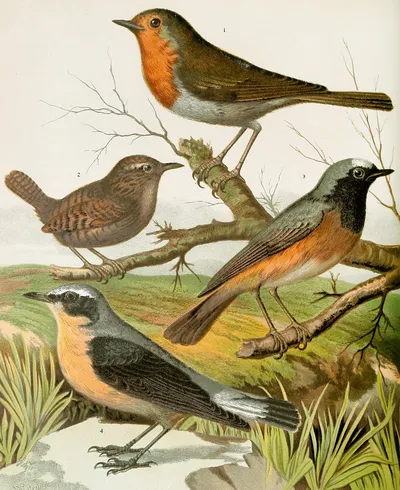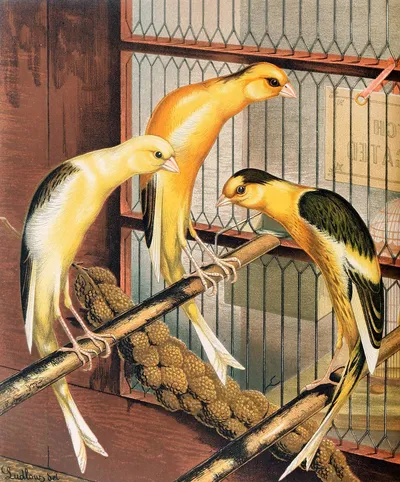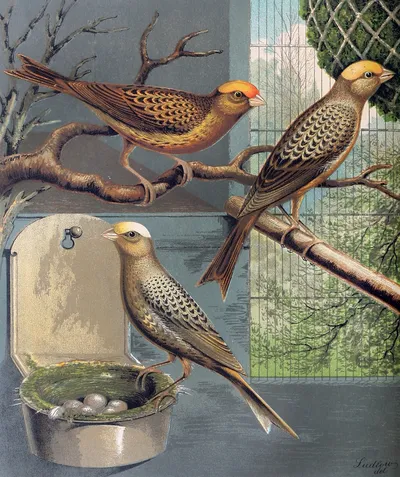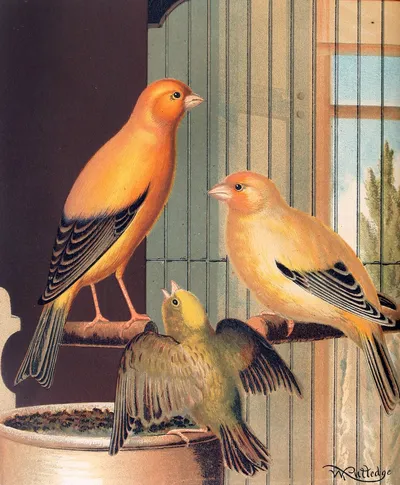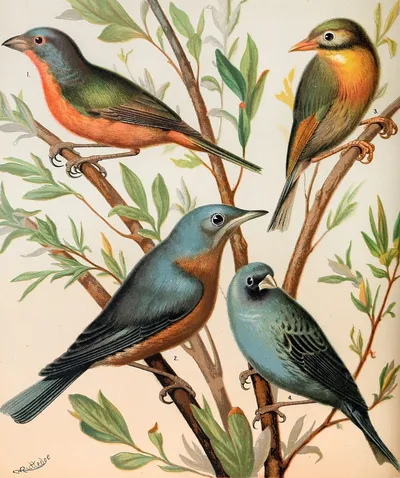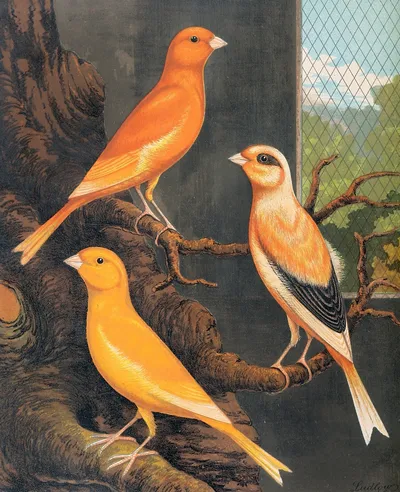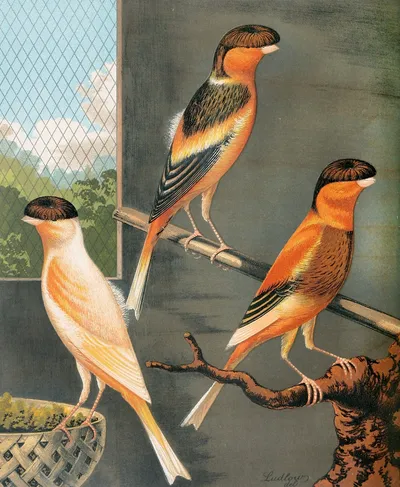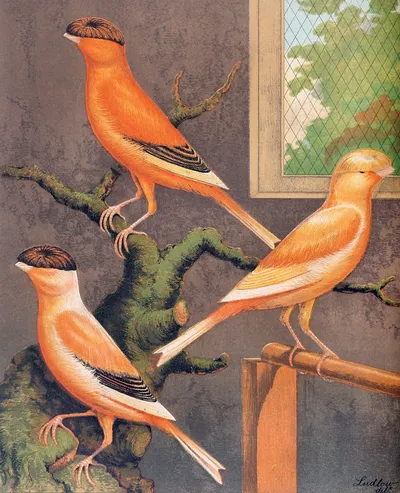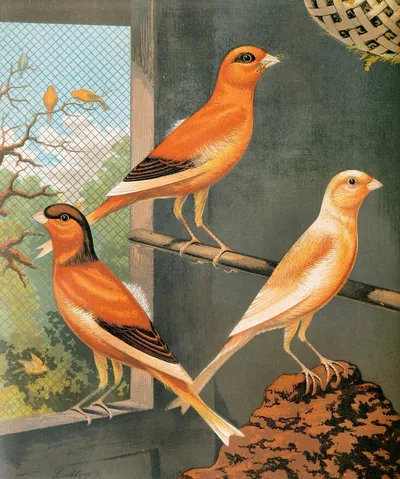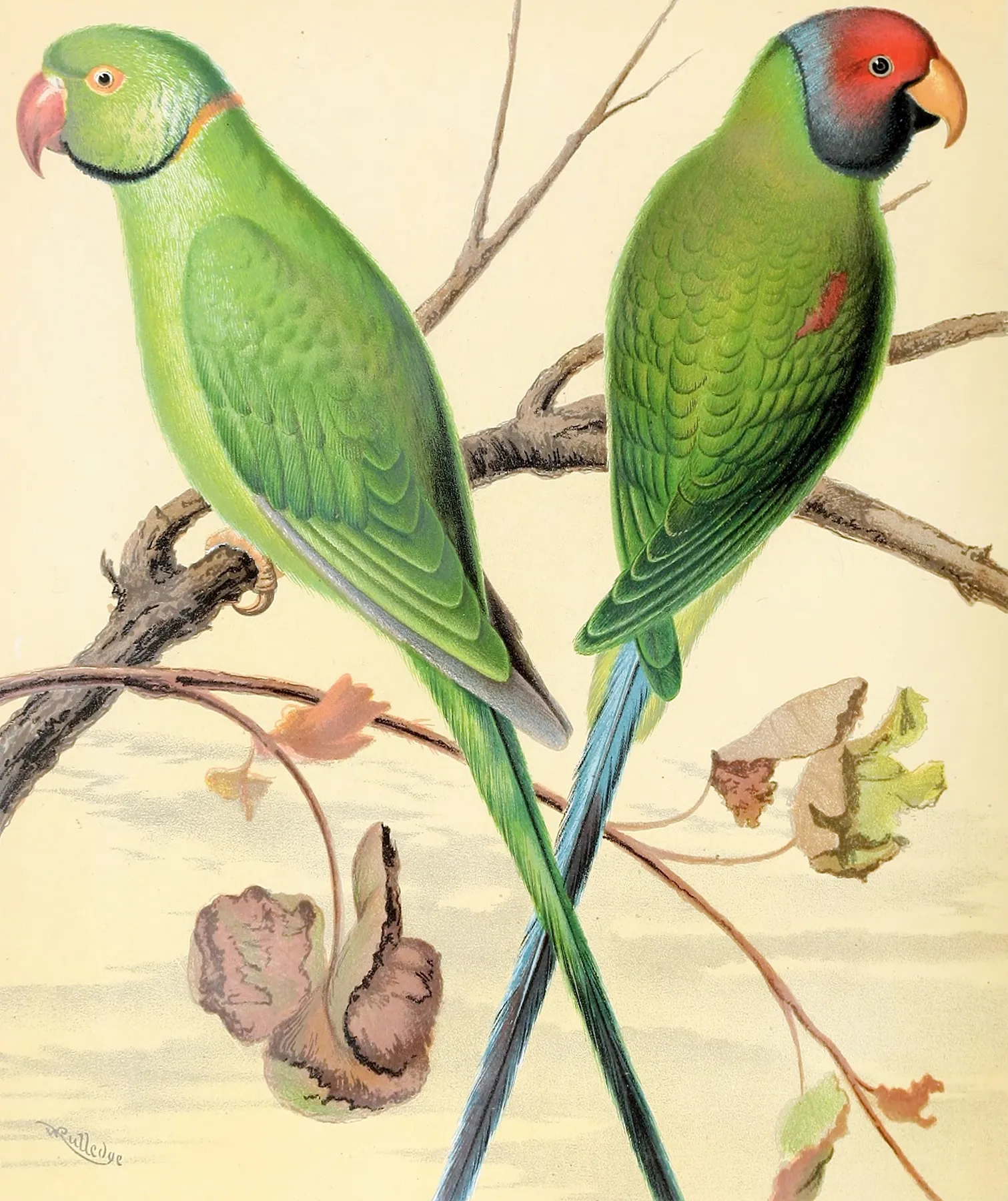
Ring-Necked Parrakeet, Plum-Headed Parrakeet (1878)
Ten ways of seeing
- slightly upright 1.19 : 1
First Look
凡画山水,意在笔先。
—— 唐·王维《山水论》
In painting, the intention precedes the brush.
Slightly taller than wide; the eye lands above centre. Then step in close: watch where colour meets line, and whether the line ever breaks. Third, find the darkest small patch: the whole tonal order is measured from there.
Name and Thing
No reliable binomial survives, so the printed title must serve. Neither name nor binomial survives: the printed title must do.
Form and Colour
Flowering trees and shrubs put out branches first; blossoms open before or with the leaves, usually five thin, translucent petals around a cluster of fine stamens.No colour group is recorded. A single plant, laid out with nothing hidden.
Composition
Slightly taller than wide, the plant set a little above centre. No details are appended: a plate for looking, not for keying out. Old plates set the plant slightly off centre, with unequal margins — that small imbalance is what keeps it alive.
Line and Colour
In the later nineteenth century chromolithography took over: colour printed rather than painted, line demoted. Take a loupe to three places: petal edge, leaf vein, caption. An unbroken line means engraving; colour crossing the outline means a hand. If you mean to copy it: block in the broad shapes and colours first, detail last; lithographic softness comes from thin washes — two or three pale layers will get you close.
Poetic Resonance
更落尽梨花,飞尽杨花,春也成憔悴。
—— 《莺啼序·重过金陵》
The poem gives the mood first and the picture supplies the form; set the line beside the plate and the corolla becomes its resting point.
Symbolism
Plum is solitude, peach is marriage, apricot is spring itself, crabapple is a fragile fate; the hibiscus, opening at dawn and falling at dusk, is impermanence. Meanings change their tune: the same flower can say opposite things within a century.
Season and Place
Mid spring: plum first, then peach and apricot, cherry last — the season keeps its order. cherry and crabapple went east to Japan and west to Europe. The year 1878 on the plate is that of publication, not of flowering — the gathering came a year or two earlier. See this kind of plate in the flowering season if you can: once you have met the living flower, you stop reading only colour.
The Book and the Hand
“The illustrated book of canaries and cage-birds, British and foreign” carries only W. A . Blakston's name. From drawing to plate the sheet passed through several hands — the engraver aimed at accuracy, the colourist at speed, and between them lies each plate's unevenness.
What to Take Away
Appreciation is not knowledge but habit — one more look each time. The flower of that year is dust, yet its image on paper has outlived every living cousin.