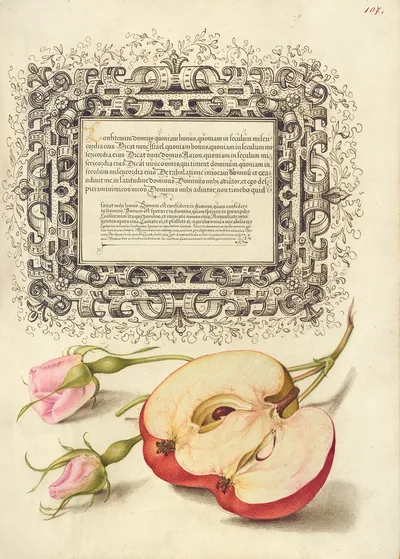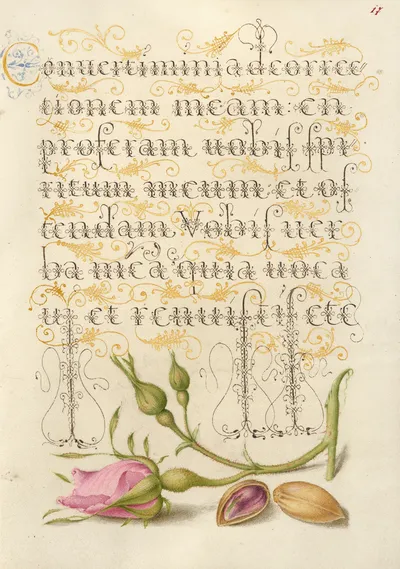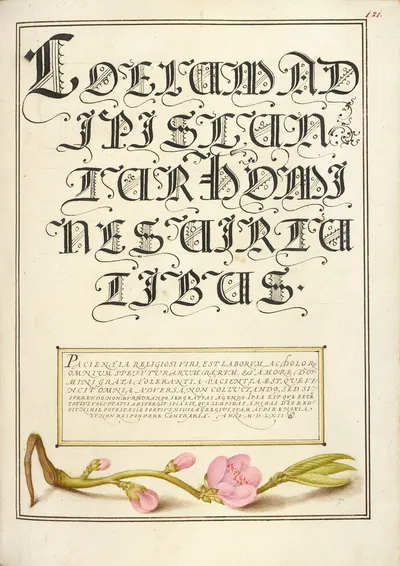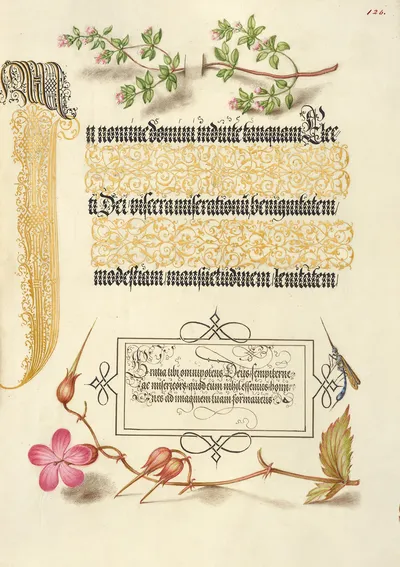
French Rose and Dwarf Nasturtium (1561–1596)
Ten ways of seeing
- upright 1.40 : 1
First Look
夫象物必在于形似,形似须全其骨气。
—— 唐·张彦远《历代名画记》
Likeness is the threshold; bone-and-breath is the point.
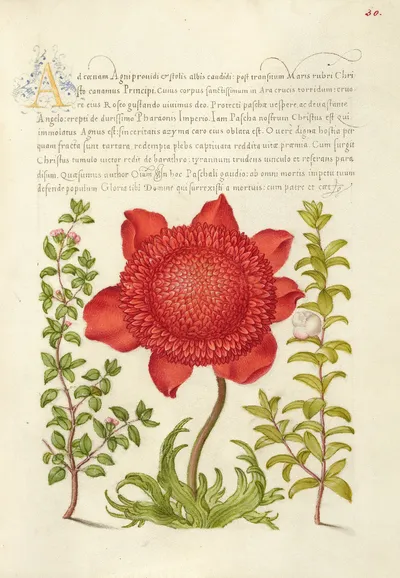
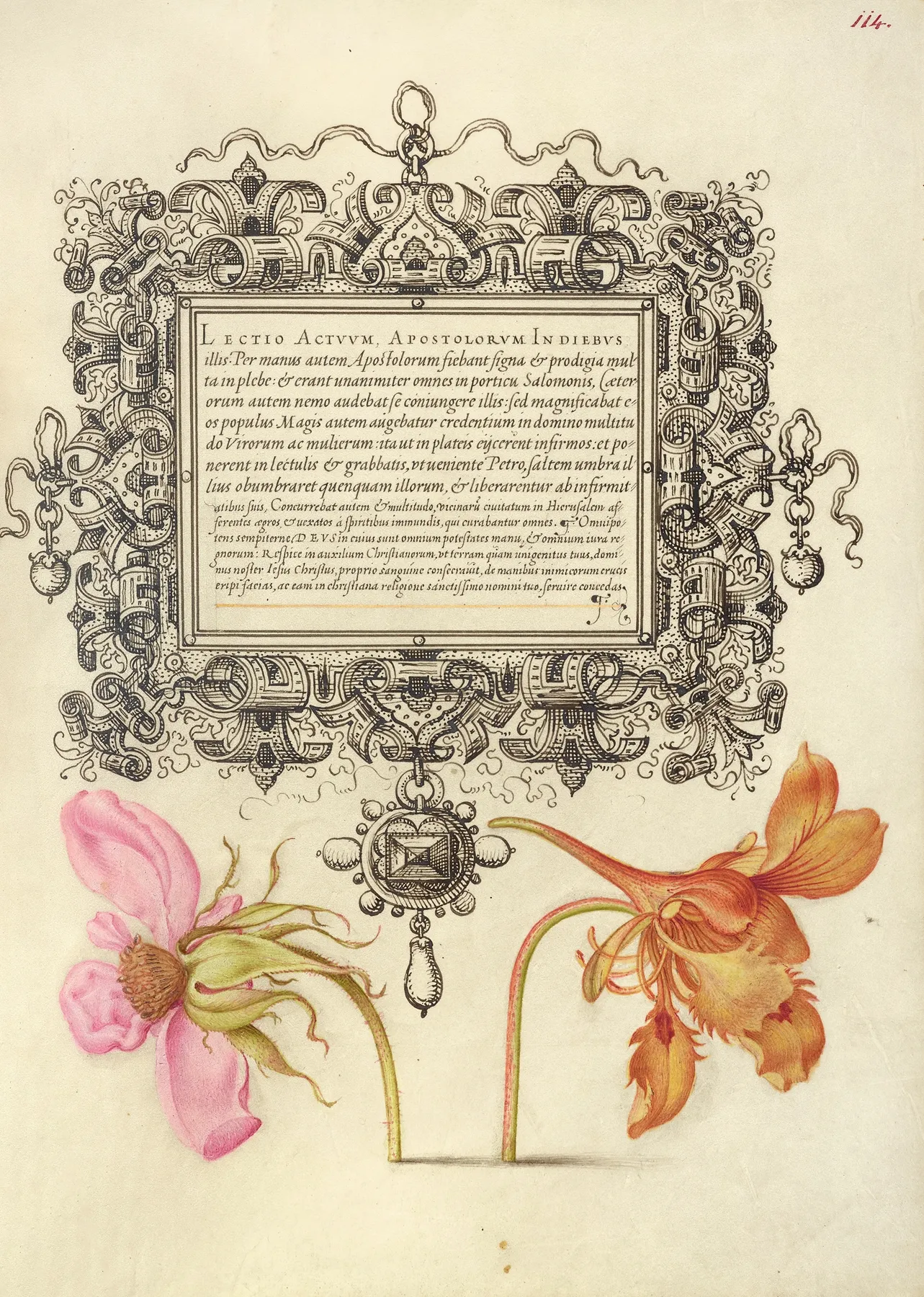
The sheet is vertical: the eye climbs and settles in the upper half. Let the plant stand before you look for detail. Then step in close: watch where colour meets line, and whether the line ever breaks. Third, find the darkest small patch: the whole tonal order is measured from there.
Name and Thing
No reliable binomial survives, so the printed title must serve. Neither name nor binomial survives: the printed title must do.
Form and Colour
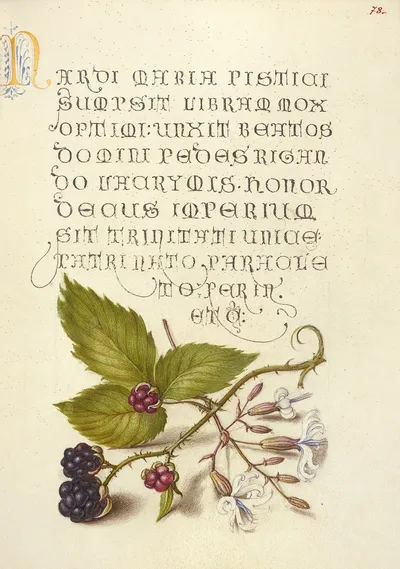
Roses are shrubs or scramblers with pinnate leaves of three to seven serrated leaflets; the double flowers open in crumpled, inward-curling layers around a small knot of yellow stamens.No colour group is recorded. Read the outline, then the colour layers, then the brush.
Composition
Tall and narrow, the plant rising in one movement with generous margins — the upright format of most floras. No details are appended: a plate for looking, not for keying out. Cover the margins with your thumb and the plate suffocates; uncover them and the flower breathes again.
Line and Colour
Before 1700 most botanical figures came from woodcut: thick, hard lines in relief, colour brushed on afterwards. Craft leaves franker evidence than inscriptions. If you mean to copy it: take its skeleton, its margins and the order of its colours; the burin's hatching is the language of copper — suggest it with pencil density, do not imitate it stroke for stroke.
Poetic Resonance
暗香一阵连风起,知有蔷薇涧底花。
—— 宋·王安石《同熊伯通自定林过悟真二首》
The poem gives the mood first and the picture supplies the form; set the line beside the plate and the corolla becomes its resting point.
Symbolism
In Europe the rose means love and secrecy ('sub rosa'); in Chinese verse the rambling rose leans and clings — lingering attachment rather than ardour. In a flora it is a species first and a symbol second; the order is worth keeping.
Season and Place
Late spring into early summer, peaking in May — the first flush of the garden year. Widespread in the temperate north. Chinese gardeners knew roses since the Han. The year 1561 on the plate is that of publication, not of flowering — the gathering came a year or two earlier. Read the locality and the flowering season both with a discount: one is hearsay, the other a ten-day peak.
The Book and the Hand
“The Model Book of Calligraphy (Mira calligraphiae monumenta)” carries only Joris Hoefnagel's name. The image is public domain; the hand-colouring is still one person's hand.
What to Take Away
Next time you stand before a flowering plant, give it three minutes: leaf arrangement, direction of the flower, the darkest patch. A flora exists to be consulted; look long enough and you forget to consult — someone in 1561 gave a whole day to a single flower.