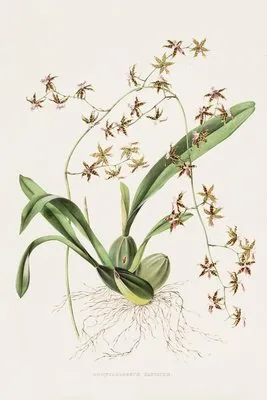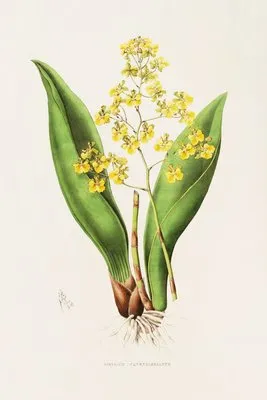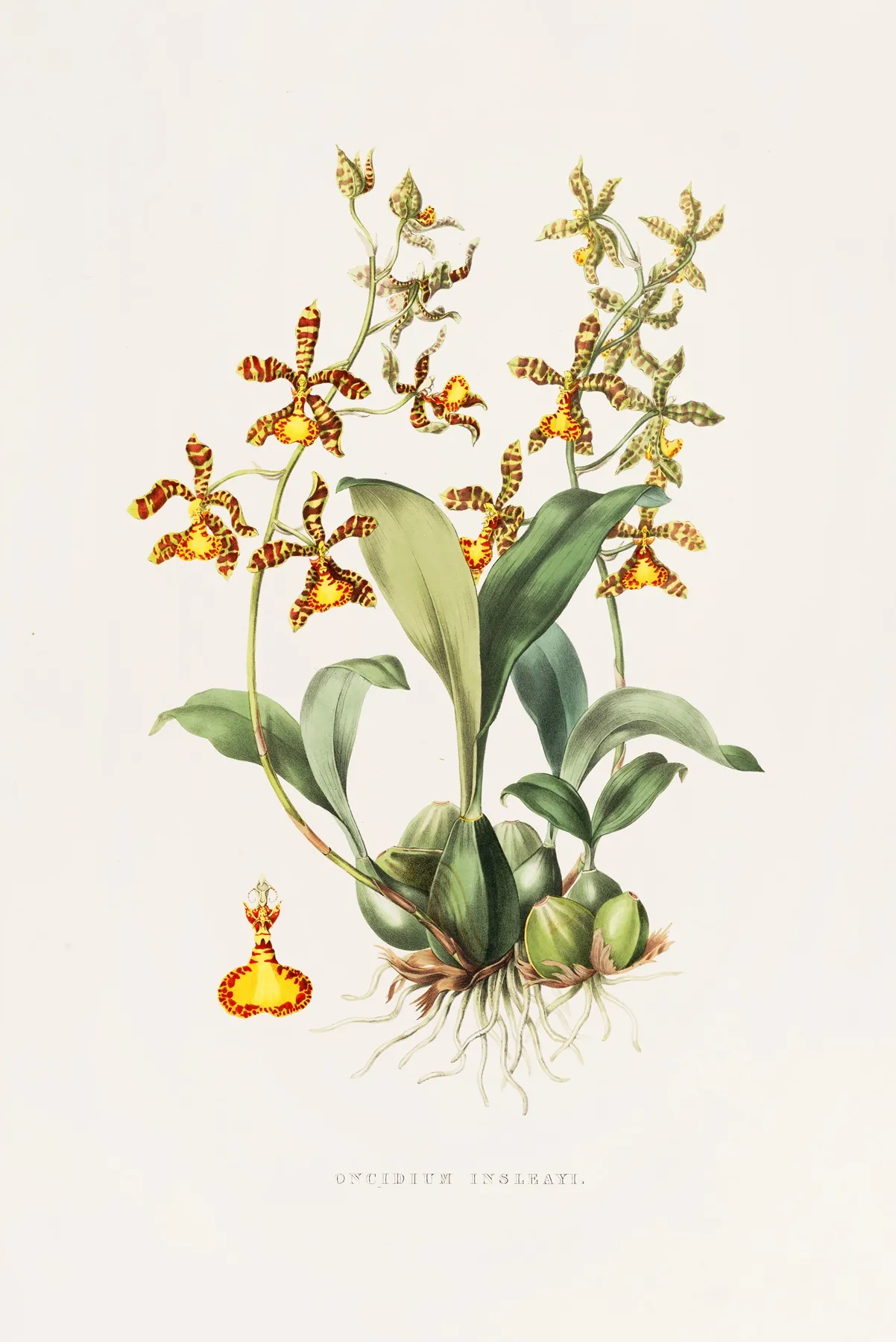
Oncidium Insleayii
Oncidium Insleayii
Oncidium Insleayii
Ten ways of seeing
- measured cast yellow-green
- upright 1.50 : 1
First Look
竖划三寸,当千仞之高;横墨数尺,体百里之迥。
—— 南朝宋·宗炳《画山水序》
A vertical stroke of three inches stands for a cliff of a thousand fathoms; a few feet of ink holds a hundred li.
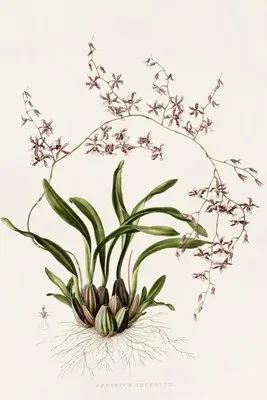
The sheet is vertical: the eye climbs and settles in the upper half. Let the plant stand before you look for detail. Then step in close: watch where colour meets line, and whether the line ever breaks. Third, find the darkest small patch: the whole tonal order is measured from there.
Name and Thing
The binomial is Oncidium insleayii: the first word is the genus it belongs among, the second the epithet that sets it apart. Two words carry a whole provenance. No established Chinese name exists, so it is cited by its binomial alone.
Form and Colour
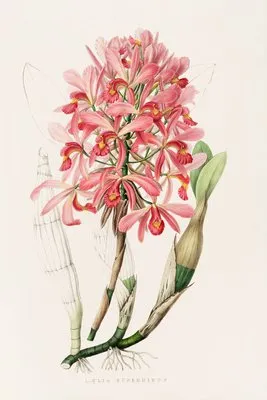
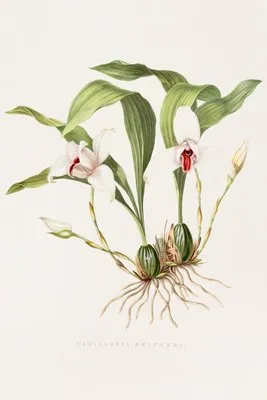
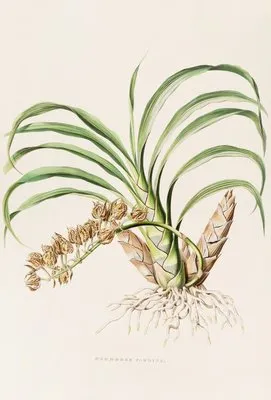
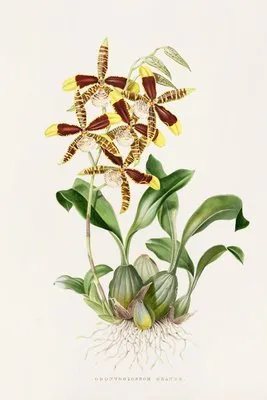
Measured on this plate: flower colour covers 9.3% of the sheet, foliage 4.8%, the cast yellow-green with a second note of amber. No other plate shares exactly this measure. Orchids carry pseudobulbs or fleshy roots; six tepals, one modified into a lip that serves as a landing stage, and a column uniting stamens and pistil — a structure unique to the family.No colour group is recorded. A single plant, laid out with nothing hidden.
Composition
The sheet is tall. No details are appended: a plate for looking, not for keying out. The plant covers only 16% of the sheet, centred near the centre; the emptiness is where the eye rests.
Line and Colour
The first half of the nineteenth century moved from copper to steel to lithography; stipple could render the softest transition. There is evidence on the back too: the plate mark pressed into the paper, the slight relief of the pigment, lines worn shallow in a later printing. If you mean to copy it: take its skeleton, its margins and the order of its colours; the burin's hatching is the language of copper — suggest it with pencil density, do not imitate it stroke for stroke.
Poetic Resonance
北风受节南雁翔,崇兰委君时菊芳。
—— 唐·王勃《秋夜长》
The poem gives the mood first and the picture supplies the form; set the line beside the plate and the corolla becomes its resting point.
Symbolism
In China the orchid is the gentleman who blooms unseen; in Victorian Europe it was luxury and obsession, a single new species worth a fortune. Flower language was added later; the flower knows nothing of it, and that innocence is part of its power.
Season and Place
Varies by genus: temperate terrestrials flower in spring and summer, tropical epiphytes almost year-round. Worldwide, richest on tropical mountains. Chinese cymbidiums come from the hills of the south. The year 1837 on the plate is that of publication, not of flowering — the gathering came a year or two earlier. See this kind of plate in the flowering season if you can: once you have met the living flower, you stop reading only colour.
The Book and the Hand
“The Orchidaceae of Mexico and Guatemala” carries only James Bateman, Sarah Ann Drake's name. From drawing to plate the sheet passed through several hands — the engraver aimed at accuracy, the colourist at speed, and between them lies each plate's unevenness.
What to Take Away
Appreciation is not knowledge but habit — one more look each time. A flora exists to be consulted; look long enough and you forget to consult — someone in 1837 gave a whole day to a single flower.
About this plate
Oncidium Insleayii is plate 10, from The Orchidaceae of Mexico and Guatemala, drawn by James Bateman, Sarah Ann Drake. This public-domain plate is reproduced at high resolution, free to view and download. Publication: London, Ridgway, 1837-1843.