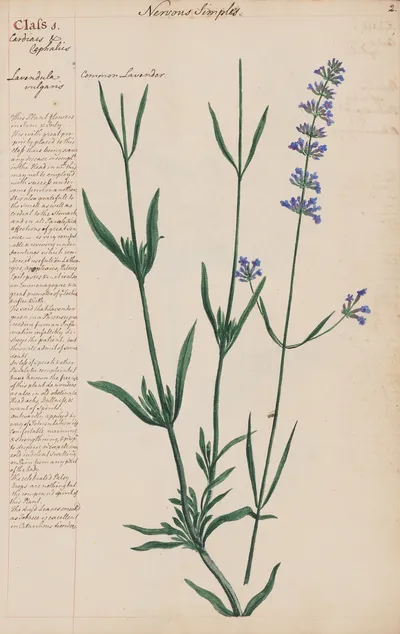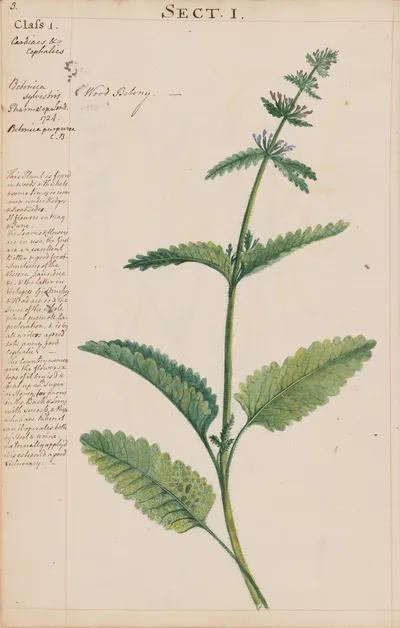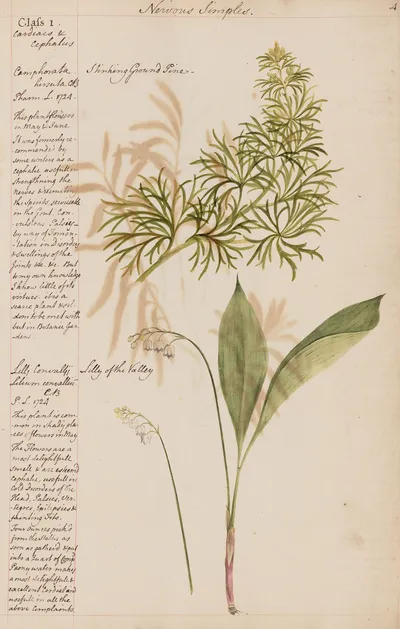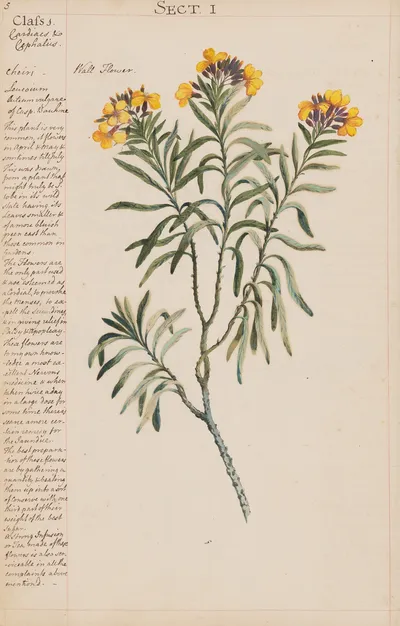
Peony (1780)
Ten ways of seeing
- upright 1.58 : 1
First Look
真山水之川谷,远望之以取其势,近看之以取其质。
—— 宋·郭熙《林泉高致·山水训》
Mountains and valleys: from afar take their momentum, up close take their texture — the two distances from which any picture is read.
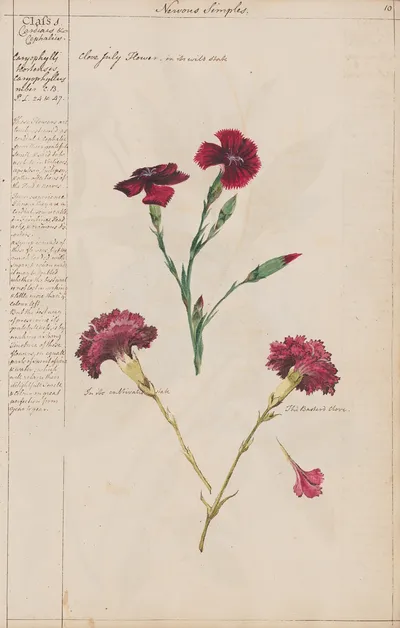
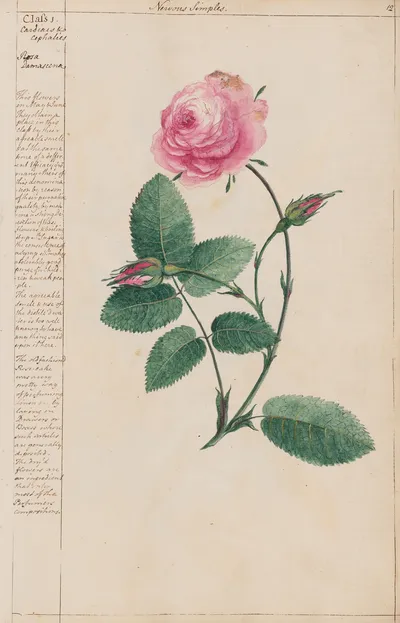
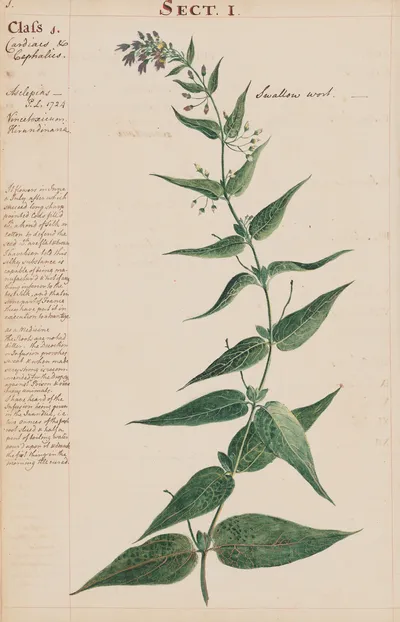
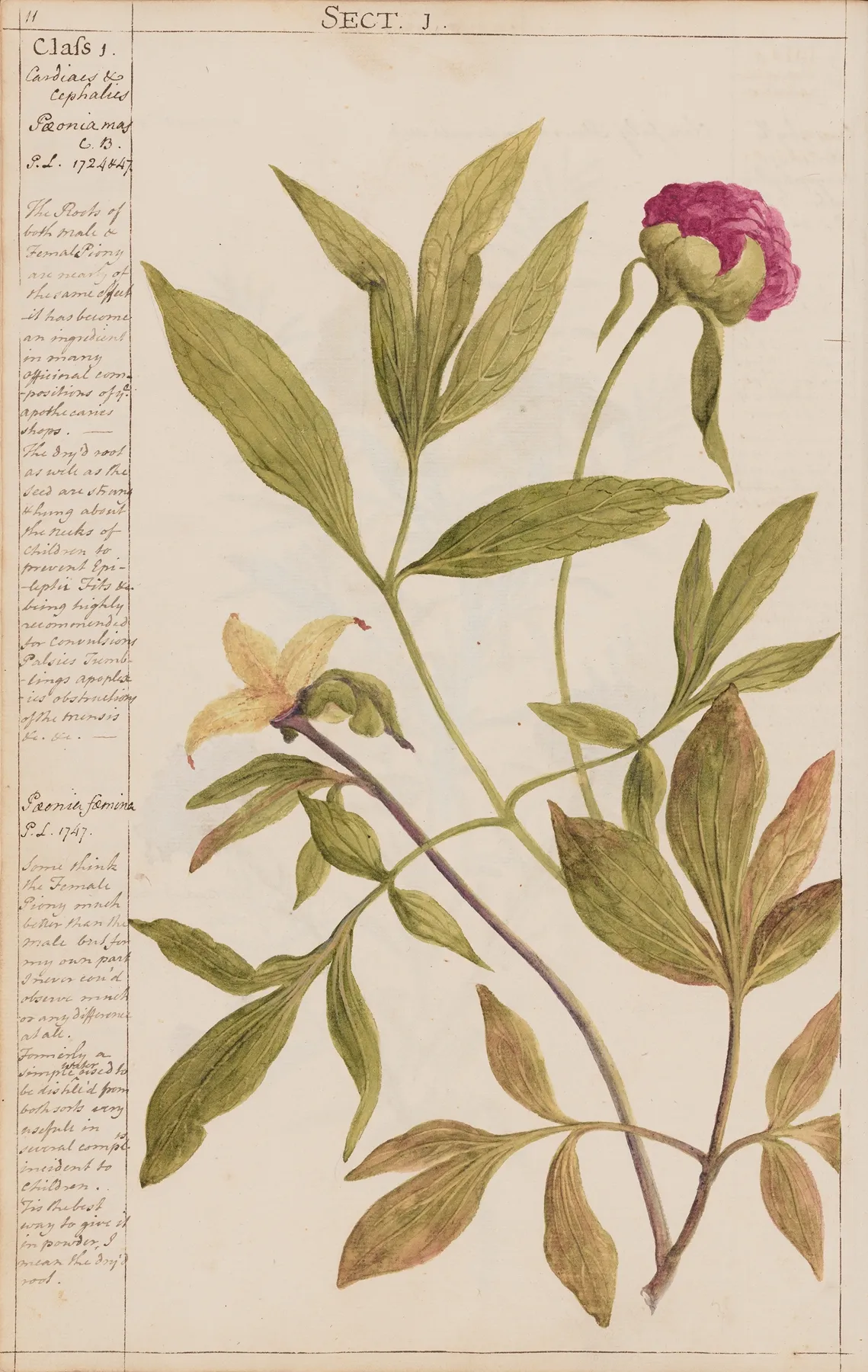
The sheet is vertical: the eye climbs and settles in the upper half. Let the plant stand before you look for detail. Then step in close: watch where colour meets line, and whether the line ever breaks. Third, find the darkest small patch: the whole tonal order is measured from there.
Name and Thing
No reliable binomial survives, so the printed title must serve. Neither name nor binomial survives: the printed title must do.
Form and Colour
Herbaceous peonies die back each year, tree peonies keep woody stems; both have twice-trifoliate leaves and huge double blooms, often blotched at the petal base.No colour group is recorded. Read the outline, then the colour layers, then the brush.
Composition
Tall and narrow, the plant rising in one movement with generous margins — the upright format of most floras. No details are appended: a plate for looking, not for keying out. Blank paper is not unfinished work: it is where the eye rests.
Line and Colour
Eighteenth-century plates are mostly copper engraving: hatched lines for shadow, then hand-colouring by another hand. Craft leaves franker evidence than inscriptions. If you mean to copy it: take its skeleton, its margins and the order of its colours; the burin's hatching is the language of copper — suggest it with pencil density, do not imitate it stroke for stroke.
Poetic Resonance
芍药初开百步香,小阑幽拚隔教廊。
—— 金朝·元好问《浣溪沙》
The poem gives the mood first and the picture supplies the form; set the line beside the plate and the corolla becomes its resting point.
Symbolism
The tree peony is 'national beauty and heavenly fragrance', an emblem of prosperity; the herbaceous peony is tenderness — given at parting, hence its name 'jiangli', 'about to leave'. Meanings change their tune: the same flower can say opposite things within a century.
Season and Place
Late April to early May, around the Grain Rain solar term. Native to China: tree peonies centred on Luoyang, herbaceous ones on Yangzhou. Most garden peonies in Europe descend from eighteenth-century Chinese imports. The year 1780 on the plate is that of publication, not of flowering — the gathering came a year or two earlier. See this kind of plate in the flowering season if you can: once you have met the living flower, you stop reading only colour.
The Book and the Hand
“Webster's distribution of English medicinal plants & c” carries only Joshua Webster's name. From drawing to plate the sheet passed through several hands — the engraver aimed at accuracy, the colourist at speed, and between them lies each plate's unevenness.
What to Take Away
Carry three rules away: whole before detail; line before colour; picture before book. A flora exists to be consulted; look long enough and you forget to consult — someone in 1780 gave a whole day to a single flower.