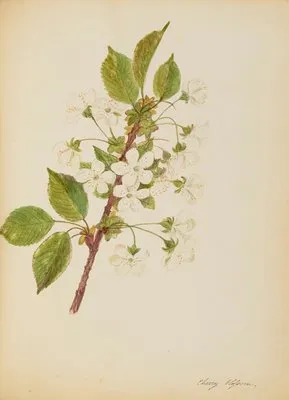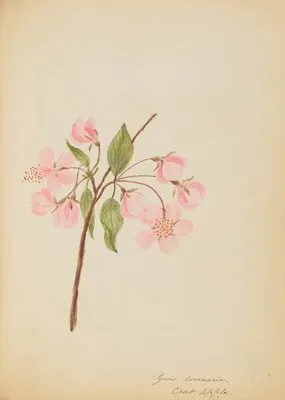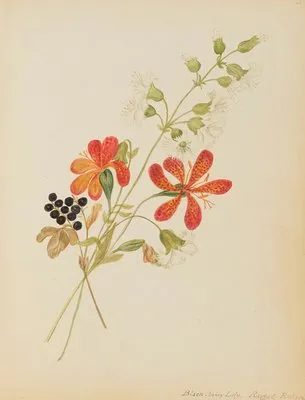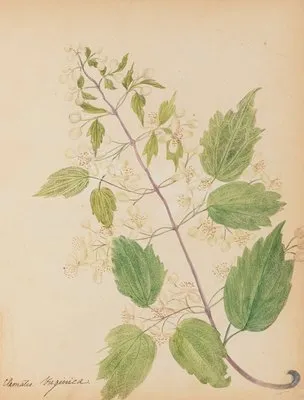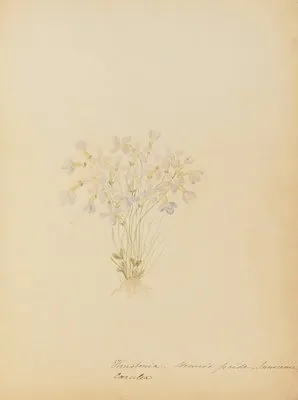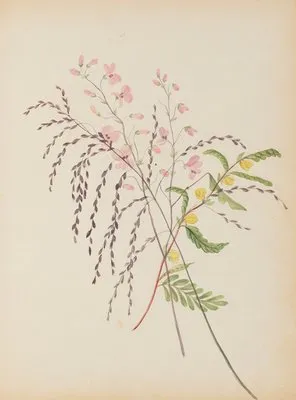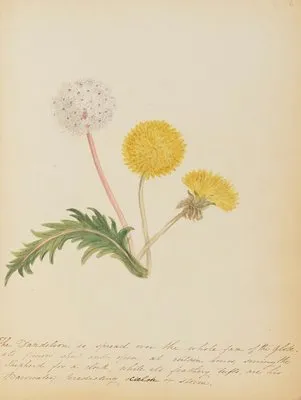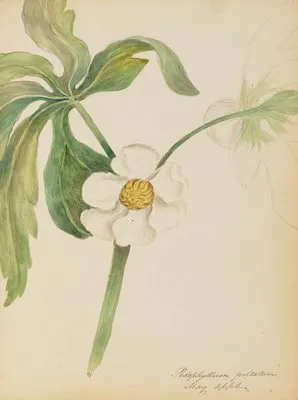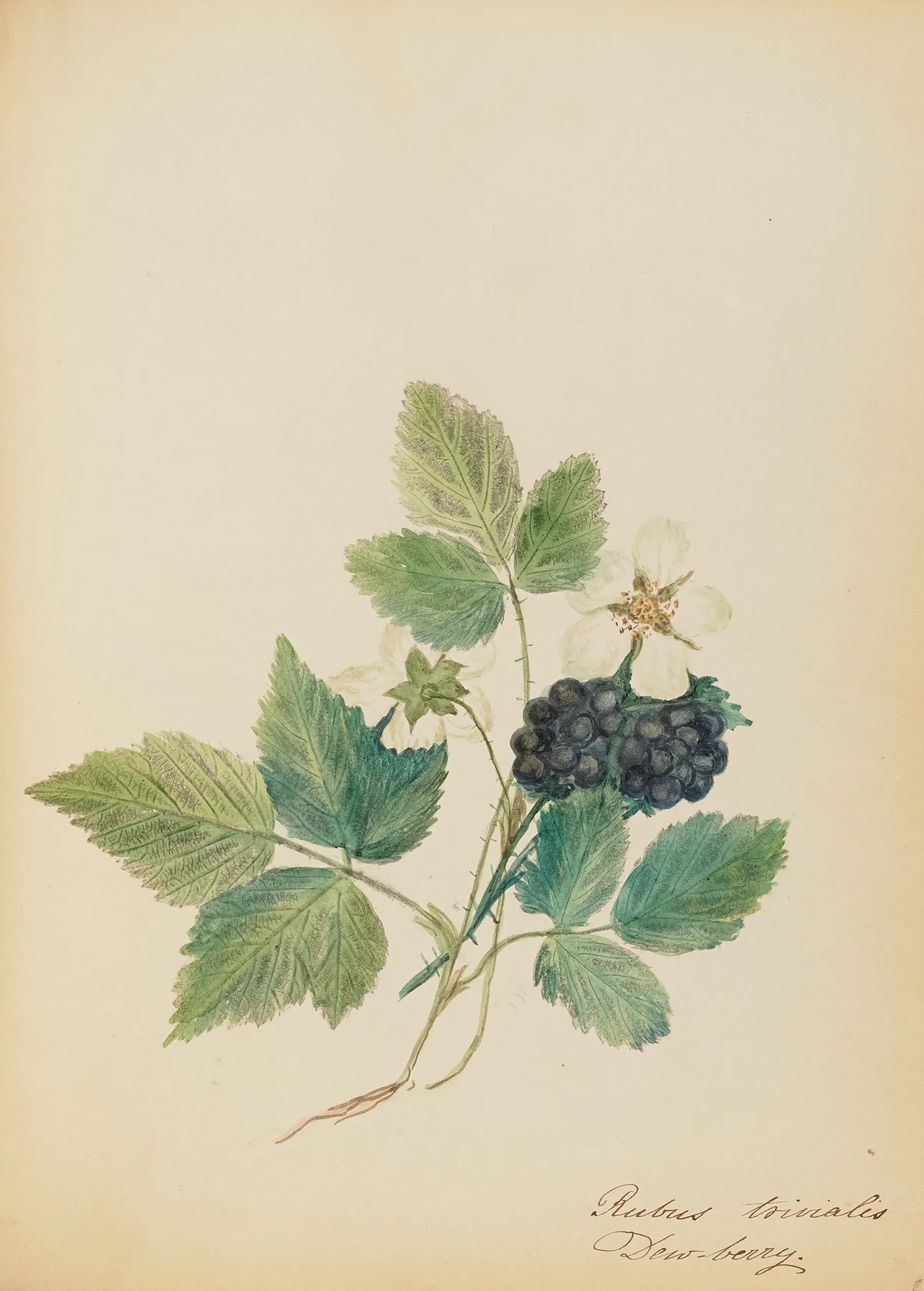
Rubus trivialis. Dew-berry (1856)
Hunus trinals|美南露莓
Rubus trivialis. Dew-berry (1856)
Ten ways of seeing
- measured cast yellow-green
- upright 1.40 : 1
First Look
江馆清秋,晨起看竹,烟光日影露气,皆浮动于疏枝密叶之间。
—— 清·郑板桥《题画竹》
On an autumn morning at the river lodge I looked at the bamboo: mist, sunlight, dew, all drifting among the sparse and dense leaves.
The sheet is vertical: the eye climbs and settles in the upper half. Let the plant stand before you look for detail. Then step in close: watch where colour meets line, and whether the line ever breaks. Third, find where the orange is deepest: the whole tonal order is measured from that patch. The pose leans left: the upper half carries 15 points further left than the lower — a living thing, not a diagram.
Name and Thing
Only the genus Rubus is given; species-level names came later. The Chinese name 美南露莓 is a modern rendering of the Latin, not an old garden name.
Form and Colour
Measured on this plate: flower colour covers 2.9% of the sheet, foliage 6.6%, the cast yellow-green with a second note of amber. No other plate shares exactly this measure. Fruit plates pair the whole fruit with a section: the outline identifies the variety, the cut reveals skin thickness, core size and seed arrangement — the evidence of registration. Filed under orange — an amber orange, built in washes from a pale ground. Three things fix the habit: leaf arrangement, tepal count, and how the flower is borne.
Composition
The sheet is tall. No details are appended: a plate for looking, not for keying out. The plant covers only 26% of the sheet, centred a little left of centre; the emptiness is where the eye rests.
Line and Colour
In the later nineteenth century chromolithography took over: colour printed rather than painted, line demoted. Take a loupe to three places: petal edge, leaf vein, caption. An unbroken line means engraving; colour crossing the outline means a hand. If you mean to copy it: block in the broad shapes and colours first, detail last; lithographic softness comes from thin washes — two or three pale layers will get you close.
Poetic Resonance
窗怜返照缘书小,庭喜新霜为橘红。
—— 唐·陆龟蒙《和袭美初冬偶作寄南阳润卿次韵》
The poem gives the mood first and the picture supplies the form; set the line beside the plate and the orange the fruit becomes its resting point.
Symbolism
In China the pomegranate means many sons, the peach long life, the orange good fortune; in Europe the apple is temptation and knowledge, the grape abundance and sacrifice. This plate leans orange, which in flower language adds one more degree of feeling. Flower language was added later; the flower knows nothing of it, and that innocence is part of its power.
Season and Place
Late summer into autumn, variety by variety. Temperate fruits came mostly from Eurasia, later from the Americas. Nineteenth-century nurseries printed varietal albums for trade and exhibition: every fruit on the page was a saleable claim. The year 1856 on the plate is that of publication, not of flowering — the gathering came a year or two earlier. The bud and the ripe fruit on one branch tell the season; the name in the title often tells the journey.
The Book and the Hand
“Wild flowers of Georgetown, DC” carries only Rebecca Nourse's name. A plate is collective work: drawer, engraver and colourist were different hands, and the unnamed ones decided how good it looks.
What to Take Away
Carry three rules away: whole before detail; line before colour; picture before book. Two centuries on, the plant may still flower in some garden; the one on this sheet stopped in the season of 1856.
About this plate
Rubus trivialis. Dew-berry (1856) is plate 33, from Wild flowers of Georgetown, DC, drawn by Rebecca Nourse. This public-domain plate is reproduced at high resolution, free to view and download. Publication: Georgeotwn, D.C., 1856.