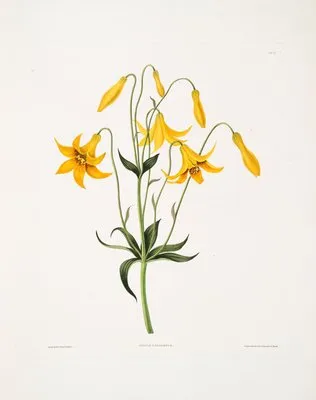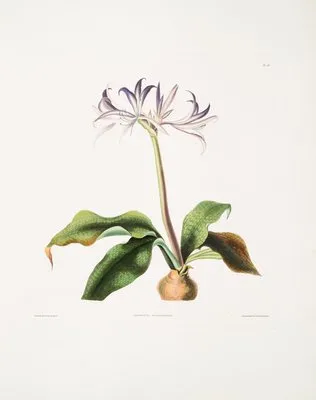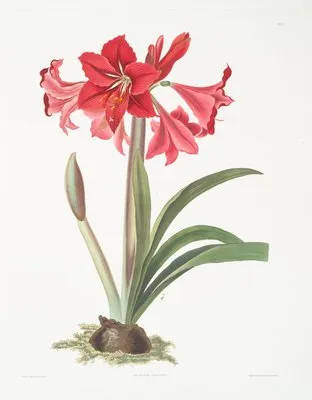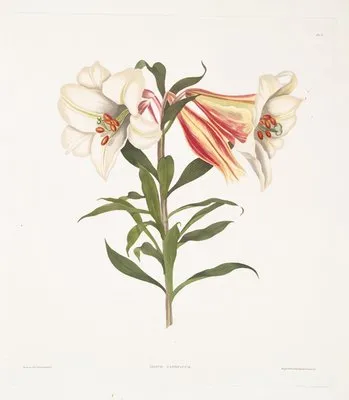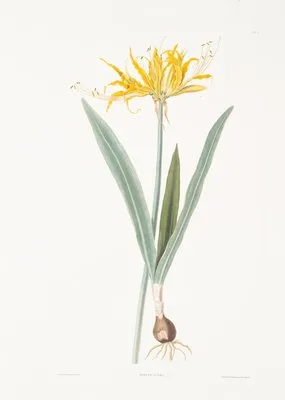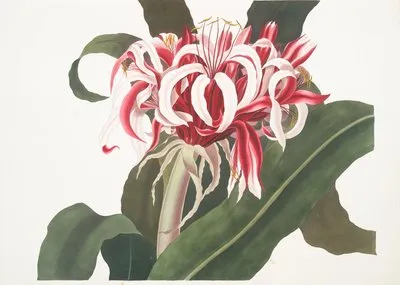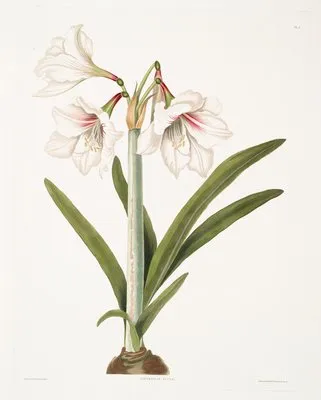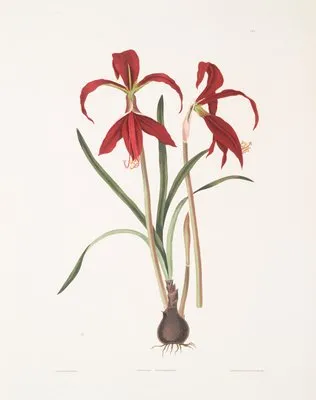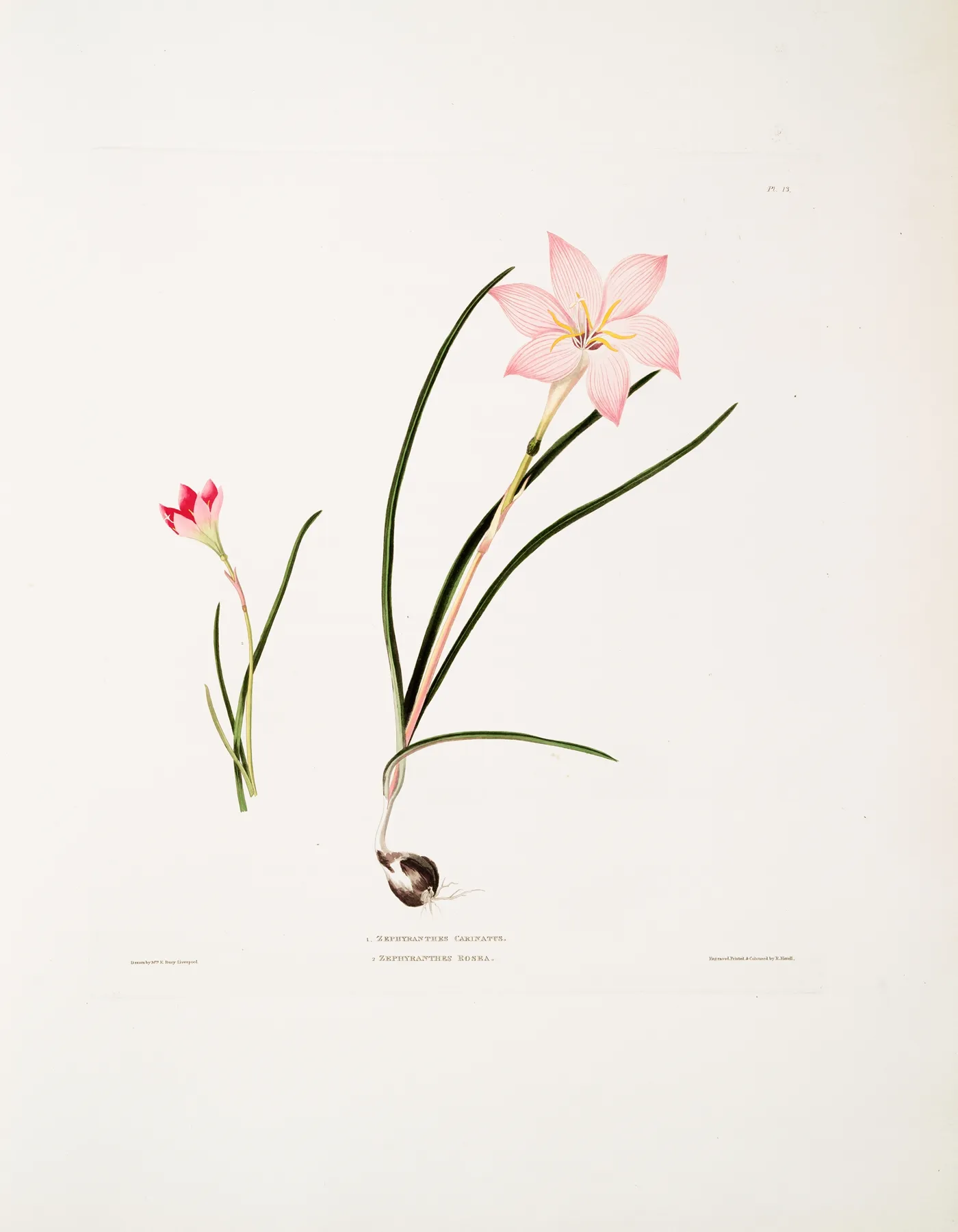
1. Zephyranthes carinatus. 2. Zephyranthes rosea. [Zaphyr lily, Fairy lily, Rain lily] (1834)
葱莲属、中美洲风雨花、黛玉花、暮雨葱莲
1. Zephyranthes carinatus. 2. Zephyranthes rosea. [Zaphyr lily, Fairy lily, Rain lily] (1834)
Ten ways of seeing
- measured cast yellow-green
- slightly upright 1.29 : 1
First Look
论画以形似,见与儿童邻。
—— 宋·苏轼《书鄢陵王主簿所画折枝》
To judge painting by likeness alone is the view of a child.
Slightly taller than wide; the eye lands above centre. Then step in close: watch where colour meets line, and whether the line ever breaks. Third, find the darkest small patch: the whole tonal order is measured from there. The pose leans right: the upper half carries 10 points further right than the lower — a living thing, not a diagram.
Name and Thing
Only the genus Zephyranthes is given; species-level names came later. No established Chinese name exists, so it is cited by its binomial alone.
Form and Colour
Measured on this plate: flower colour is sparing, 1.2% of the sheet against 0.6% of foliage, the cast tending yellow-green — as with pale or white blooms, outline and tone do the talking. Bulbous plants store the year underground — bulb, corm or tuber — then send up a few thick leaves and a single scape, with six tepals in cup, funnel or star.No colour group is recorded. Read the outline, then the colour layers, then the brush.
Composition
The sheet is slightly tall. No details are appended: a plate for looking, not for keying out. The plant covers only 2% of the sheet, centred near the centre; the emptiness is where the eye rests.
Line and Colour
The first half of the nineteenth century moved from copper to steel to lithography; stipple could render the softest transition. Decide first whether it was printed or painted; only then discuss whether it is beautiful. If you mean to copy it: take its skeleton, its margins and the order of its colours; the burin's hatching is the language of copper — suggest it with pencil density, do not imitate it stroke for stroke.
Poetic Resonance
总待别人般数尽,袖中拈出郁金芽。
—— 唐·王建《宮詞一百首 八十五》
The poem gives the mood first and the picture supplies the form; set the line beside the plate and the corolla becomes its resting point.
Symbolism
The tulip was an imperial emblem in Istanbul and a speculative bubble in Amsterdam; the hyacinth sprang from a boy's blood in Greek myth. What bulbs share is concealment: next year kept underground. Meanings change their tune: the same flower can say opposite things within a century.
Season and Place
Early spring to early summer, genus by genus: tulips and hyacinths first, gladiolus and amaryllis later. Three homelands: the Mediterranean, Central Asia and South Africa. The tulip came from Ottoman gardens and became a Dutch mania. The year 1834 on the plate is that of publication, not of flowering — the gathering came a year or two earlier. The bud and the ripe fruit on one branch tell the season; the name in the title often tells the journey.
The Book and the Hand
“A selection of hexandrian plants, belonging to the natural orders Amaryllidae and Liliacæ” carries only Priscilla Susan Bury's name. The image is public domain; the hand-colouring is still one person's hand.
What to Take Away
Carry three rules away: whole before detail; line before colour; picture before book. Two centuries on, the plant may still flower in some garden; the one on this sheet stopped in the season of 1834.
About this plate
1. Zephyranthes carinatus. 2. Zephyranthes rosea. [Zaphyr lily, Fairy lily, Rain lily] (1834) is plate 13, from A selection of hexandrian plants, belonging to the natural orders Amaryllidae and Liliacæ, drawn by Priscilla Susan Bury. This public-domain plate is reproduced at high resolution, free to view and download. Publication: London, R. Havell, 1834.