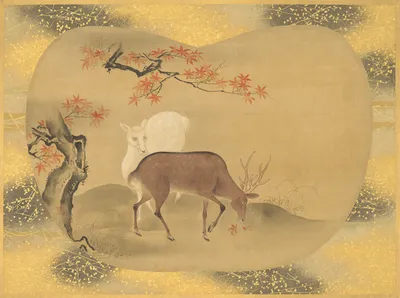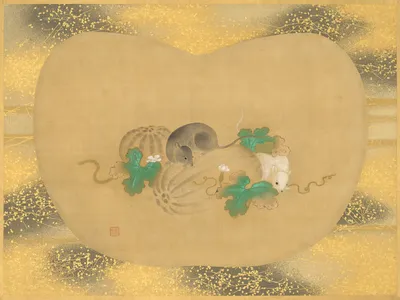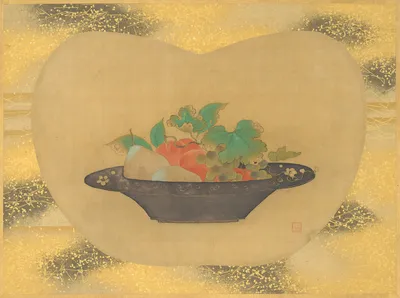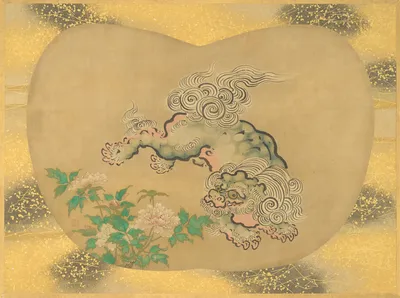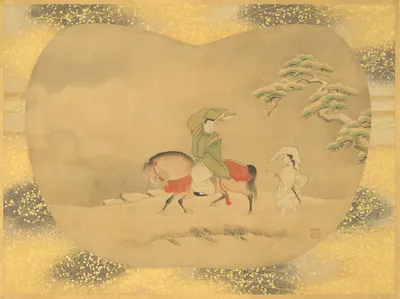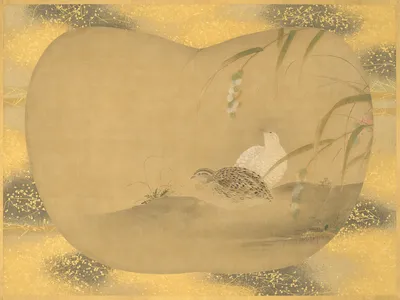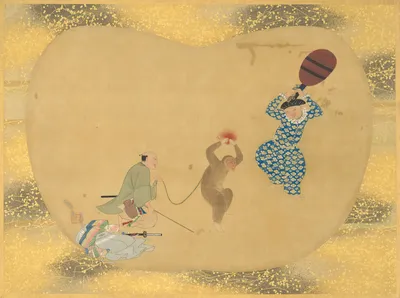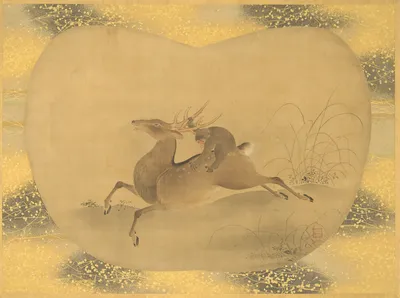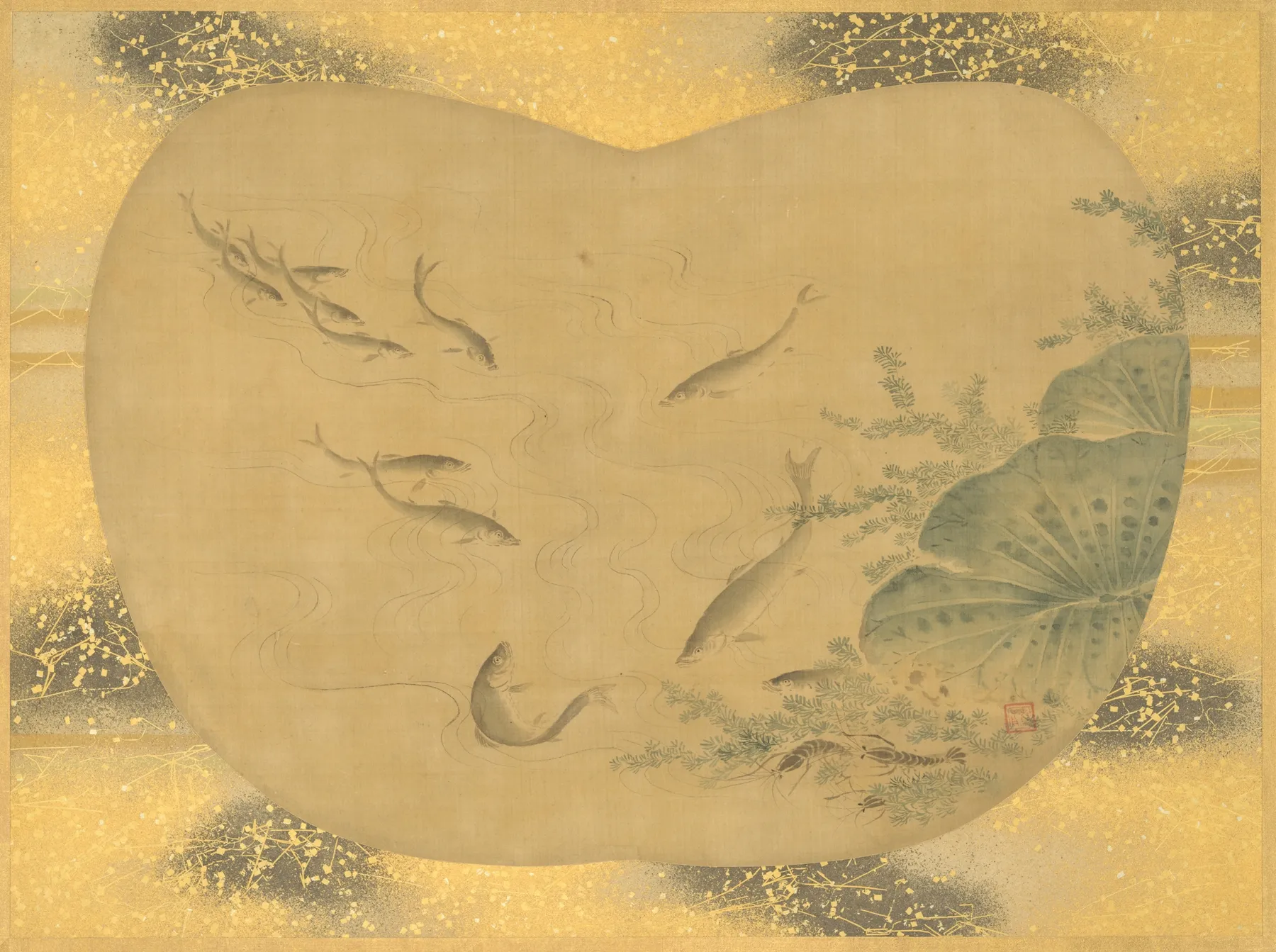
Fish and waterweeds in a lotus pond (18th century)
Ten ways of seeing
- broad 0.75 : 1
First Look
六法者何?一、气韵生动是也;二、骨法用笔是也;三、应物象形是也;四、随类赋彩是也;五、经营位置是也;六、传移模写是也。
—— 南齐·谢赫《古画品录》
The six laws: spirit resonance alive; bone-method in the brush; matching form; colour by kind; planning the placing; copying the masters.
Broad and horizontal: the eye travels side to side. Find where it stops. Then step in close: watch where colour meets line, and whether the line ever breaks. Third, find the darkest small patch: the whole tonal order is measured from there.
Name and Thing
No reliable binomial survives, so the printed title must serve. Neither name nor binomial survives: the printed title must do.
Form and Colour
The sacred lotus lifts shield-shaped leaves above the water with a seed pod standing at the centre; waterlilies float their notched leaves and rest their flowers on the surface.No colour group is recorded. Read the outline, then the colour layers, then the brush.
Composition
Broad and horizontal — the format for groups or a whole plant with its roots. No details are appended: a plate for looking, not for keying out. Cover the margins with your thumb and the plate suffocates; uncover them and the flower breathes again.
Line and Colour
The exact date is lost. Woodcut before 1700, copper in the eighteenth century, steel and lithography from the 1820s, chromolithography by the century's end. There is evidence on the back too: the plate mark pressed into the paper, the slight relief of the pigment, lines worn shallow in a later printing. If you mean to copy it: take its skeleton, its margins and the order of its colours; the burin's hatching is the language of copper — suggest it with pencil density, do not imitate it stroke for stroke.
Poetic Resonance
接天莲叶无穷碧,映日荷花别样红。
—— 宋·杨万里《晓出净慈寺送林子方》
Leaves to the horizon, endlessly green; lotus in the sun, red beyond compare.
The poem gives the mood first and the picture supplies the form; set the line beside the plate and the corolla becomes its resting point.
Symbolism
In China the lotus is the gentleman unstained by mud; in Buddhism it is the seat of the pure land. Meanings change their tune: the same flower can say opposite things within a century.
Season and Place
High summer, June to August. The sacred lotus is native to warm Asia and cultivated in China for three millennia. No firm date survives, so the season is inferred from the subject. Read the locality and the flowering season both with a discount: one is hearsay, the other a ten-day peak.
The Book and the Hand
“Album of Fan-Shaped Paintings of Figures, Birds and Flowers” carries only Kanō Tsunenobu's name. From drawing to plate the sheet passed through several hands — the engraver aimed at accuracy, the colourist at speed, and between them lies each plate's unevenness.
What to Take Away
Carry three rules away: whole before detail; line before colour; picture before book. A plate is meant to be consulted; what it preserves is the time one person spent on one flower.