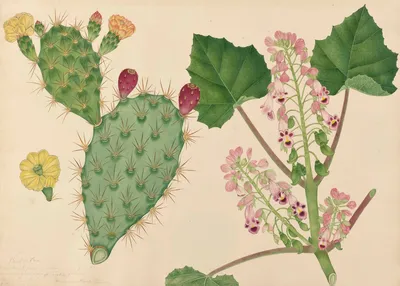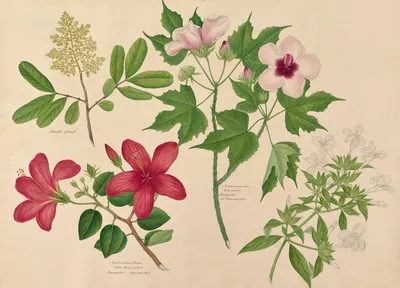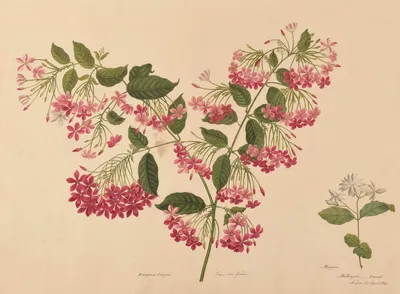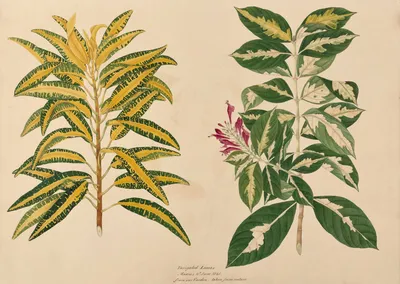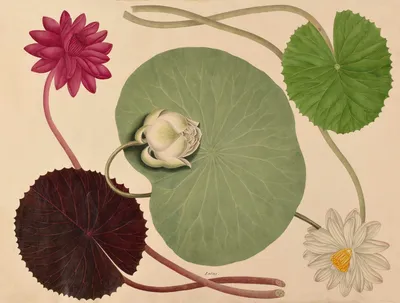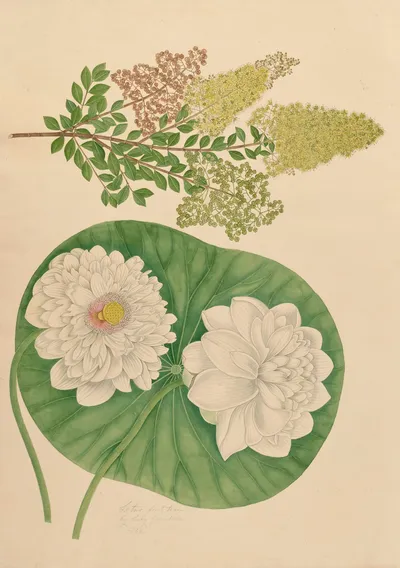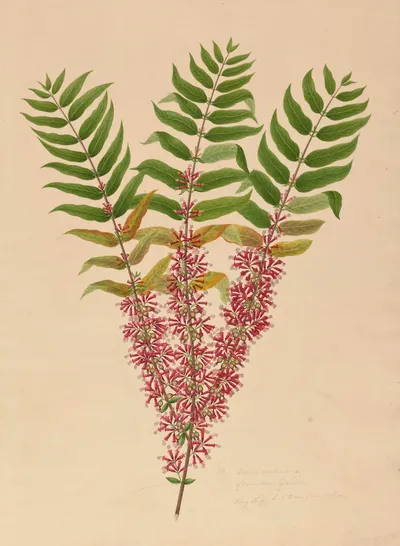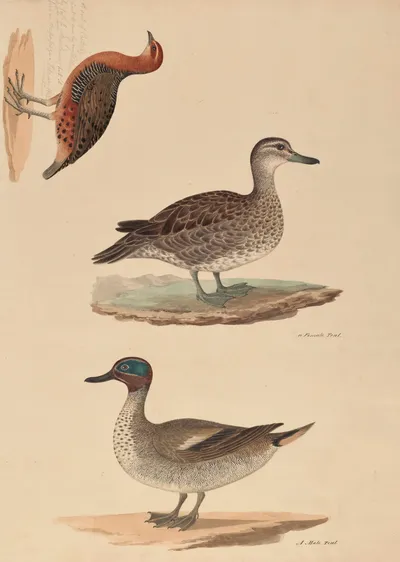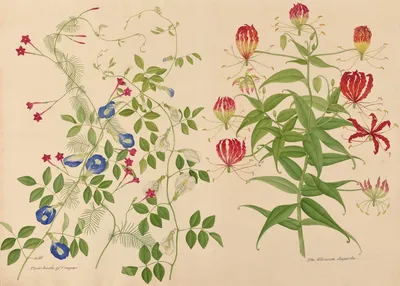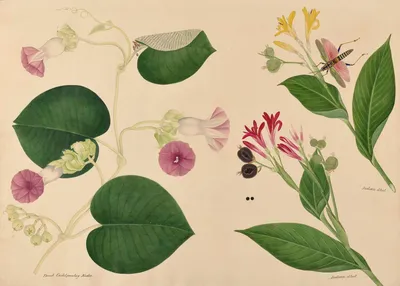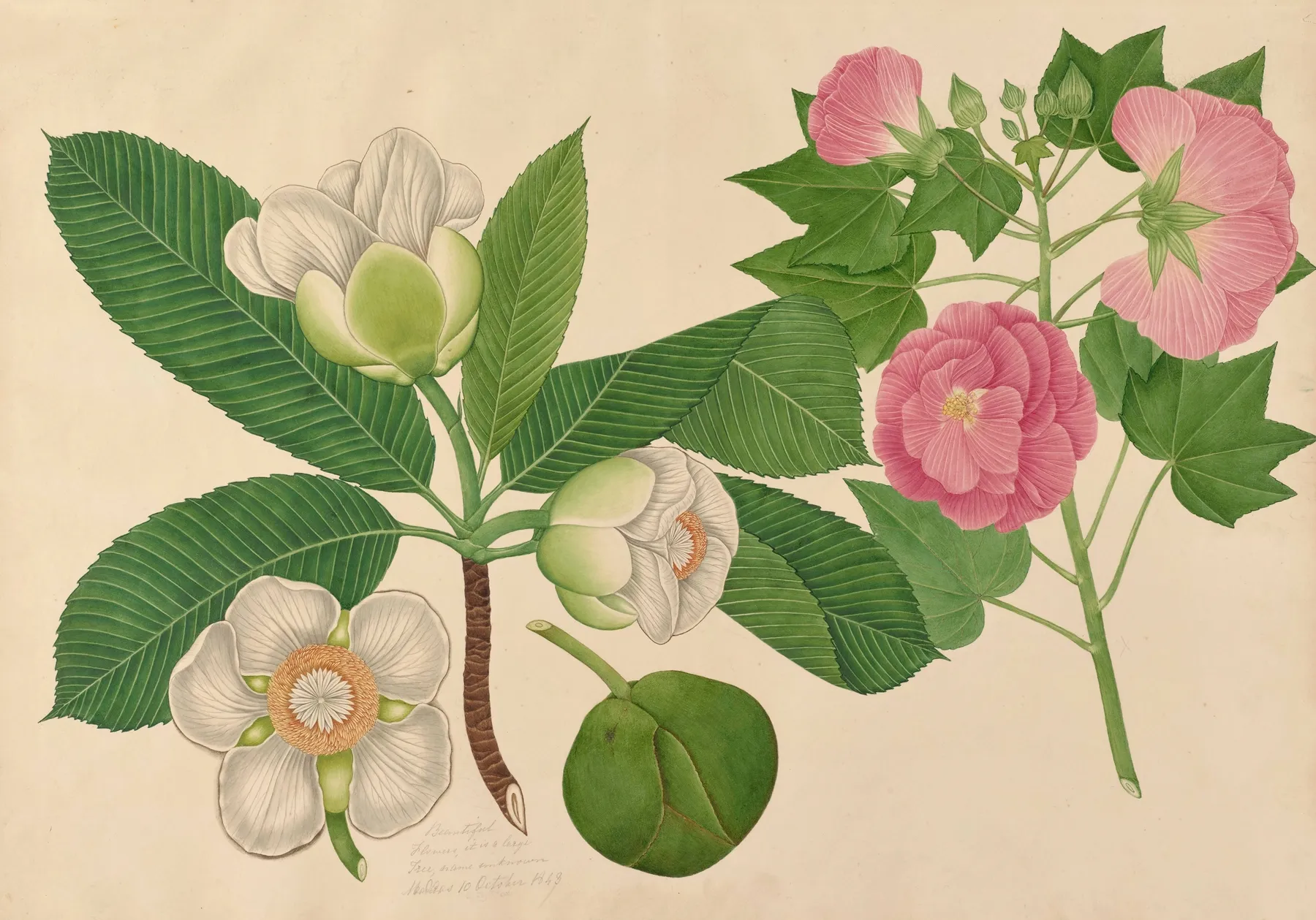
Beautiful flowers, name unknown, Dunble Pass rose (1840-1843)
Ten ways of seeing
- broad 0.70 : 1
First Look
六法者何?一、气韵生动是也;二、骨法用笔是也;三、应物象形是也;四、随类赋彩是也;五、经营位置是也;六、传移模写是也。
—— 南齐·谢赫《古画品录》
The six laws: spirit resonance alive; bone-method in the brush; matching form; colour by kind; planning the placing; copying the masters.
Broad and horizontal: the eye travels side to side. Find where it stops. Then step in close: watch where colour meets line, and whether the line ever breaks. Third, find the darkest small patch: the whole tonal order is measured from there.
Name and Thing
The binomial is Beautiful flowers: the first word is the genus it belongs among, the second the epithet that sets it apart. Two words carry a whole provenance. No established Chinese name exists, so it is cited by its binomial alone.
Form and Colour
Roses are shrubs or scramblers with pinnate leaves of three to seven serrated leaflets; the double flowers open in crumpled, inward-curling layers around a small knot of yellow stamens.No colour group is recorded. Read the outline, then the colour layers, then the brush.
Composition
Broad and horizontal — the format for groups or a whole plant with its roots. No details are appended: a plate for looking, not for keying out. Blank paper is not unfinished work: it is where the eye rests.
Line and Colour
The first half of the nineteenth century moved from copper to steel to lithography; stipple could render the softest transition. There is evidence on the back too: the plate mark pressed into the paper, the slight relief of the pigment, lines worn shallow in a later printing. If you mean to copy it: take its skeleton, its margins and the order of its colours; the burin's hatching is the language of copper — suggest it with pencil density, do not imitate it stroke for stroke.
Poetic Resonance
水沉山麝蔷薇露,漱作香云喷出来。
—— 唐·杨万里《正月五日以送伴借官侍宴集英殿十口号 其三》
The poem gives the mood first and the picture supplies the form; set the line beside the plate and the corolla becomes its resting point.
Symbolism
In Europe the rose means love and secrecy ('sub rosa'); in Chinese verse the rambling rose leans and clings — lingering attachment rather than ardour. Flower language was added later; the flower knows nothing of it, and that innocence is part of its power.
Season and Place
Late spring into early summer, peaking in May — the first flush of the garden year. Widespread in the temperate north. Chinese gardeners knew roses since the Han. The year 1840 on the plate is that of publication, not of flowering — the gathering came a year or two earlier. The bud and the ripe fruit on one branch tell the season; the name in the title often tells the journey.
The Book and the Hand
“An album of Indian plants, fruit, birds, and insects” carries only Miss Gough's name. The image is public domain; the hand-colouring is still one person's hand.
What to Take Away
Next time you stand before a flowering plant, give it three minutes: leaf arrangement, direction of the flower, the darkest patch. Two centuries on, the plant may still flower in some garden; the one on this sheet stopped in the season of 1840.