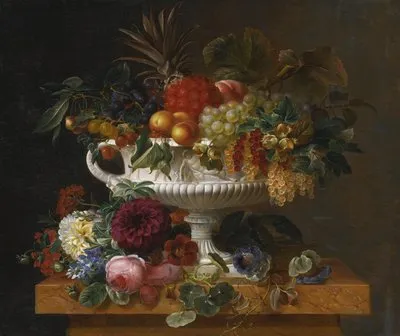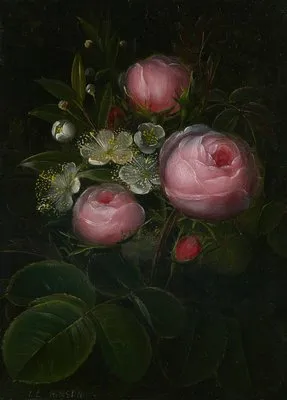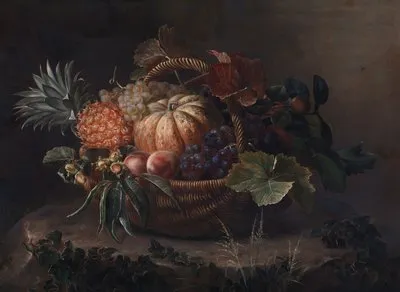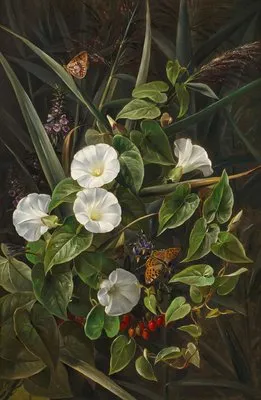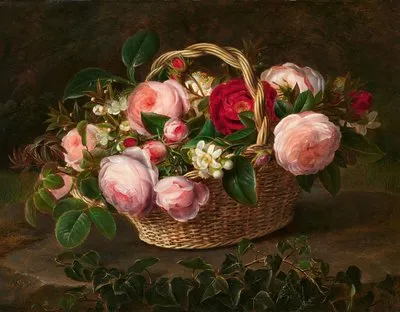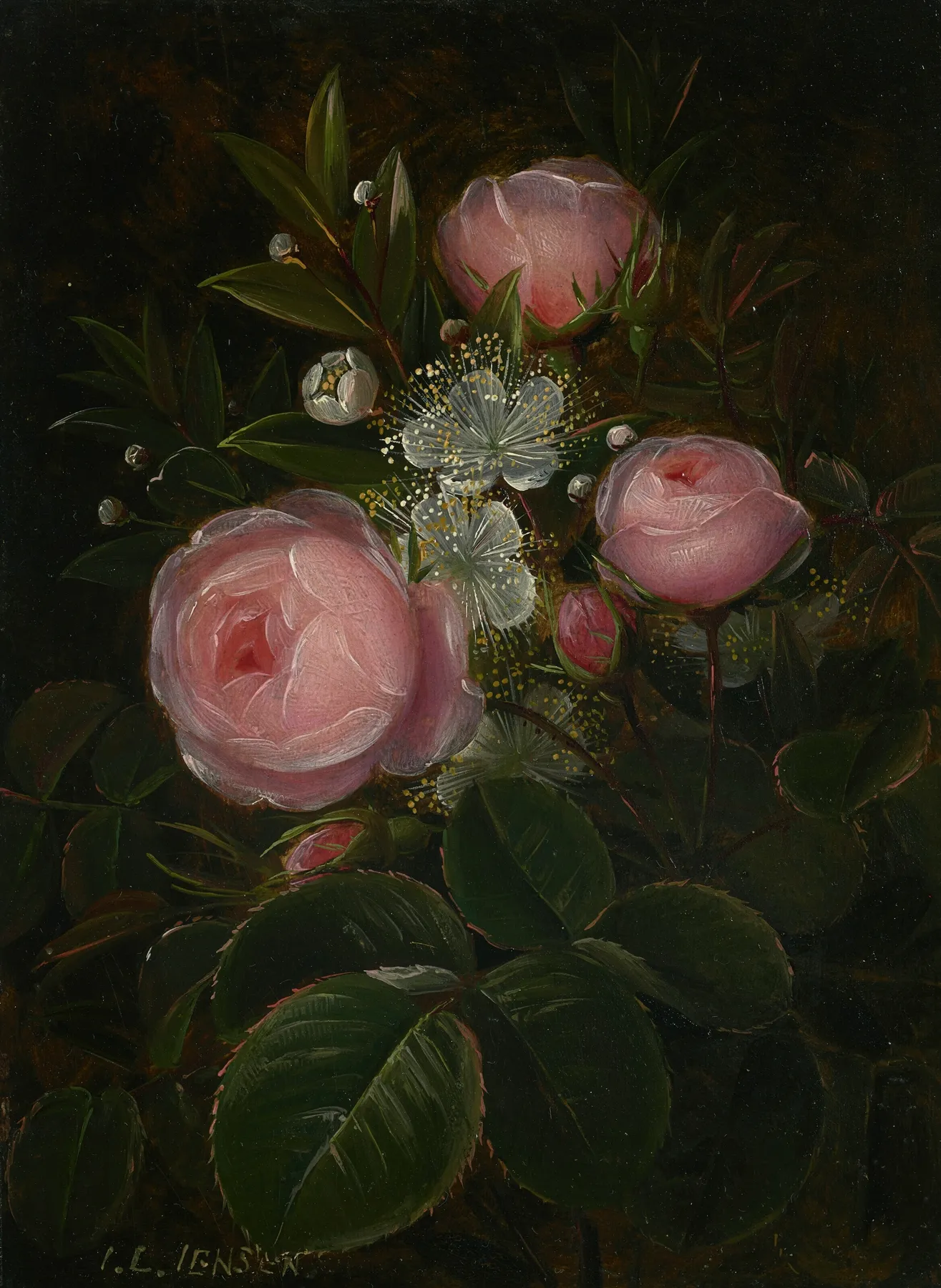
Roser og blomstrende Myrther
野蔷薇
Roser og blomstrende Myrther
Ten ways of seeing
- measured cast red
- upright 1.37 : 1
First Look
搜尽奇峰打草稿。
—— 清·石涛《苦瓜和尚画语录》
Exhaust the strange peaks, and then make the sketch.
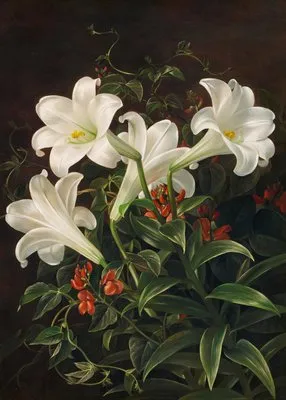
The sheet is vertical: the eye climbs and settles in the upper half. Let the plant stand before you look for detail. Then step in close: watch where colour meets line, and whether the line ever breaks. Third, find where the yellow is deepest: the whole tonal order is measured from that patch. The pose leans right: the upper half carries 14 points further right than the lower — a living thing, not a diagram.
Name and Thing
No reliable binomial survives, so the printed title must serve. The Chinese name 野蔷薇 is a modern rendering of the Latin, not an old garden name.
Form and Colour
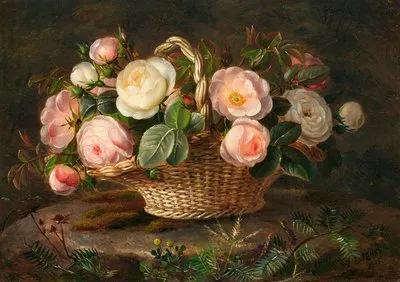
Measured on this plate: flower colour covers 13.5% of the sheet, foliage 0.8%, the cast red with a second note of amber. No other plate shares exactly this measure. Roses are shrubs or scramblers with pinnate leaves of three to seven serrated leaflets; the double flowers open in crumpled, inward-curling layers around a small knot of yellow stamens. Filed under yellow — a honey-yellow, built in washes from a pale ground. A single plant, laid out with nothing hidden.
Composition
The sheet is tall. No details are appended: a plate for looking, not for keying out. The plant covers only 17% of the sheet, centred above centre; the emptiness is where the eye rests.
Line and Colour
The first half of the nineteenth century moved from copper to steel to lithography; stipple could render the softest transition. There is evidence on the back too: the plate mark pressed into the paper, the slight relief of the pigment, lines worn shallow in a later printing. If you mean to copy it: take its skeleton, its margins and the order of its colours; the burin's hatching is the language of copper — suggest it with pencil density, do not imitate it stroke for stroke.
Poetic Resonance
玲珑云髻生花样,飘飖风袖蔷薇香。
—— 唐·白居易《简简吟》
The poem gives the mood first and the picture supplies the form; set the line beside the plate and the yellow the corolla becomes its resting point.
Symbolism
In Europe the rose means love and secrecy ('sub rosa'); in Chinese verse the rambling rose leans and clings — lingering attachment rather than ardour. This plate leans yellow, which in flower language adds one more degree of feeling. Flower language was added later; the flower knows nothing of it, and that innocence is part of its power.
Season and Place
Late spring into early summer, peaking in May — the first flush of the garden year. the ever-blooming modern rose is a nineteenth-century crossing of European and Chinese stock. The year 1800 on the plate is that of publication, not of flowering — the gathering came a year or two earlier. The bud and the ripe fruit on one branch tell the season; the name in the title often tells the journey.
The Book and the Hand
“Johan Laurentz Jensen” carries only Johan Laurentz Jensen's name. The image is public domain; the hand-colouring is still one person's hand.
What to Take Away
Next time you stand before a flowering plant, give it three minutes: leaf arrangement, direction of the flower, the darkest patch. The flower of that year is dust, yet its image on paper has outlived every living cousin.
About this plate
Roser og blomstrende Myrther is plate 12, from Johan Laurentz Jensen, drawn by Johan Laurentz Jensen. This public-domain plate is reproduced at high resolution, free to view and download. Publication: Danish, 1800 – 1856.