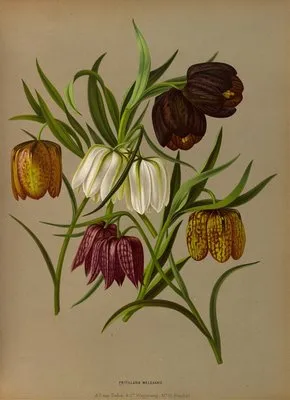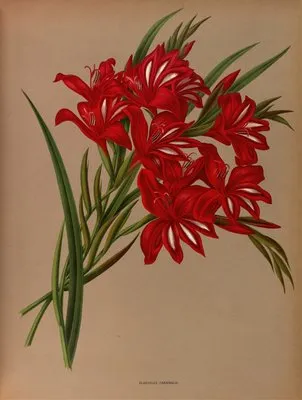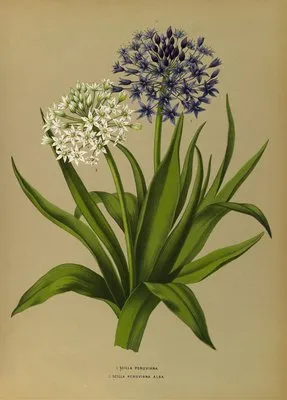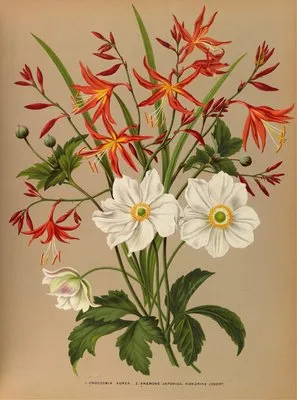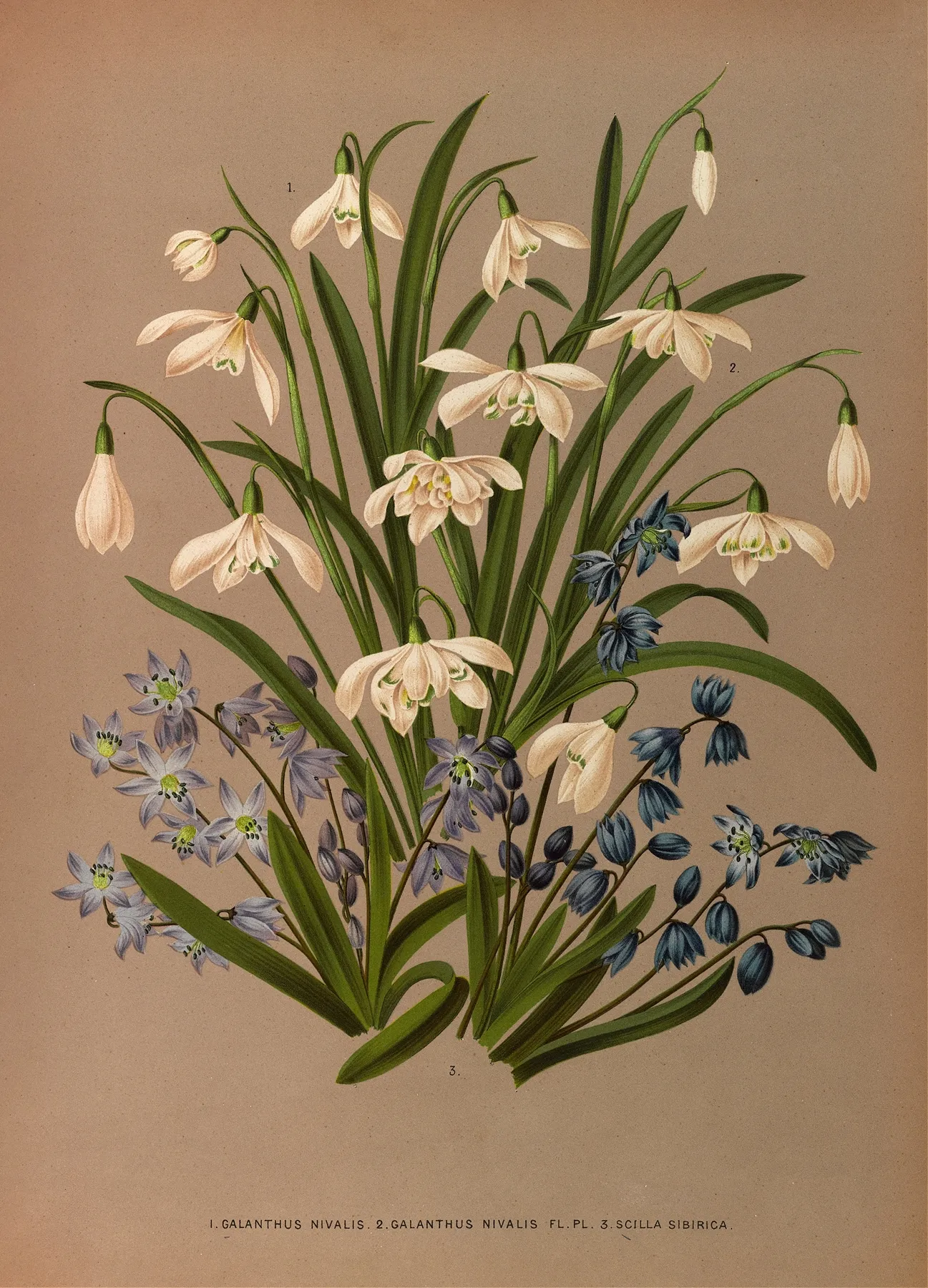
Galanthus Nivalis 2 . Galanthus Nivalis Fl . Pl . 3. Scilla Sibirica
Galanthus Nivalis 2 . Galanthus Nivalis Fl . Pl . 3. Scilla Sibirica
Galanthus Nivalis 2 . Galanthus Nivalis Fl . Pl . 3. Scilla Sibirica
Ten ways of seeing
- measured cast yellow-green
- upright 1.39 : 1
First Look
论画以形似,见与儿童邻。
—— 宋·苏轼《书鄢陵王主簿所画折枝》
To judge painting by likeness alone is the view of a child.
The sheet is vertical: the eye climbs and settles in the upper half. Let the plant stand before you look for detail. Then step in close: watch where colour meets line, and whether the line ever breaks. Third, find where the orange is deepest: the whole tonal order is measured from that patch.
Name and Thing
Only the genus Galanthus is given; species-level names came later. No established Chinese name exists, so it is cited by its binomial alone.
Form and Colour
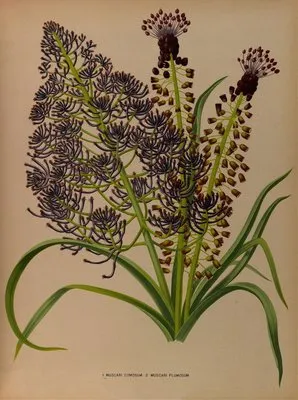
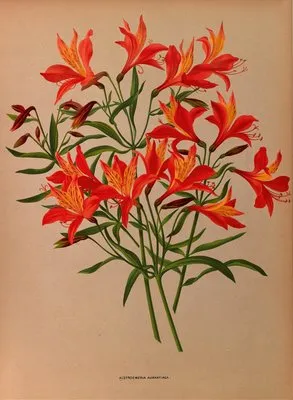
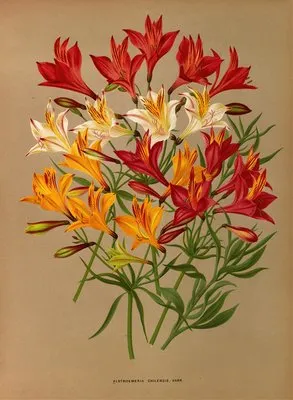
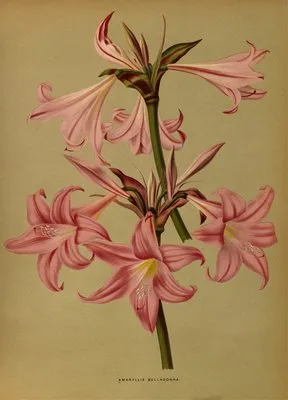
Measured on this plate: flower colour covers 16.3% of the sheet, foliage 3.5%, the cast yellow-green with a second note of amber. No other plate shares exactly this measure. A layered bulb, upright strap leaves, six white tepals and a small golden cup — the Chinese name is 'silver terrace with a golden cup'. Filed under orange — an amber orange, built in washes from a pale ground. Read the outline, then the colour layers, then the brush.
Composition
The sheet is tall. No details are appended: a plate for looking, not for keying out. The plant covers only 26% of the sheet, centred near the centre; the emptiness is where the eye rests.
Line and Colour
In the later nineteenth century chromolithography took over: colour printed rather than painted, line demoted. Craft leaves franker evidence than inscriptions. If you mean to copy it: block in the broad shapes and colours first, detail last; lithographic softness comes from thin washes — two or three pale layers will get you close.
Poetic Resonance
南海春天外,祇应学水仙。
—— 宋·文天祥《南海第七十六》
The poem gives the mood first and the picture supplies the form; set the line beside the plate and the orange the corolla becomes its resting point.
Symbolism
In China it is the New Year's offering — clear, fragrant, a little otherworldly; in Europe, because of Narcissus, it means self-love and the gaze turned inward. This plate leans orange, which in flower language adds one more degree of feeling. In a flora it is a species first and a symbol second; the order is worth keeping.
Season and Place
Late winter into early spring: forced in water in the twelfth month, blooming at the New Year. Native to the Mediterranean, reaching China by sea in the late Tang. The year 1872 on the plate is that of publication, not of flowering — the gathering came a year or two earlier. Read the locality and the flowering season both with a discount: one is hearsay, the other a ten-day peak.
The Book and the Hand
“Haarlem's Flora” carries only Arentine H. Arendsen's name. The image is public domain; the hand-colouring is still one person's hand.
What to Take Away
Appreciation is not knowledge but habit — one more look each time. The flower of that year is dust, yet its image on paper has outlived every living cousin.
About this plate
Galanthus Nivalis 2 . Galanthus Nivalis Fl . Pl . 3. Scilla Sibirica is plate 32, from Haarlem's Flora, drawn by Arentine H. Arendsen. This public-domain plate is reproduced at high resolution, free to view and download. Publication: Haarlem : 1872-1881..