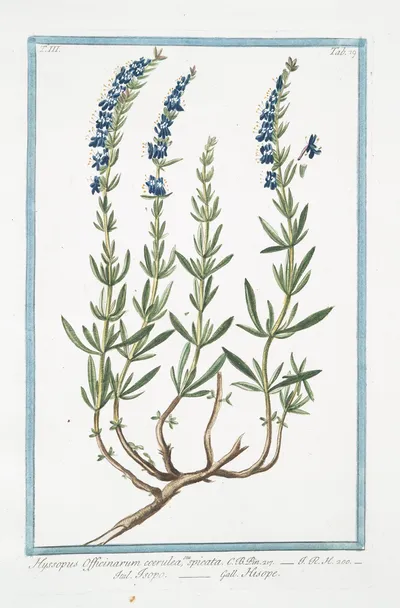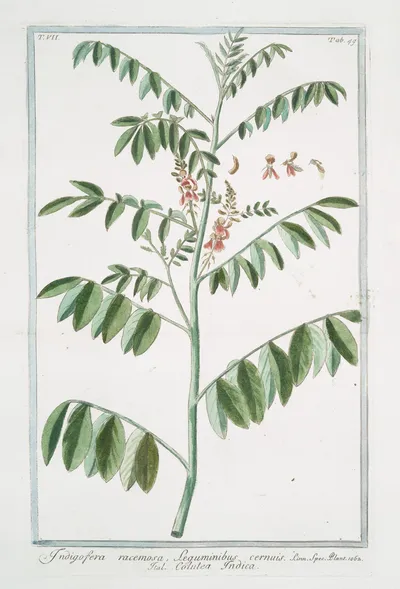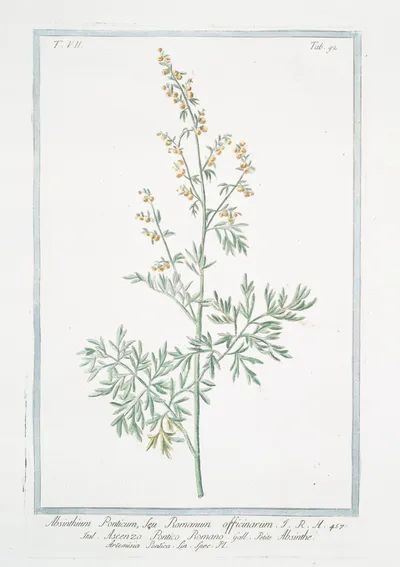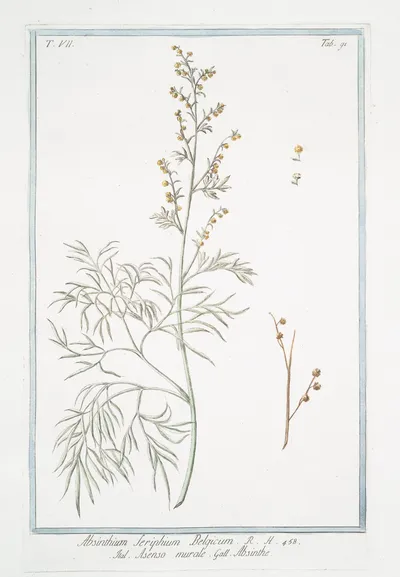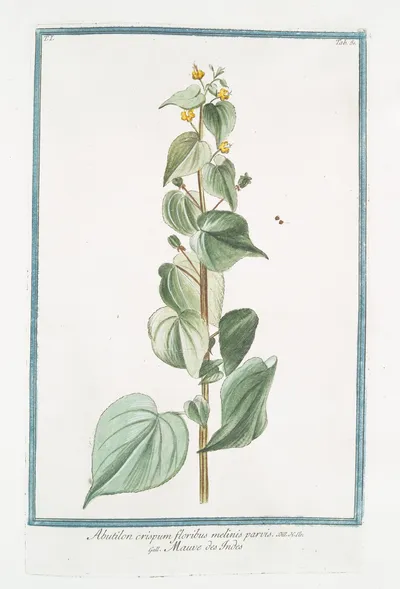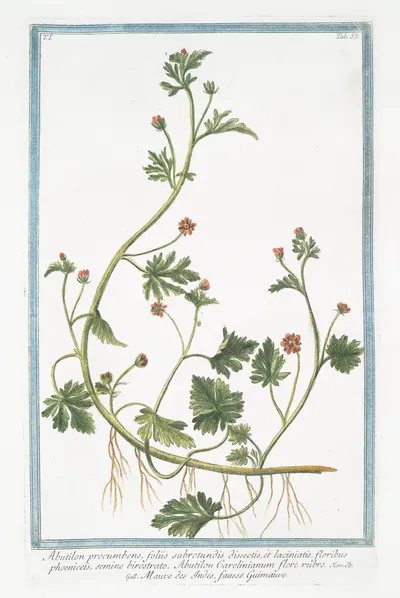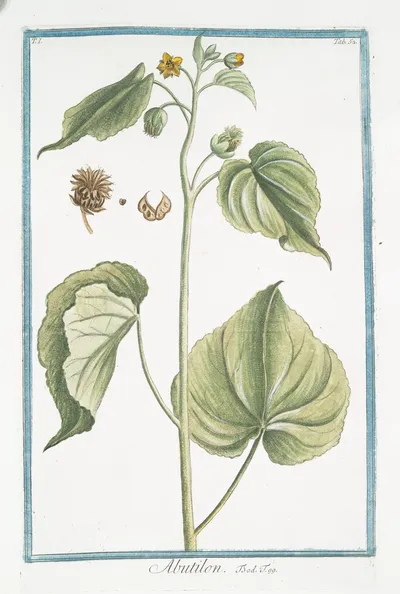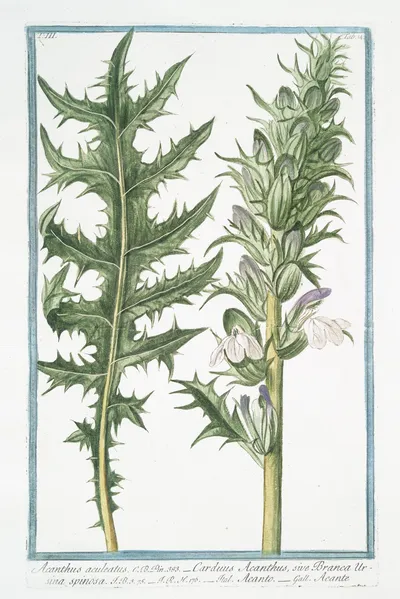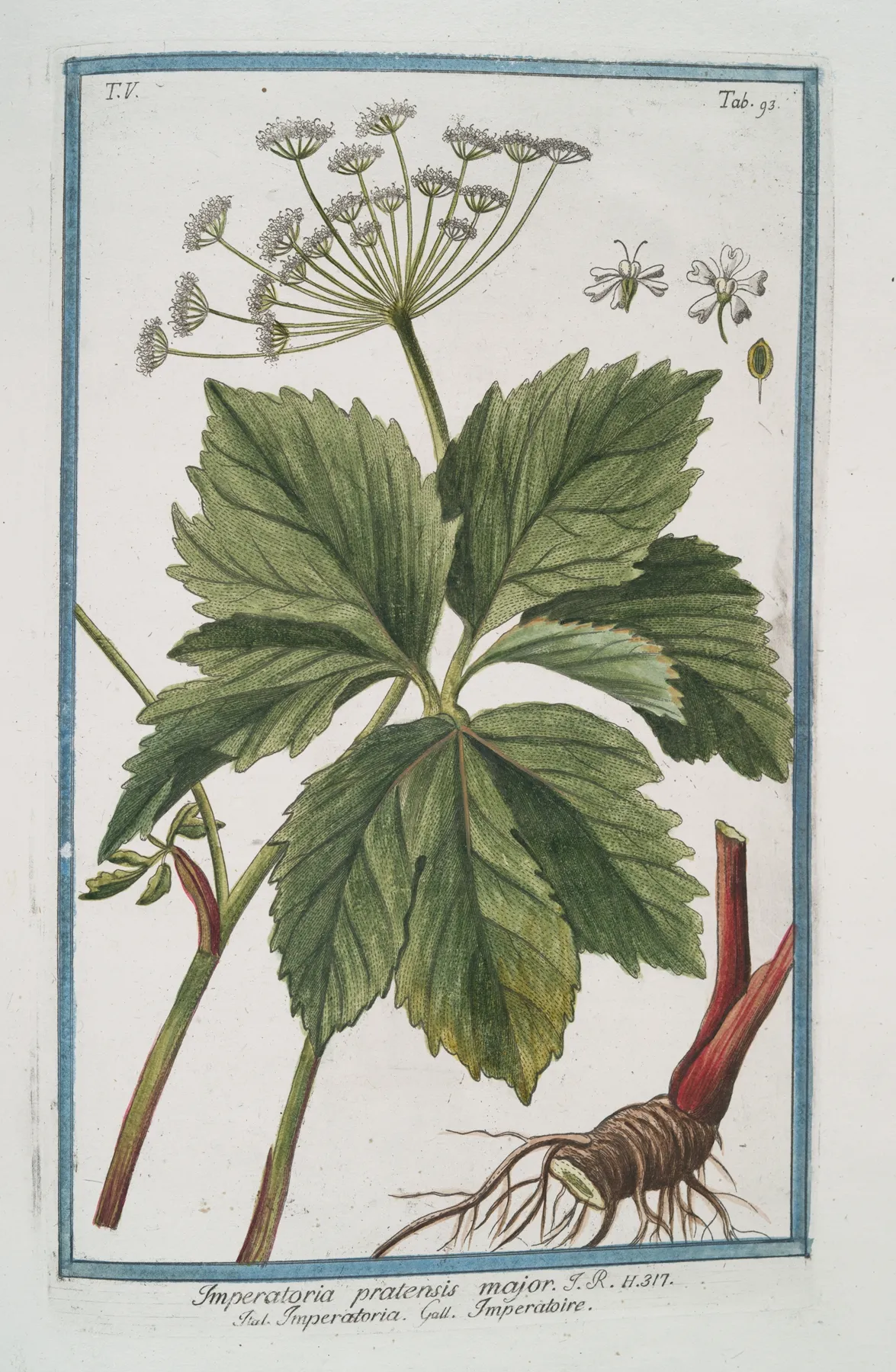
Imperatoria pratensis major – Imperatoire. (Masterwort) (1772-1793)
Ten ways of seeing
- upright 1.53 : 1
First Look
论画以形似,见与儿童邻。
—— 宋·苏轼《书鄢陵王主簿所画折枝》
To judge painting by likeness alone is the view of a child.
The sheet is vertical: the eye climbs and settles in the upper half. Let the plant stand before you look for detail. Then step in close: watch where colour meets line, and whether the line ever breaks. Third, find the darkest small patch: the whole tonal order is measured from there.
Name and Thing
No reliable binomial survives, so the printed title must serve. Neither name nor binomial survives: the printed title must do.
Form and Colour
Chrysanthemums are herbaceous with deeply lobed, downy leaves. Each 'flower' is a head — ray florets around the rim, disc florets in the centre, hundreds of small flowers in one.No colour group is recorded. Read the outline, then the colour layers, then the brush.
Composition
Tall and narrow, the plant rising in one movement with generous margins — the upright format of most floras. No details are appended: a plate for looking, not for keying out. Cover the margins with your thumb and the plate suffocates; uncover them and the flower breathes again.
Line and Colour
Eighteenth-century plates are mostly copper engraving: hatched lines for shadow, then hand-colouring by another hand. Craft leaves franker evidence than inscriptions. If you mean to copy it: take its skeleton, its margins and the order of its colours; the burin's hatching is the language of copper — suggest it with pencil density, do not imitate it stroke for stroke.
Poetic Resonance
少日曾题菊枕诗,蠹编残稿锁蛛丝。
—— 宋·陆游《余年二十时尝作菊枕诗颇传于人今秋偶复采菊》
The poem gives the mood first and the picture supplies the form; set the line beside the plate and the corolla becomes its resting point.
Symbolism
In China, seclusion and long life — and, after Tao Yuanming, the will to go home; in Japan, imperial authority. In a flora it is a species first and a symbol second; the order is worth keeping.
Season and Place
Deep autumn, around the Double Ninth in the ninth month — after the first frost, when everything else is gone. Native to China, adopted in Japan as the imperial crest, carried to Europe by the Dutch in the seventeenth century and remade by Victorian breeders. The year 1772 on the plate is that of publication, not of flowering — the gathering came a year or two earlier. See this kind of plate in the flowering season if you can: once you have met the living flower, you stop reading only colour.
The Book and the Hand
“Hortus Romanus juxta systema Tournefortianum” carries only Giorgio Bonelli's name. From drawing to plate the sheet passed through several hands — the engraver aimed at accuracy, the colourist at speed, and between them lies each plate's unevenness.
What to Take Away
Appreciation is not knowledge but habit — one more look each time. The flower of that year is dust, yet its image on paper has outlived every living cousin.