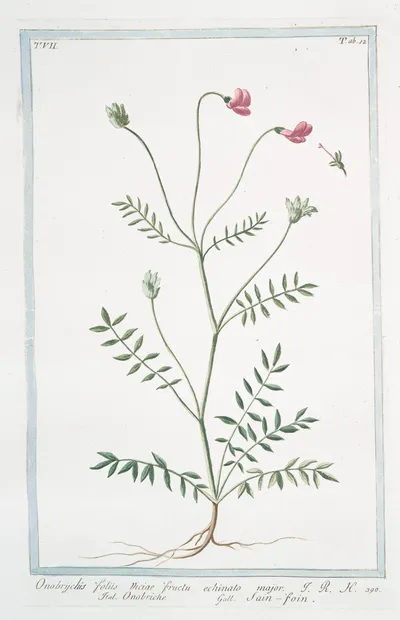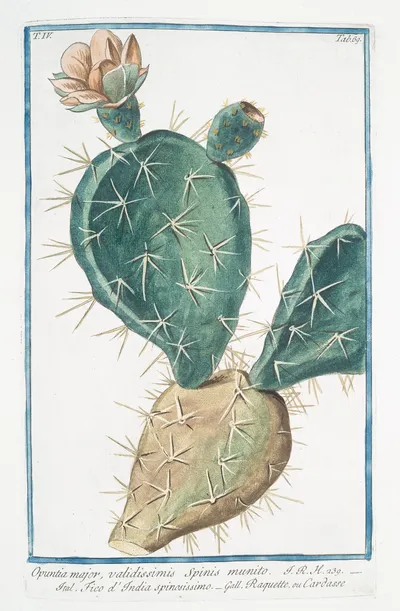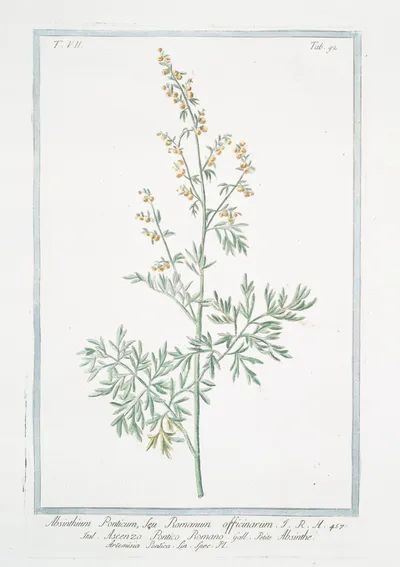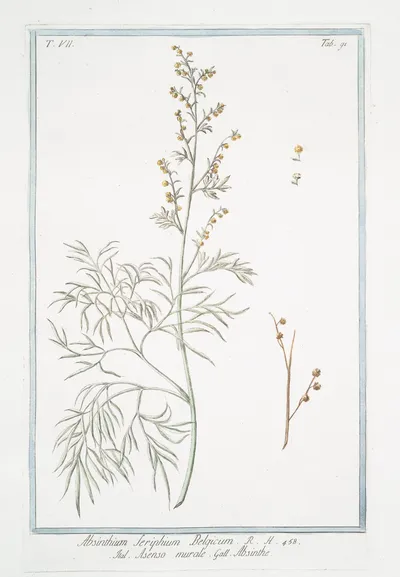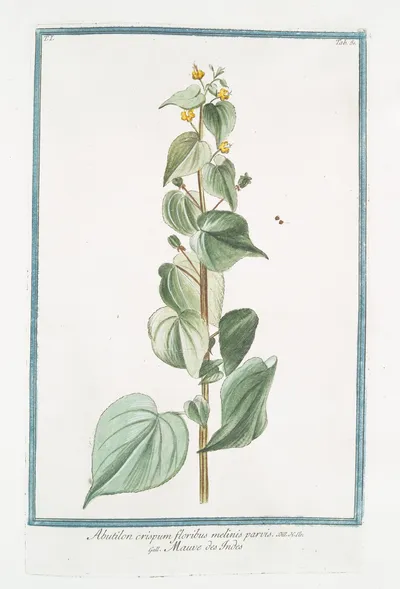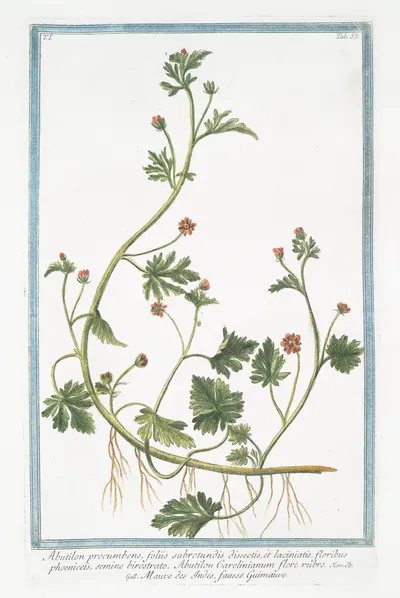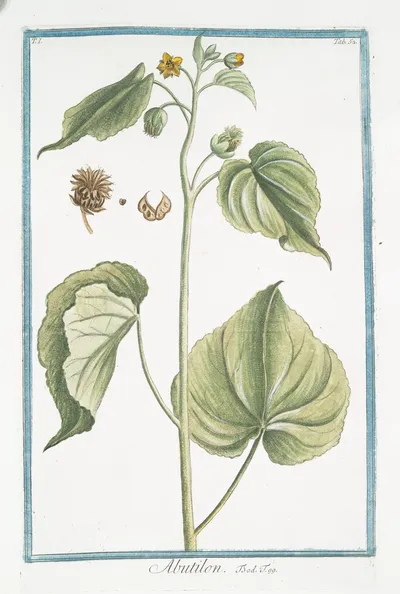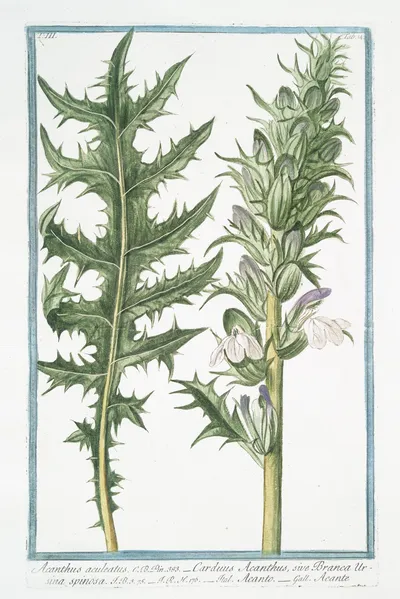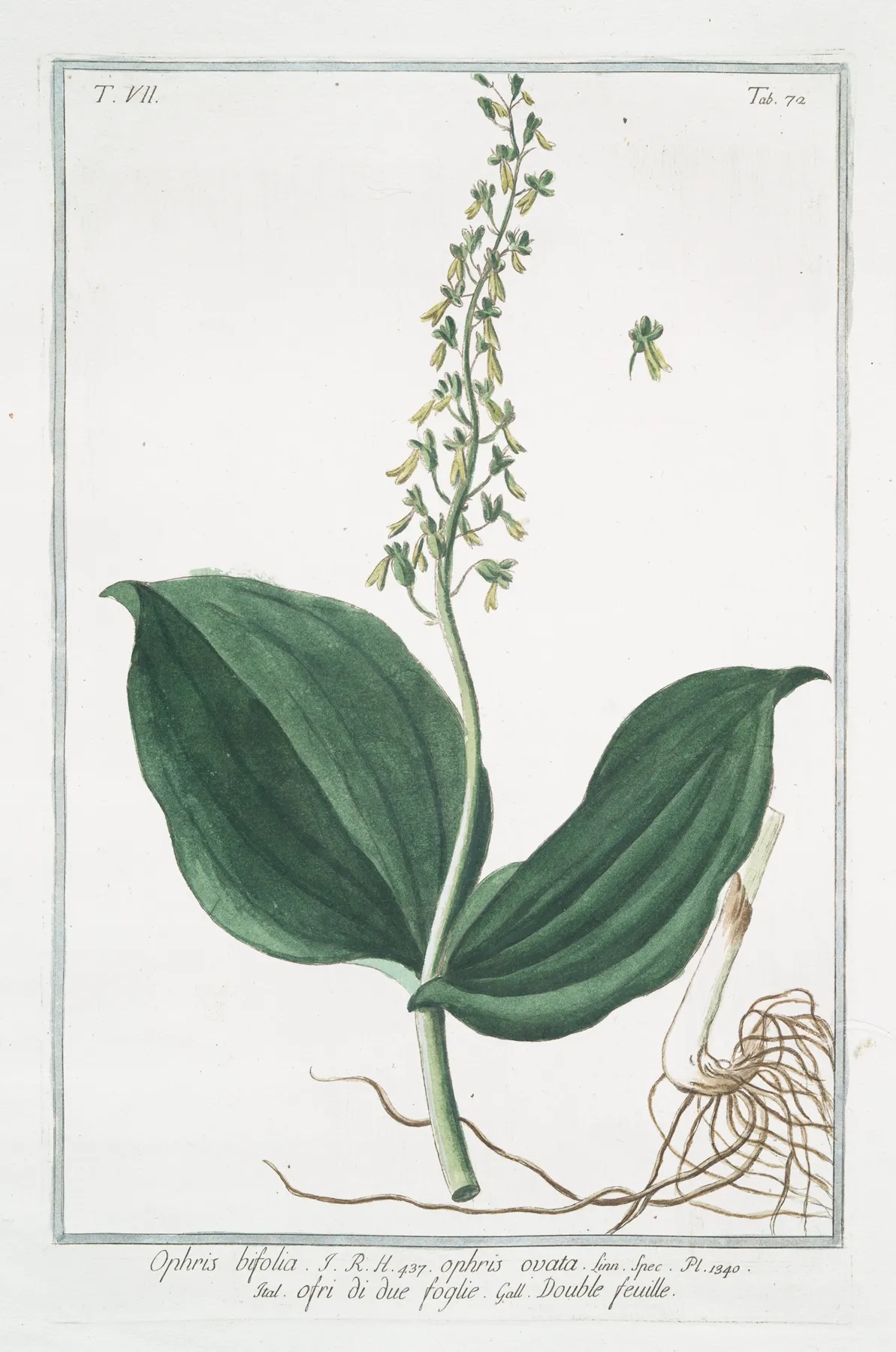
Ophris, bifolia – Ophris ovata – Ofri di due foglie – Double feuille. (Two-leaved Ophrys) (1772-1793)
Ten ways of seeing
- upright 1.51 : 1
First Look
六法者何?一、气韵生动是也;二、骨法用笔是也;三、应物象形是也;四、随类赋彩是也;五、经营位置是也;六、传移模写是也。
—— 南齐·谢赫《古画品录》
The six laws: spirit resonance alive; bone-method in the brush; matching form; colour by kind; planning the placing; copying the masters.
The sheet is vertical: the eye climbs and settles in the upper half. Let the plant stand before you look for detail. Then step in close: watch where colour meets line, and whether the line ever breaks. Third, find the darkest small patch: the whole tonal order is measured from there.
Name and Thing
Only the genus Ophrys is given; species-level names came later. No established Chinese name exists, so it is cited by its binomial alone.
Form and Colour
Orchids carry pseudobulbs or fleshy roots; six tepals, one modified into a lip that serves as a landing stage, and a column uniting stamens and pistil — a structure unique to the family.No colour group is recorded. A single plant, laid out with nothing hidden.
Composition
Tall and narrow, the plant rising in one movement with generous margins — the upright format of most floras. No details are appended: a plate for looking, not for keying out. Cover the margins with your thumb and the plate suffocates; uncover them and the flower breathes again.
Line and Colour
Eighteenth-century plates are mostly copper engraving: hatched lines for shadow, then hand-colouring by another hand. Decide first whether it was printed or painted; only then discuss whether it is beautiful. If you mean to copy it: take its skeleton, its margins and the order of its colours; the burin's hatching is the language of copper — suggest it with pencil density, do not imitate it stroke for stroke.
Poetic Resonance
扶入流苏犹未醒,醺醺酒气麝兰和。
—— 《天仙子·深夜归来长酩酊》
The poem gives the mood first and the picture supplies the form; set the line beside the plate and the corolla becomes its resting point.
Symbolism
In China the orchid is the gentleman who blooms unseen; in Victorian Europe it was luxury and obsession, a single new species worth a fortune. Meanings change their tune: the same flower can say opposite things within a century.
Season and Place
Varies by genus: temperate terrestrials flower in spring and summer, tropical epiphytes almost year-round. the orchids drawn for European portfolios came largely from the cloud forests of Central America and Southeast Asia. The year 1772 on the plate is that of publication, not of flowering — the gathering came a year or two earlier. Read the locality and the flowering season both with a discount: one is hearsay, the other a ten-day peak.
The Book and the Hand
“Hortus Romanus juxta systema Tournefortianum” carries only Giorgio Bonelli's name. A plate is collective work: drawer, engraver and colourist were different hands, and the unnamed ones decided how good it looks.
What to Take Away
If you keep one line, keep Guo Xi's: from afar its momentum, up close its texture. Two centuries on, the plant may still flower in some garden; the one on this sheet stopped in the season of 1772.