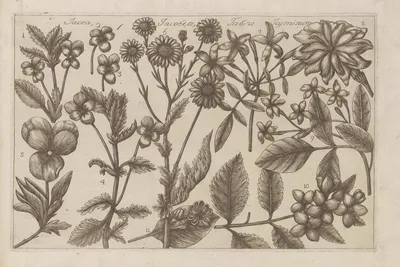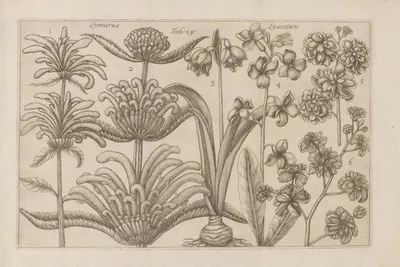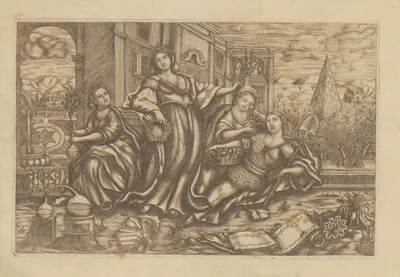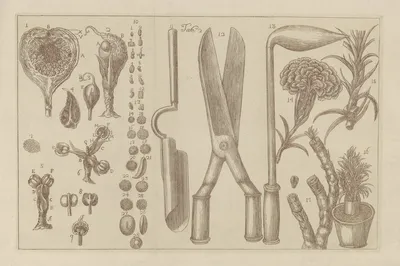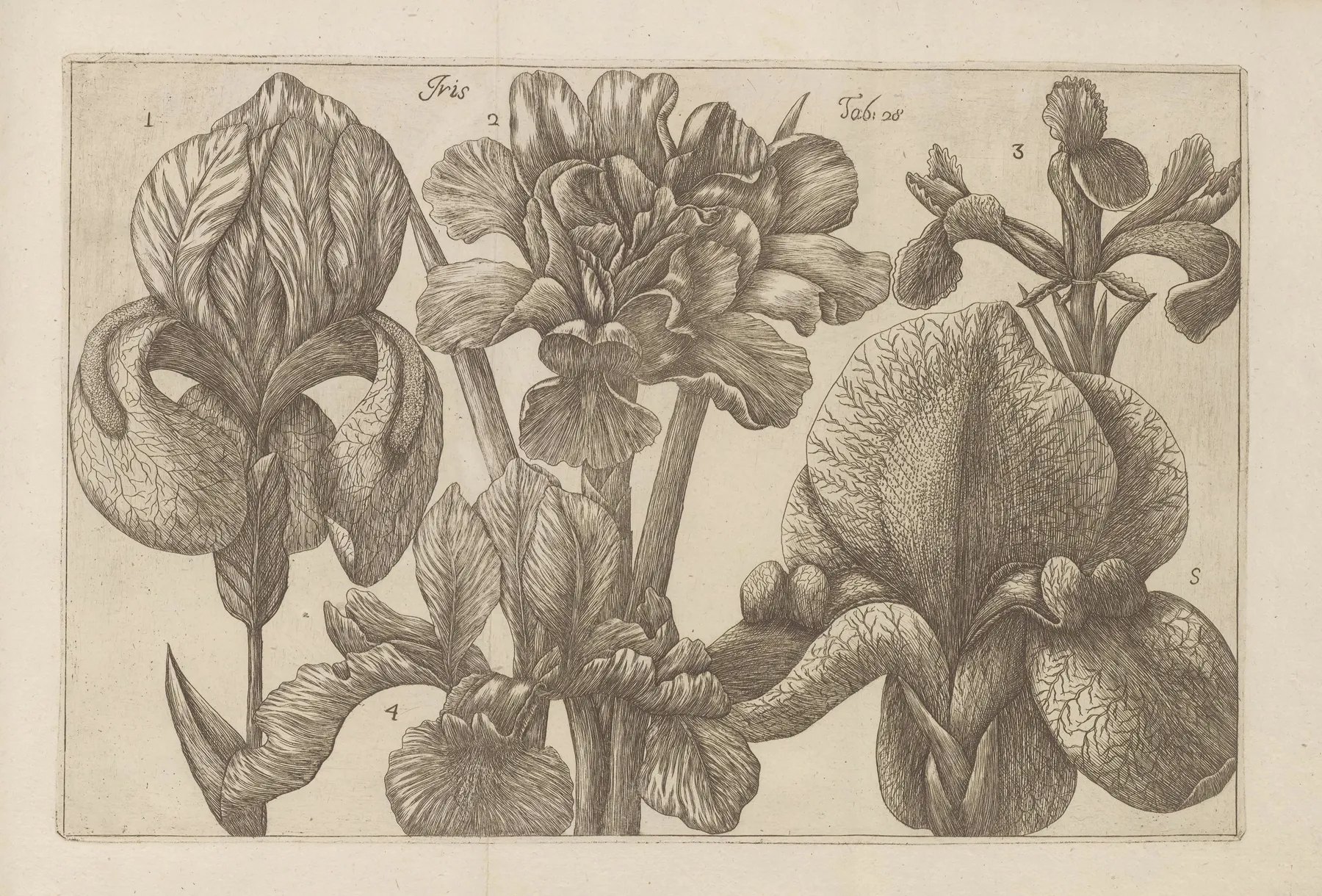
Iris (1767-1768)
Ten ways of seeing
- broad 0.68 : 1
First Look
夫象物必在于形似,形似须全其骨气。
—— 唐·张彦远《历代名画记》
Likeness is the threshold; bone-and-breath is the point.
Broad and horizontal: the eye travels side to side. Find where it stops. Then step in close: watch where colour meets line, and whether the line ever breaks. Third, find the darkest small patch: the whole tonal order is measured from there.
Name and Thing
Only the genus Iris is given; species-level names came later. No established Chinese name exists, so it is cited by its binomial alone.
Form and Colour
Irises carry rhizomes or bulbs, sword-shaped leaves in two ranks, and six tepals — three falls drooping, often bearded or speckled, three standards erect.No colour group is recorded. Three things fix the habit: leaf arrangement, tepal count, and how the flower is borne.
Composition
Broad and horizontal — the format for groups or a whole plant with its roots. No details are appended: a plate for looking, not for keying out. Blank paper is not unfinished work: it is where the eye rests.
Line and Colour
Eighteenth-century plates are mostly copper engraving: hatched lines for shadow, then hand-colouring by another hand. There is evidence on the back too: the plate mark pressed into the paper, the slight relief of the pigment, lines worn shallow in a later printing. If you mean to copy it: take its skeleton, its margins and the order of its colours; the burin's hatching is the language of copper — suggest it with pencil density, do not imitate it stroke for stroke.
Poetic Resonance
蓝田日暖玉生烟。
—— 唐·李商隐《锦瑟》
In warm sun over Lantian, the jade gives off smoke.
The poem gives the mood first and the picture supplies the form; set the line beside the plate and the corolla becomes its resting point.
Symbolism
In China sweet flag hung at the door wards off evil at midsummer; in Europe the iris is the messenger, since Iris was the rainbow goddess who carried divine words. Flower language was added later; the flower knows nothing of it, and that innocence is part of its power.
Season and Place
Late spring to early summer, peaking in April and May, before the summer rains. in Europe Iris germanica gave the perfume trade its orris root. The year 1767 on the plate is that of publication, not of flowering — the gathering came a year or two earlier. The bud and the ripe fruit on one branch tell the season; the name in the title often tells the journey.
The Book and the Hand
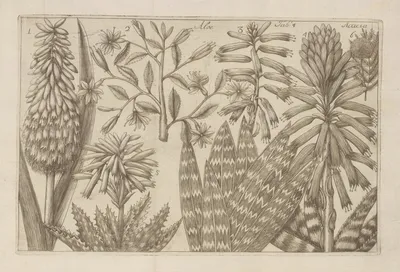
“La natura, e coltura de' fiori fisicamente esposta in due trattati con nuove ragioni, osservazioni, e sperienze” carries only Filippo Arena's name. A plate is collective work: drawer, engraver and colourist were different hands, and the unnamed ones decided how good it looks.
What to Take Away
Next time you stand before a flowering plant, give it three minutes: leaf arrangement, direction of the flower, the darkest patch. Two centuries on, the plant may still flower in some garden; the one on this sheet stopped in the season of 1767.