Lychnis Haagena
Lychnis Haagena
Lychnis Haagena
About this plate
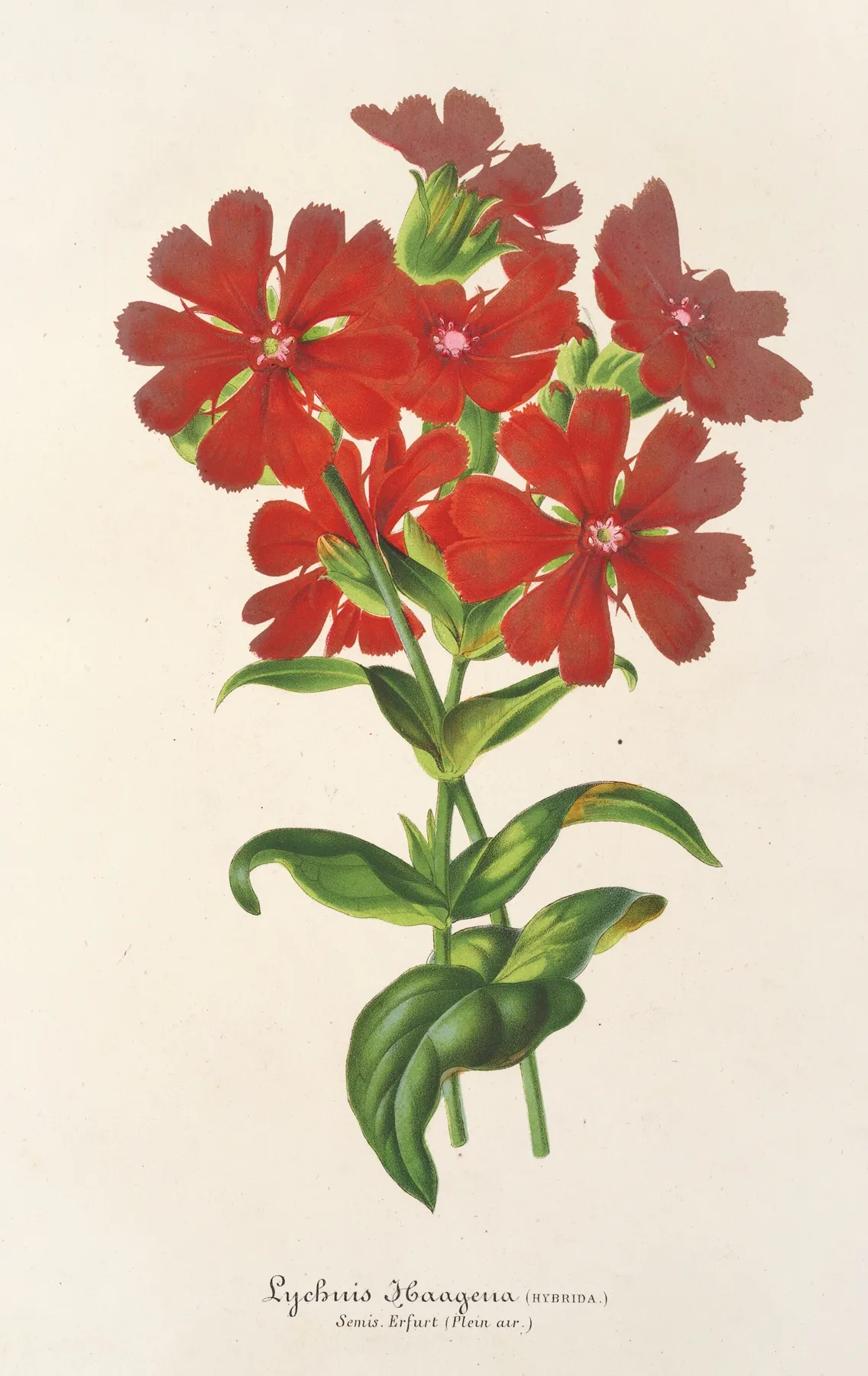
Lychnis Haagena is plate 352, from L'Illustration horticole, drawn by Charles Antoine Lemaire. This public-domain plate is reproduced at high resolution, free to view and download. Publication: Gand, Belgium, Imprimerie et lithographie de F. et E. Gyselnyck,1854-1896.
Twelve ways of seeing
One plate, read twelve times over: its name, its colour, the burin and the brush, the shape of the sheet, the season, the soil it came from, the book it belongs to, its language of flowers, the poem it answers to, the lore behind it, how to look, and what remains.
-
The Name
The plate is titled “Lychnis Haagena”, numbered Plate 352. Its binomial is Lychnis haagena: the genus places it among its kin, the epithet records a place, a shape or a person. No established Chinese name exists for this plate, so it is cited by its binomial alone.
-
Form and Colour
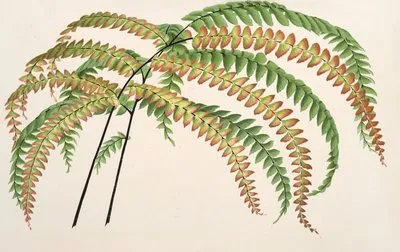
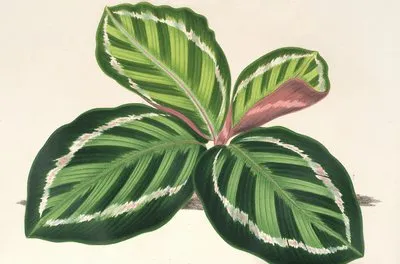
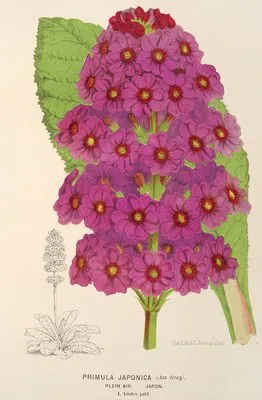
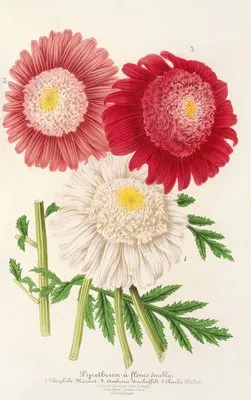
A botanical plate: one plant lifted from field or glasshouse and set at the centre of the sheet, root, stem, leaf, flower and fruit in turn, made legible, citable, transmissible. Filed under red — a red close to carmine. The colour is built in washes: a pale ground first, then deepening at the petal base and in shadow. Read the outline, then the colour layers, then the touch of the brush.
-
Line and Colour
In the later nineteenth century chromolithography took over: colour printed rather than painted, line demoted. Images grew more accurate and less personal. Look closely at the line and the colour: an unbroken line means engraving, colour crossing the outline by half a millimetre means hand-colouring. Craft leaves franker evidence than inscriptions.
-
Composition
Tall and narrow, the plant rising in one movement with generous margins above and below — the upright format of most floras. (about 1.58 : 1). No details are appended: this is a plate for looking, not for keying out.
-
Season
Plates usually record flowering, the fortnight when a plant is most identifiable; the rest of the year it is only a mass of leaves. The year 1854 on the plate is the year of publication, not of flowering — the gathering came a year or two earlier.
-
Provenance
Various: local hillside or a plant brought from overseas. The nineteenth-century botanic garden and glasshouse were their first address away from home. The volume was made in 1854-1896, when most of this knowledge came from living plants under glass rather than from the wild.
-
The Book
“L'Illustration horticole” was drawn by Charles Antoine Lemaire and published 1854-1896. This plate is Plate 352. The image is in the public domain; the hand-colouring on the paper is still one person's hand, two centuries ago.
-
Symbolism
The symbolism of such a plate lies not in flower lore but in record: the belief that a plant deserves to be drawn accurately — the plainest ethic of the scientific age. This plate leans red, which in flower language adds one more degree of feeling. Flower language was added later; the flower knows nothing of it, and that innocence is part of its power.
-
Poetic Resonance
天地有大美而不言,四时有明法而不议。
—— 《庄子·知北游》
Heaven and earth have great beauty and do not speak.
The poem gives the mood first and the picture supplies the form; set the line beside the plate and the red the corolla becomes its resting point.
-
Classical Lore
China had the Bencao Gangmu and the Illustrated Study of Plant Names and Realities; Europe moved from herbal woodcuts to chromolithography. Both trusted pictures to finish what words could not. Chinese flower books ranked plants by character; European floras described them by form and name. This plate belongs to the second tradition, yet bears reading by the first. A flora asks what it is; a flower book asks what it means. Read both or half-read the plate.
-
How to Look
Look at the edge: where the plant is cropped tells you how it was seen — as specimen, as garden plant, or as wild thing. And read the caption and number: not part of the picture, but the door through which it entered knowledge.
-
Afterword
A flora exists to be consulted; look long enough and you forget to consult — someone in 1854 gave a whole day to a single flower.