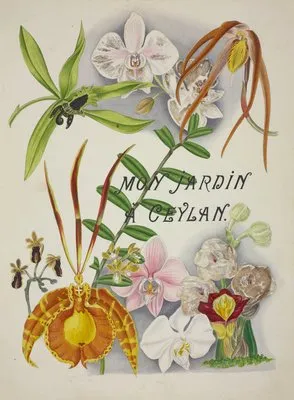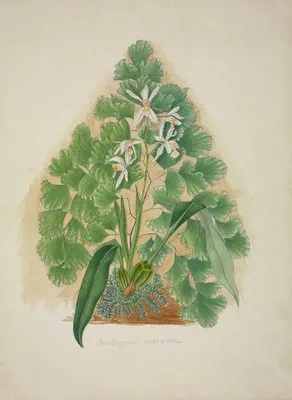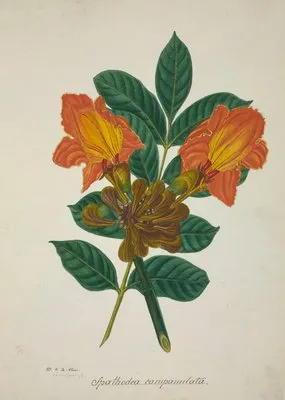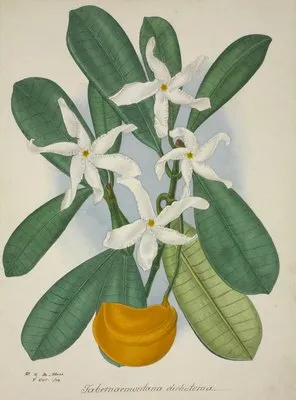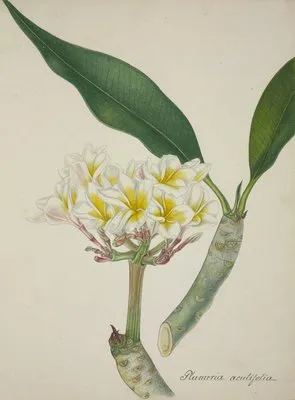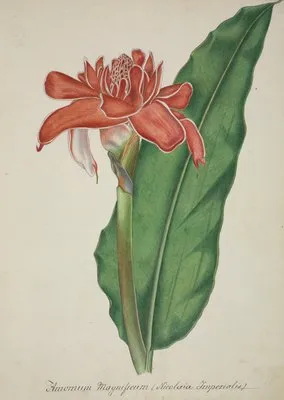
Mon Jardin a Ceylan Pl.123 (1896)
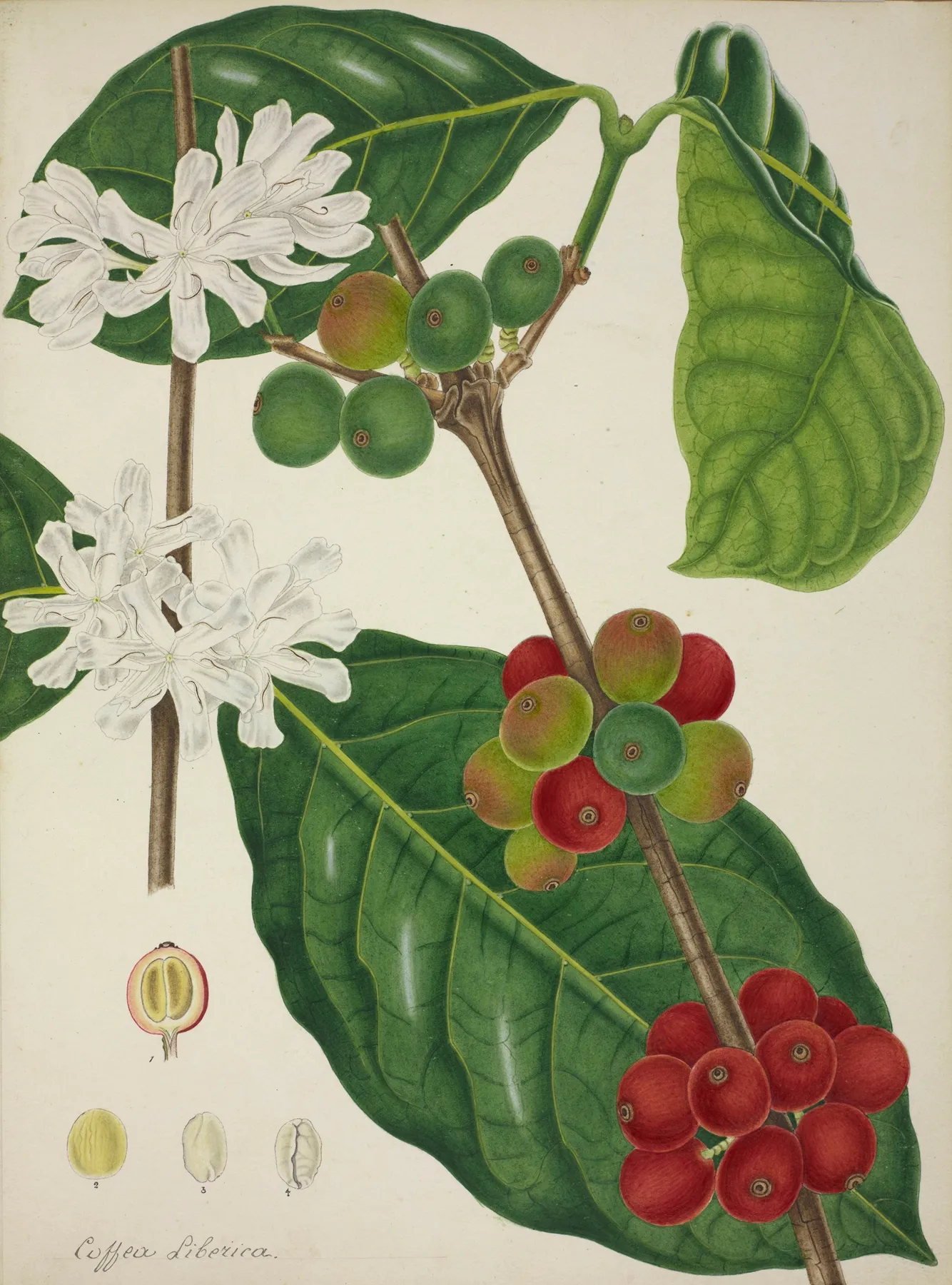
Coffeo diberica|Mon Jardin a Ceylan Pl.123 (1896)
Mon Jardin a Ceylan Pl.123 (1896)
About this plate
Mon Jardin a Ceylan Pl.123 (1896) is plate 123, from Mon Jardin a Ceylan, drawn by George De Alwis. This public-domain plate is reproduced at high resolution, free to view and download. Publication: Sri Lanka, 1896.
Twelve ways of seeing
- measured cast red
- upright 1.35 : 1
- published 1896
- Plate 123
Not a catalogue entry but a way of looking: how to stand, what to notice, how the line was cut, when it flowers, where it came from, who made it — and then the poems and the classics that taught China to see the same flower. Read the twelve in order and the plate opens.
-
First Look
凡画山水,意在笔先。
—— 唐·王维《山水论》
In painting, the intention precedes the brush.
The sheet is vertical: the eye climbs and settles in the upper half. Let the plant stand before you look for detail. Then step in close: watch where colour meets line, and whether the line ever breaks. Third, find where the green is deepest: the whole tonal order is measured from that patch.
-
Name and Thing
No reliable binomial survives, so the printed title must serve. Neither name nor binomial survives: the printed title must do.
-
Form and Colour
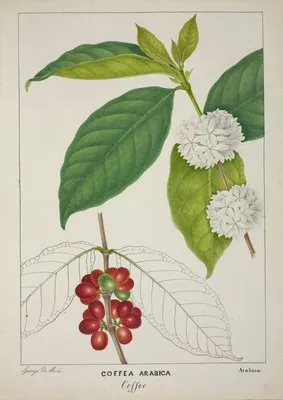
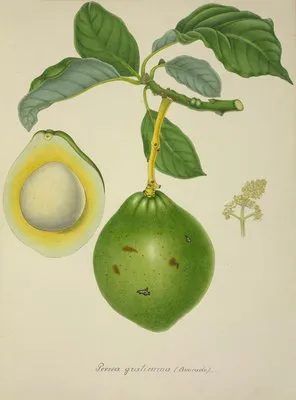
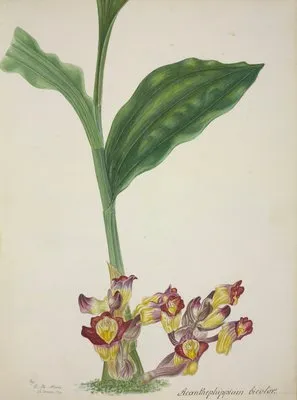
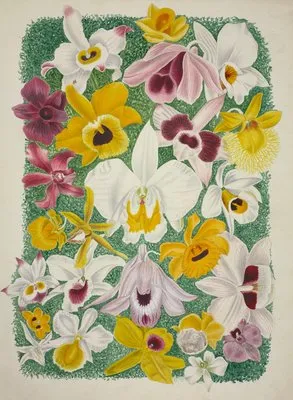
Measured on this plate: flower colour covers 11.8% of the sheet, foliage 36.6%, the cast red with a second note of amber. No other plate shares exactly this measure. Tropical plants defy temperate habits: heavy, saturated flowers with strong scent, leathery or dissected leaves, stems that climb, swell, or reduce to spines. Filed under green — a moss green, a colour that comes mostly from leaf and stem. Three things fix the habit: leaf arrangement, tepal count, and how the flower is borne.
-
Composition
Tall and narrow, the plant rising in one movement with generous margins — the upright format of most floras. (about 1.35 : 1) No details are appended: a plate for looking, not for keying out. The plant fills 74% of the sheet, centred near the centre — the herbarium way, drawn to be read whole. Blank paper is not unfinished work: it is where the eye rests.
-
Line and Colour
In the later nineteenth century chromolithography took over: colour printed rather than painted, line demoted. Take a loupe to three places: petal edge, leaf vein, caption. An unbroken line means engraving; colour crossing the outline means a hand.
-
Season
The tropics have no four seasons, only wet and dry; flowering follows the first rains, so a month on the plate often means 'after the rain'. The year 1896 on the plate is that of publication, not of flowering — the gathering came a year or two earlier. The best time to read such a plate is its flowering season: three minutes under the tree explains what no text can.
-
Provenance
Central and South America, Southeast Asia, India, Ceylon. Eighteenth- and nineteenth-century artists either sailed with the ships or drew from living specimens under glass. In the same volume the kin are shelved together; set several plates side by side.
-
The Book and the Hand
“Mon Jardin a Ceylan” was drawn by George De Alwis and published 1896. This plate is Plate 123. The image is public domain; the hand-colouring is still one person's hand.
-
Poetic Resonance
日啖荔枝三百颗,不辞长作岭南人。
—— 宋·苏轼《食荔枝》
Three hundred lychees a day — I would not mind being a southerner all my life.
The poem gives the mood first and the picture supplies the form; set the line beside the plate and the green the corolla becomes its resting point.
-
The Written Tradition
投我以木瓜,报之以琼琚。匪报也,永以为好也。
—— 《诗经·卫风·木瓜》
You toss me a quince, I return a jade pendant — not as payment, but so that we may be friends for ever.
Ji Han's fourth-century Records of the Plants of the South is China's earliest regional flora; Europe's counterpart was the exotic flora brought home by voyages — both by-products of empire and trade. Keep the line; it will surface the next time you meet the same plant.
-
Symbolism
In China these plants carry no classical symbolism; their meaning is newness — new worlds, new species, new trade routes. They show natural history's expanding edge. In a flora it is a species first and a symbol second; the order is worth keeping.
-
What to Take Away
Next time you stand before a flowering plant, give it three minutes: leaf arrangement, direction of the flower, the darkest patch. The flower of that year is dust, yet its image on paper has outlived every living cousin.