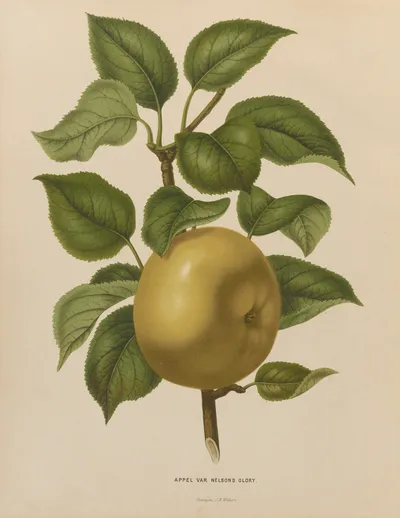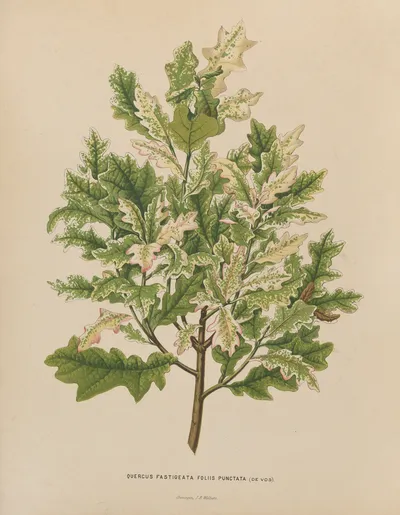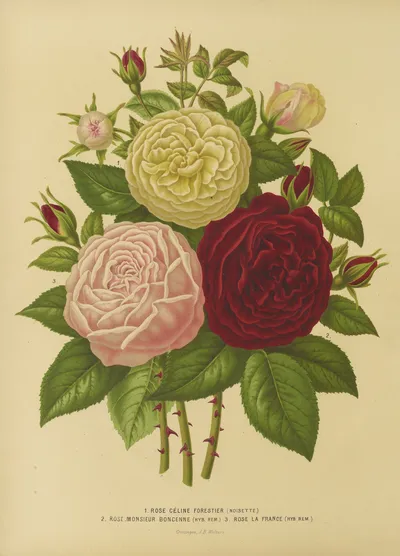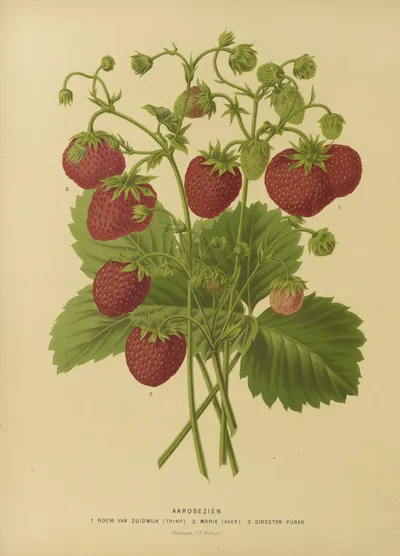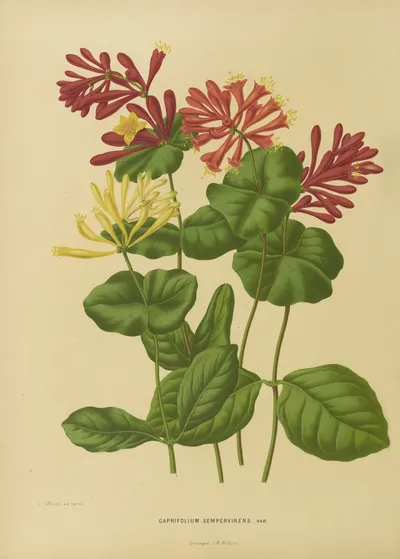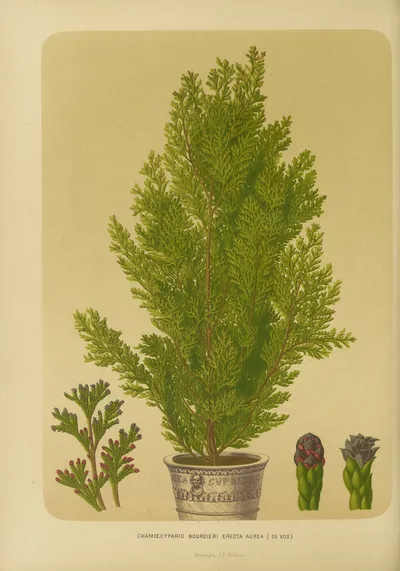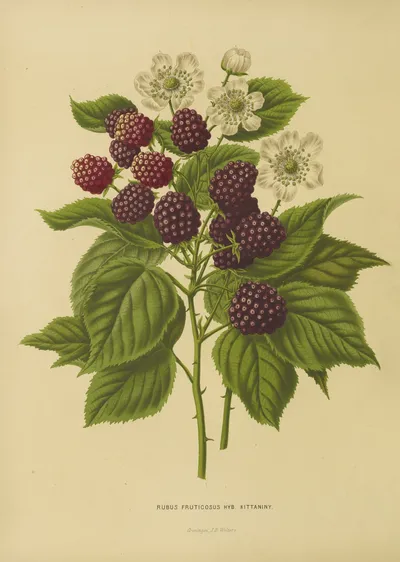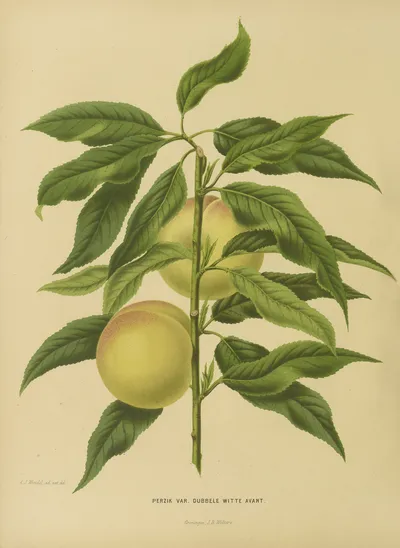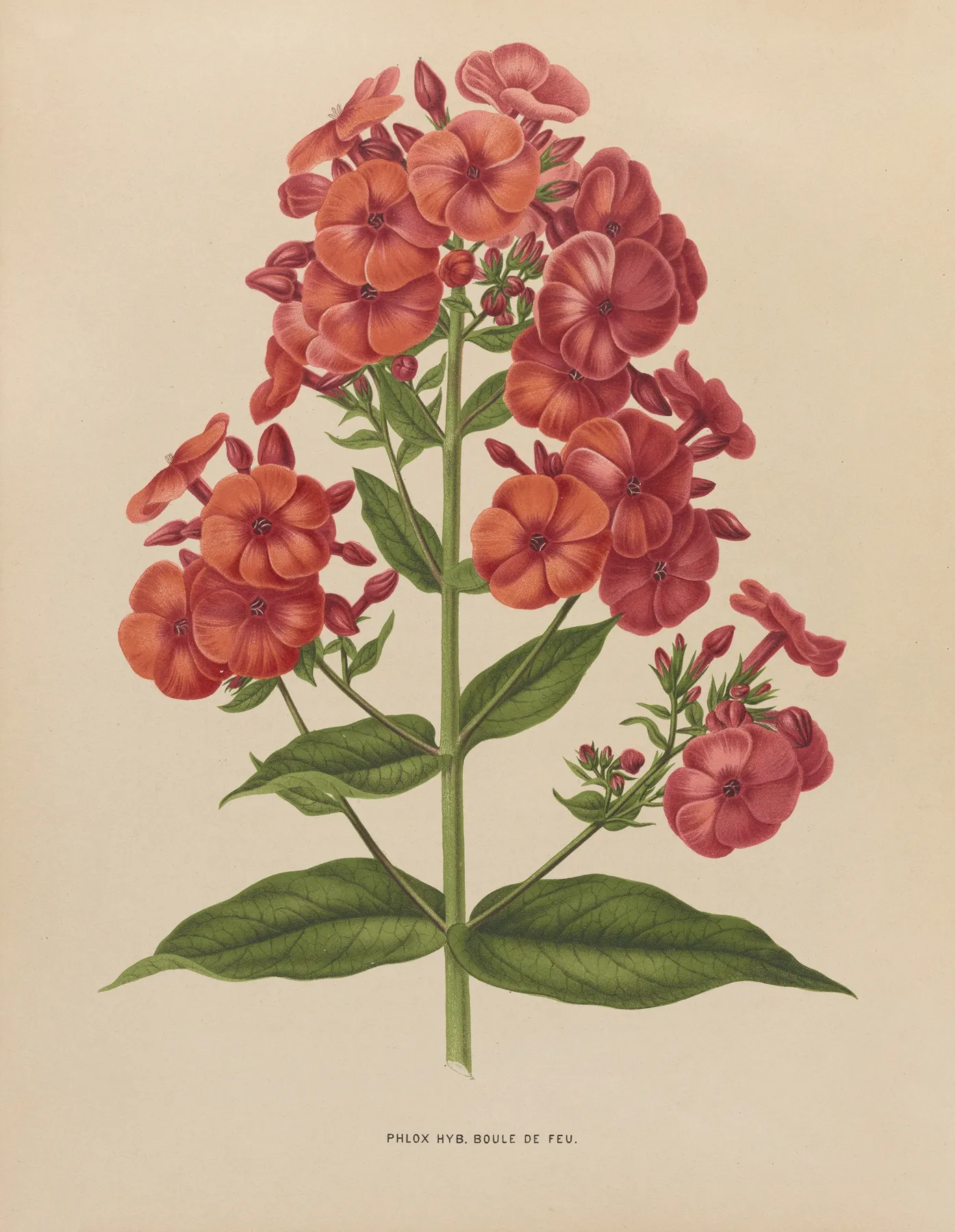
Phlox Hyb. Boule De Feu (1879)
Ten ways of seeing
- slightly upright 1.29 : 1
First Look
凡画山水,意在笔先。
—— 唐·王维《山水论》
In painting, the intention precedes the brush.
Slightly taller than wide; the eye lands above centre. Then step in close: watch where colour meets line, and whether the line ever breaks. Third, find the darkest small patch: the whole tonal order is measured from there.
Name and Thing
No reliable binomial survives, so the printed title must serve. Neither name nor binomial survives: the printed title must do.
Form and Colour
Wildflowers are rarely tidy: small blooms, slender stems, leaves imperfect and often chewed. That untidiness is exactly what records wind, light and soil.No colour group is recorded. Read the outline, then the colour layers, then the brush.
Composition
Slightly taller than wide, the plant set a little above centre. No details are appended: a plate for looking, not for keying out. Old plates set the plant slightly off centre, with unequal margins — that small imbalance is what keeps it alive.
Line and Colour
In the later nineteenth century chromolithography took over: colour printed rather than painted, line demoted. There is evidence on the back too: the plate mark pressed into the paper, the slight relief of the pigment, lines worn shallow in a later printing. If you mean to copy it: block in the broad shapes and colours first, detail last; lithographic softness comes from thin washes — two or three pale layers will get you close.
Poetic Resonance
叶心朱实看时落,阶面青苔先自生。
—— 唐·杜甫《院中晚晴懷西郭茅舍》
The poem gives the mood first and the picture supplies the form; set the line beside the plate and the corolla becomes its resting point.
Symbolism
In Chinese verse wildflowers bloom unseen, owing nothing to praise; in the West they mark a place — one species, one landscape's character. In a flora it is a species first and a symbol second; the order is worth keeping.
Season and Place
By latitude and altitude. Native plants of woodland floor, bog, roadside and rock crevice. The year 1879 on the plate is that of publication, not of flowering — the gathering came a year or two earlier. See this kind of plate in the flowering season if you can: once you have met the living flower, you stop reading only colour.
The Book and the Hand
“Nederlandsche flora en pomona” carries only Abraham Jacobus Wendel's name. The image is public domain; the hand-colouring is still one person's hand.
What to Take Away
Appreciation is not knowledge but habit — one more look each time. The flower of that year is dust, yet its image on paper has outlived every living cousin.