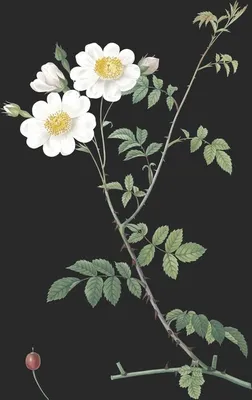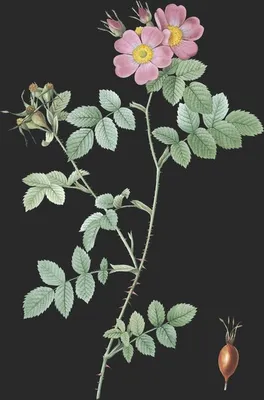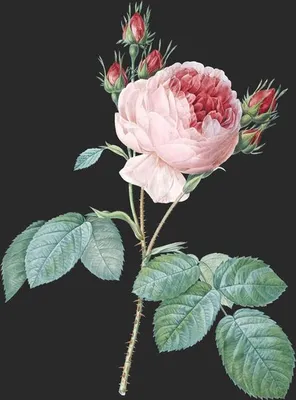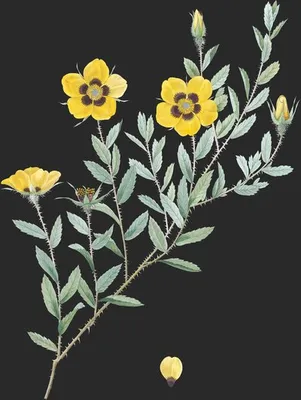
Rosa Brevistyla var Leucochroa
Rosa Brevistyla var Leucochroa
Le Rosier a Court Style
Ten ways of seeing
- measured cast yellow-green
- slightly upright 1.22 : 1
First Look
六法者何?一、气韵生动是也;二、骨法用笔是也;三、应物象形是也;四、随类赋彩是也;五、经营位置是也;六、传移模写是也。
—— 南齐·谢赫《古画品录》
The six laws: spirit resonance alive; bone-method in the brush; matching form; colour by kind; planning the placing; copying the masters.
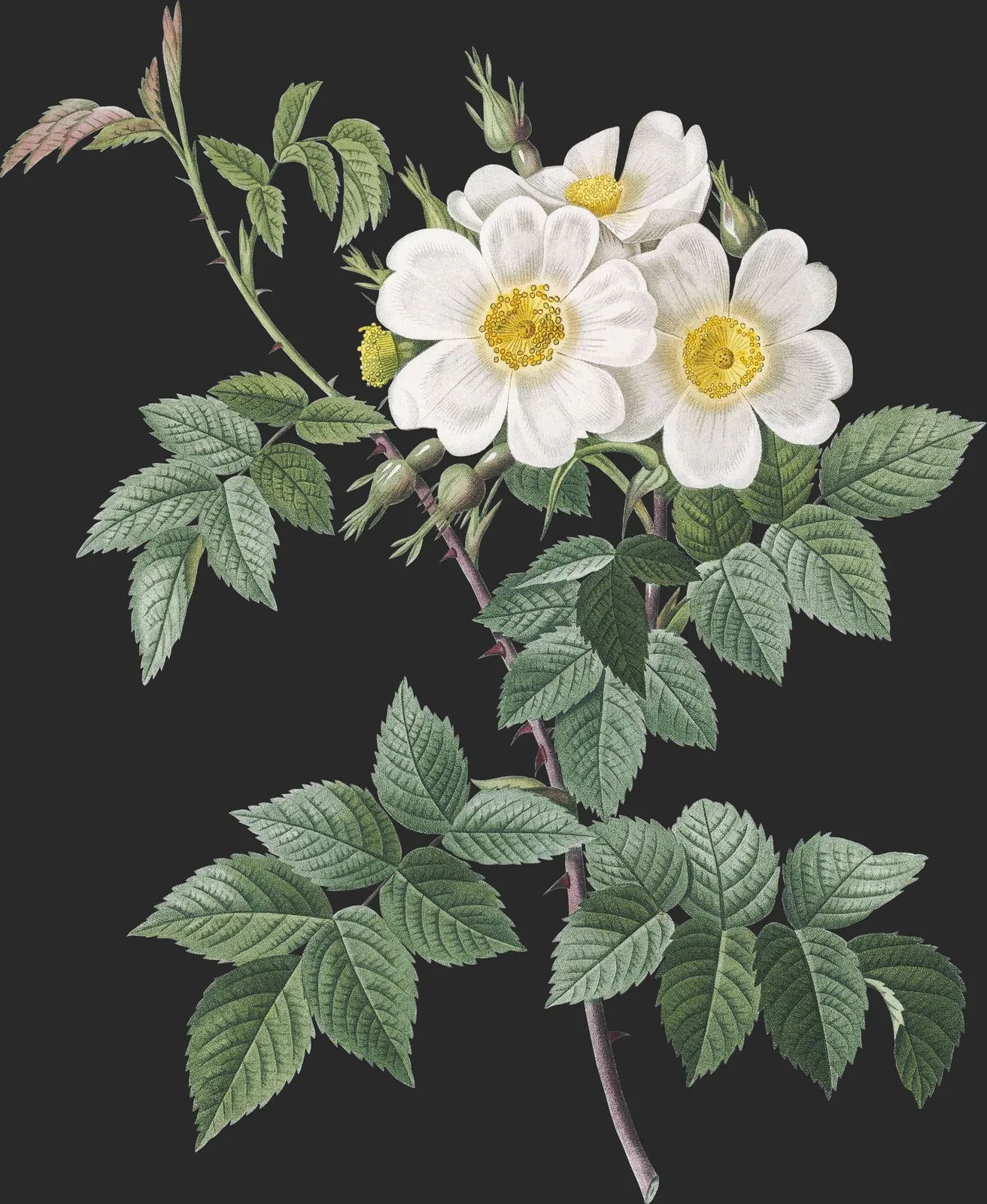
Slightly taller than wide; the eye lands above centre. Then step in close: watch where colour meets line, and whether the line ever breaks. Third, find where the green is deepest: the whole tonal order is measured from that patch.
Name and Thing
The binomial is Rosa brevistyla: the first word is the genus it belongs among, the second the epithet that sets it apart. The genus name Rosa: Rosa is simply the Latin for rose, from Greek rhodon. No established Chinese name exists, so it is cited by its binomial alone.
Form and Colour
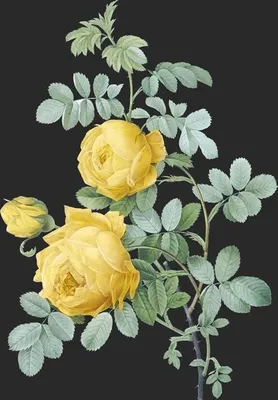
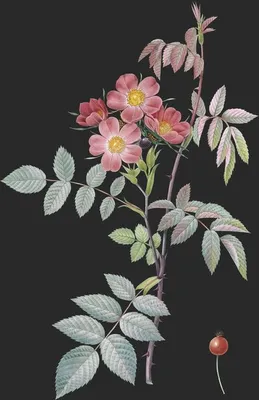
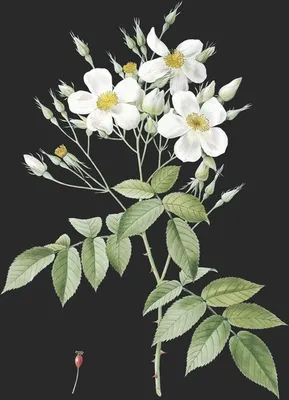
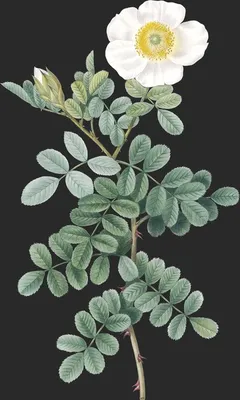
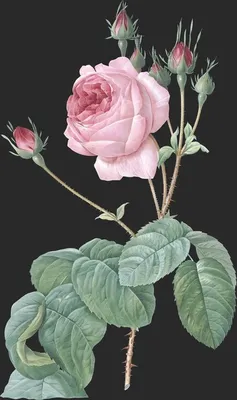
Measured on this plate: flower colour covers 2.4% of the sheet, foliage 8.2%, the cast yellow-green. No other plate shares exactly this measure. Roses are shrubs or scramblers with pinnate leaves of three to seven serrated leaflets; the double flowers open in crumpled, inward-curling layers around a small knot of yellow stamens. a moss green. Three things fix the habit: leaf arrangement, tepal count, and how the flower is borne.
Composition
The sheet is slightly tall. No details are appended: a plate for looking, not for keying out. The plant takes about 36% of the sheet, centred near the centre — the easy measure most florists kept to.
Line and Colour
The first half of the nineteenth century moved from copper to steel to lithography; stipple could render the softest transition. Take a loupe to three places: petal edge, leaf vein, caption. An unbroken line means engraving; colour crossing the outline means a hand. If you mean to copy it: take its skeleton, its margins and the order of its colours; the burin's hatching is the language of copper — suggest it with pencil density, do not imitate it stroke for stroke.
Poetic Resonance
素景将阑,黄花初笑。
—— 宋·徐俯《踏莎行》
The poem gives the mood first and the picture supplies the form; set the line beside the plate and the green the corolla becomes its resting point.
Symbolism
In Europe the rose means love and secrecy ('sub rosa'); in Chinese verse the rambling rose leans and clings — lingering attachment rather than ardour. In a flora it is a species first and a symbol second; the order is worth keeping.
Season and Place
Late spring into early summer, peaking in May — the first flush of the garden year. the ever-blooming modern rose is a nineteenth-century crossing of European and Chinese stock. The year 1817 on the plate is that of publication, not of flowering — the gathering came a year or two earlier. The bud and the ripe fruit on one branch tell the season; the name in the title often tells the journey.
The Book and the Hand
“Les Roses” carries only Pierre-Joseph Redouté's name. The image is public domain; the hand-colouring is still one person's hand.
What to Take Away
If you keep one line, keep Guo Xi's: from afar its momentum, up close its texture. A flora exists to be consulted; look long enough and you forget to consult — someone in 1817 gave a whole day to a single flower.
About this plate
Description
Ce beau Rosier forme un buisson touffu qui s’élève à la hauteur de six à huit pieds. Ses rameaux, diffus et parfaitement glabres, sont armés d’aiguillons épars, larges, crochus et rougeâtres. Ses feuilles se composent de sept folioles vertes en-dessus, plus pâles en-dessous, ovales-pointues, simplement dentées, supportées par un pétiole garni de petits aiguillons jaunes, courbés, inégaux, et muni à la base de stipules étroites pointues et glabres. Les fleurs, d’un blanc-jaunâtre, principalement vers l’onglet, légèrement odorantes, naissent trois ou quatre ensemble, et forment, par leur réunion à l’extrémité des rameaux, une espèce de corymbe court et serré. Les pédoncules communs sont glabres, mais les pédicelles sont couverts de cils rudes au toucher, et garnis, à leur base, de deux bractées ovales, allongées et pointues. Le tube du calice, de forme à-peu-près ovoïde, est glabre; les divisions du lymbe sont pinnatifides, terminées en spathule, et un peu velues en leurs bords. Les cinq pétales de la corolle sont profondément échancrés en cœur. Les styles sont soudés, et réunis en une colonne glabre très-courte, qui s’élève du centre de la fleur, et s’épanouit au sommet en plusieurs stygmates distincts.
Nomenclature des variétés connues de cette espèce.
- R. Germinibus ovatis glabris; pedicellis hispidulis aliquando glabris; lacinis calycinis pinnatifidis; stylis in columnam glabram brevem coalitis. (N.)
- R. Brevistyla. D C. Fl. franç. vol. 6, p. 537.
- R. Leucochroa. Desv. Journ. Bot. 2, p. 316, ibid. 1813, p. 113. Lois. not. p. 80. D. C. cat. monsp. p. 138, № 6.
Les Rosiers suivants composent la quatrième division de la série des Rosiers à styles soudés (voyez page 90).
-
- R. Brevistyla leucochroa.
- R. Brevistyla petalis albis basi favidis. D C. Fl. franç. vol. 6, p. 53g. v. α.
- R. (Leucochroa) Desv. l. c. Tab. 15. D C. cat. monsp. 138.
- R. Germinibus ovatis pedunculisque glabris, calycinis lacinis pinnatifidis, foliolis ovatis glabris lucidis, stylis subsessilibus connato-capitatis, glabris. Lois. not. p. 80.
-
- R. Brevistyla lactea.
- R. (Leucochroa) lactea fl. candidis. Lois. l. c.
-
R. Brevistyla petalis lacteis. D C. Fl. franç. l. c. v. β.
Cette variété ressemble à la première, mais ses fleurs sont parfaitement blanches.
-
- R. Brevistyla systyla.
- R. (Systyla) calycum tubis ovatis glabris; pedunculis hispidulis; petiolis nervisque pubescentibus; foliolis ovato-lanceolatis glabris; foribus solitaris; stylis in colum-nam cylindricam coalitis. Bast. supp. à la Fl. de Maine-et-Loire, p. 31.
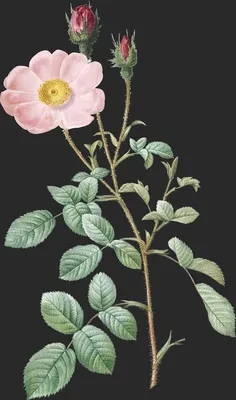
- R. Brevistyla petalis pallide roseis. D C. Fl. franç. l. c. v. γ.
- R. (Leucochroa) angusta. Desv. Journ. 1813, l. c. v. β.
Ces Rosiers croissent dans le Haut-Poitou, dans l’Anjou, et il est vraisemblable qu’on les trouvera encore ailleurs quand on prendra la peine de les chercher. La variété γ est plus rare que les autres. Toutes trois nous ont été envoyées de La Flèche, par M. Le Meunier, et nous les cultivons avec succès.