Rosa Hudsoniana var Subcorymbosa
Le Rosier d’Hudson
Le Rosier d’Hudson
Ten ways of seeing
- measured cast red
- slightly upright 1.27 : 1
First Look
夫象物必在于形似,形似须全其骨气。
—— 唐·张彦远《历代名画记》
Likeness is the threshold; bone-and-breath is the point.
Slightly taller than wide; the eye lands above centre. Then step in close: watch where colour meets line, and whether the line ever breaks. Third, find where the green is deepest: the whole tonal order is measured from that patch.
Name and Thing
The binomial is Rosa hudsoniana: the first word is the genus it belongs among, the second the epithet that sets it apart. The genus name Rosa: Rosa is simply the Latin for rose, from Greek rhodon. No established Chinese name exists, so it is cited by its binomial alone.
Form and Colour
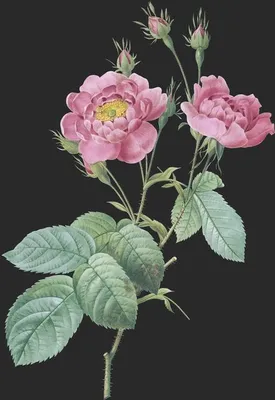
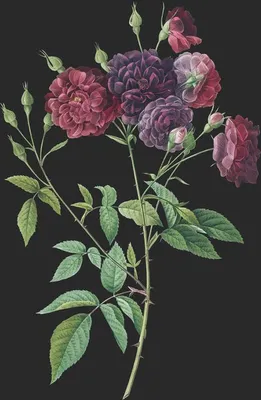
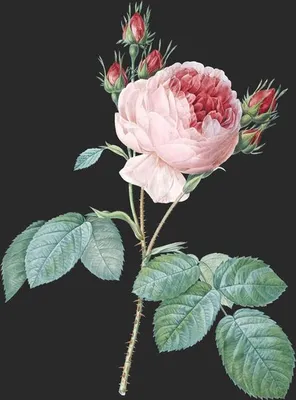
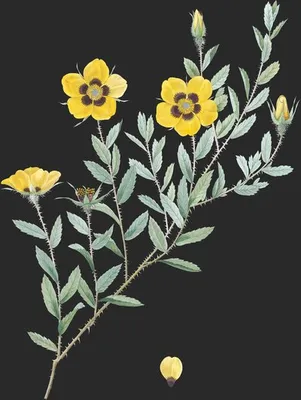
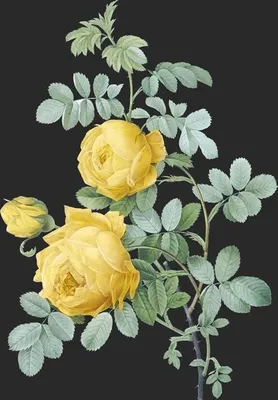
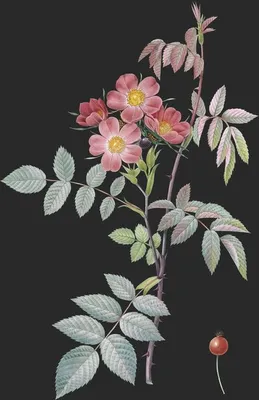
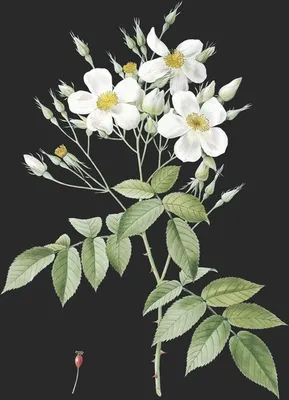
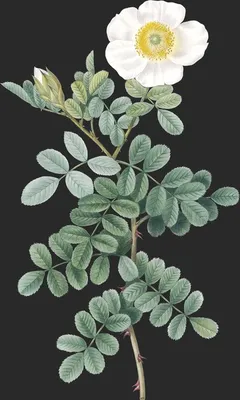
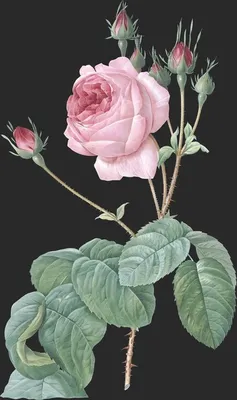
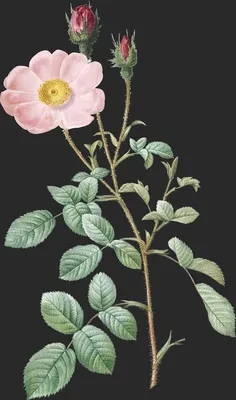
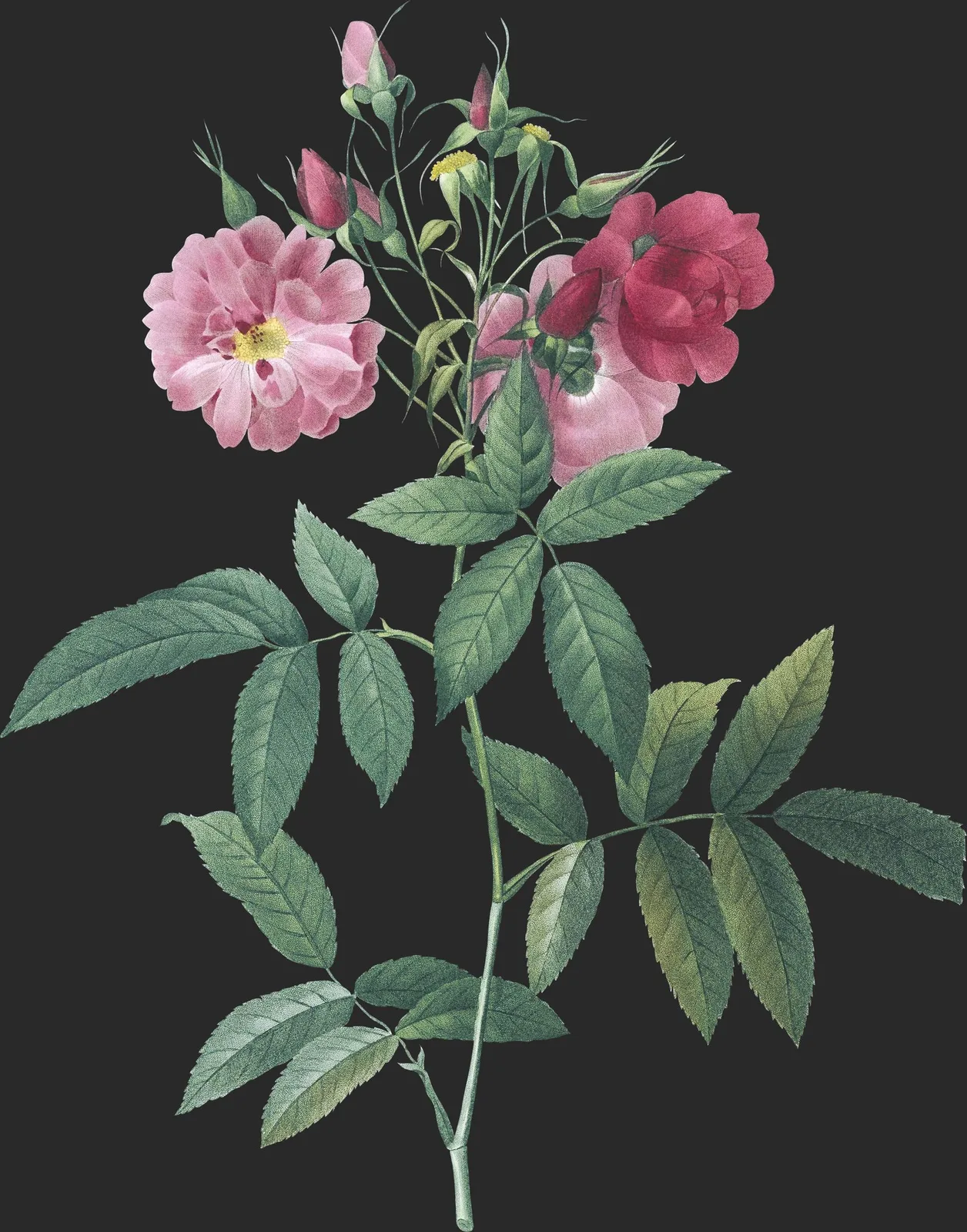
Measured on this plate: flower colour covers 5.8% of the sheet, foliage 10.7%, the cast red with a second note of crimson. No other plate shares exactly this measure. Roses are shrubs or scramblers with pinnate leaves of three to seven serrated leaflets; the double flowers open in crumpled, inward-curling layers around a small knot of yellow stamens. a moss green. Read the outline, then the colour layers, then the brush.
Composition
The sheet is slightly tall. No details are appended: a plate for looking, not for keying out. The plant takes about 29% of the sheet, centred near the centre — the easy measure most florists kept to.
Line and Colour
The first half of the nineteenth century moved from copper to steel to lithography; stipple could render the softest transition. Decide first whether it was printed or painted; only then discuss whether it is beautiful. If you mean to copy it: take its skeleton, its margins and the order of its colours; the burin's hatching is the language of copper — suggest it with pencil density, do not imitate it stroke for stroke.
Poetic Resonance
更旁无红粉有青奴,堪娱夜。
—— 宋·刘克庄《满江红》
The poem gives the mood first and the picture supplies the form; set the line beside the plate and the green the corolla becomes its resting point.
Symbolism
In Europe the rose means love and secrecy ('sub rosa'); in Chinese verse the rambling rose leans and clings — lingering attachment rather than ardour. Flower language was added later; the flower knows nothing of it, and that innocence is part of its power.
Season and Place
Late spring into early summer, peaking in May — the first flush of the garden year. Widespread in the temperate north. Chinese gardeners knew roses since the Han. The year 1821 on the plate is that of publication, not of flowering — the gathering came a year or two earlier. Read the locality and the flowering season both with a discount: one is hearsay, the other a ten-day peak.
The Book and the Hand
“Les Roses” carries only Pierre-Joseph Redouté's name. A plate is collective work: drawer, engraver and colourist were different hands, and the unnamed ones decided how good it looks.
What to Take Away
Next time you stand before a flowering plant, give it three minutes: leaf arrangement, direction of the flower, the darkest patch. The flower of that year is dust, yet its image on paper has outlived every living cousin.
About this plate
Description
Ce Rosier s’élève à deux ou trois pieds. Ses branches, dif-fuses, rougeâtres, particulièrement sur les parties exposées au soleil, sont absolument dépourvues d’aiguillons. Ses feuilles se composent de cing, sept, ou neuf folioles de forme elliptique-allongée, pointues à la base et au sommet, glabres sur les deux faces, vertes endessus, glauques en-dessous, finement et simplement dentées en scie. Le pétiole qui les supporte est légèrement velu; on y rencontre parfois quelques petits aiguil-lons. Il est muni de stipules étroites et bifides, repliées sur elles-mêmes. Les fleúrs se réunissent, en une espèce de corymbe, à l’extrémité des rameaux. Les pédoncules qui les supportent sont garnis d’un petit nombre de poils glanduleux. Les tubes des calices, ovoïdes-allongés, sont indifféremment glabres ou munis de quelques poils sur le même arbrisseau. Les divisions du limbe sont simples, pointues ou spatulées au sommet, glandulenses à l’extérieur et sur leur bordure, et couvertes d’un duvet blanchâtre à l’intérieur. La corolle présente cing ou six rangs de pétales, d’un rose-tendre irrégulierement arrondis au sommet. Étamines très-nombreuses. Stigmates réunis en une tête sessile au centre de la fleur.
Observations
Cette variation du Rosier d’Hudson diffère de la variété à feuilles de saule (vol. 1, p. et fig. 95) par ses folioles moins allongées et de forme elliptique, ses ovaires plus constamment glanduleux, et ses fleurs semi-doubles. Quant à notre R. Hudsoniana scandens, il se distingue facilement des deux autres par ses rameaux grimpants, et ses fleurs le plus souvent soli-taires, rarement réunies par deux ou trois.
Le dessin du Rosier dont nous présentons aujourd’hui la figure a été fait sur des échantillons pris dans le jardin de M. Ternaux, à Auteuil, où il a été, depuis peu, obtenu de semence.
- R. Hudsoniana fl. submultiplici. Thy. Prod. p. 147.