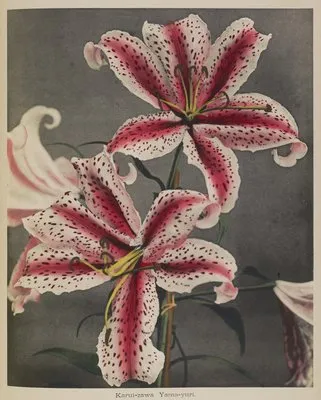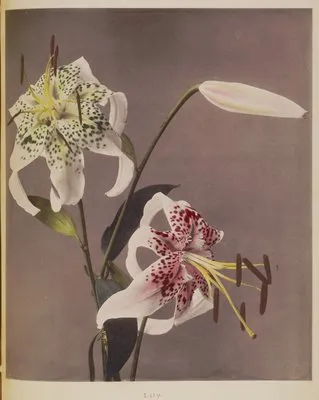
Chrysanthemum (1896)
Chrysanthemum (1896)
Chrysanthemum (1896)
About this plate
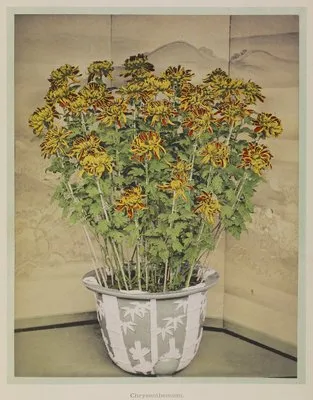
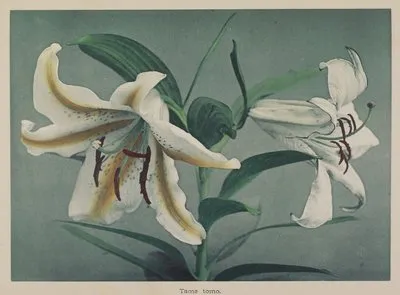
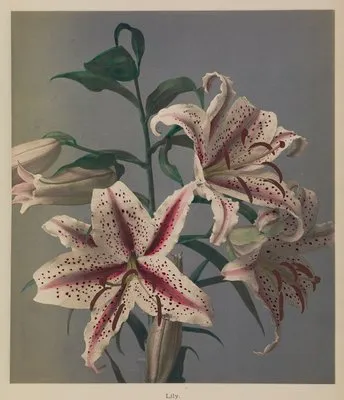
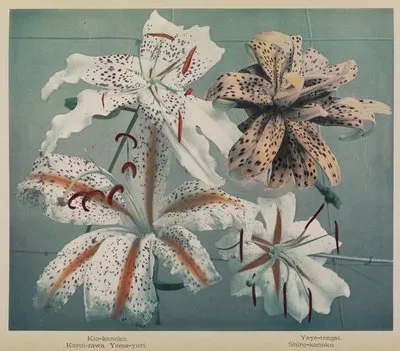
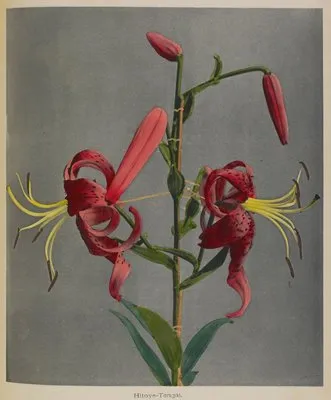
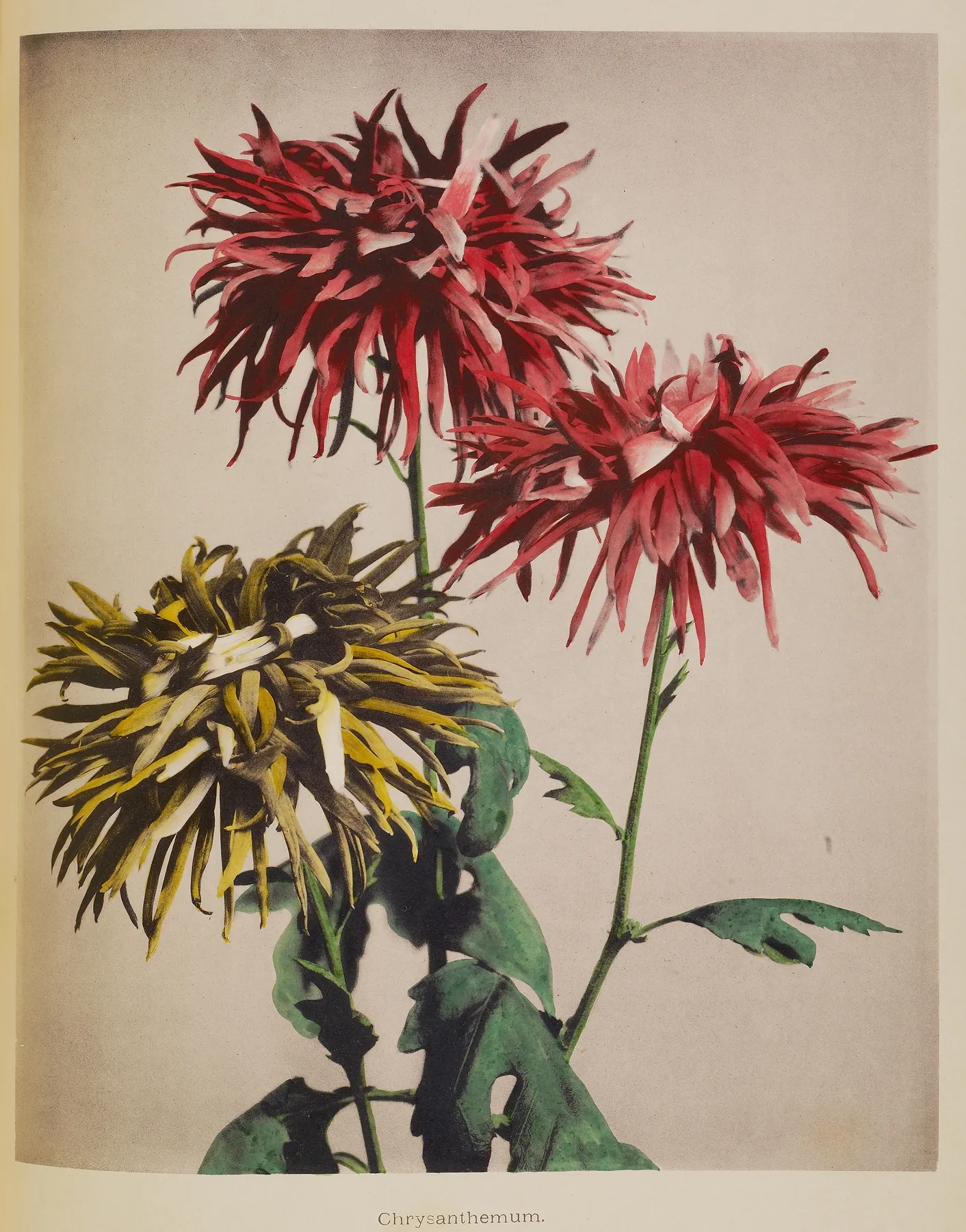
Chrysanthemum (1896) is plate 21, from Some Japanese Flowers, drawn by Kazumasa Ogawa. This public-domain plate is reproduced at high resolution, free to view and download. Publication: Tokyo, 1896.
Twelve ways of seeing
One plate, read twelve times over: its name, its colour, the burin and the brush, the shape of the sheet, the season, the soil it came from, the book it belongs to, its language of flowers, the poem it answers to, the lore behind it, how to look, and what remains.
-
The Name
The plate is titled “Chrysanthemum”, numbered Plate 21. The plate gives only the genus, Chrysanthemum; species-level names came later. No established Chinese name exists for this plate, so it is cited by its binomial alone.
-
Form and Colour
Chrysanthemums are herbaceous with deeply lobed, downy leaves. Each 'flower' is a head — ray florets around the rim, disc florets in the centre, hundreds of small flowers in one. Filed under orange — an amber orange. The colour is built in washes: a pale ground first, then deepening at the petal base and in shadow. A single plant, laid out on the sheet with nothing hidden.
-
Line and Colour
In the later nineteenth century chromolithography took over: colour printed rather than painted, line demoted. Images grew more accurate and less personal. Look closely at the line and the colour: an unbroken line means engraving, colour crossing the outline by half a millimetre means hand-colouring. Craft leaves franker evidence than inscriptions.
-
Composition
Slightly taller than wide, the plant set a little above centre so the eye lands on the flower. (about 1.27 : 1). No details are appended: this is a plate for looking, not for keying out.
-
Season
Deep autumn, around the Double Ninth in the ninth month — after the first frost, when everything else is gone. The year 1896 on the plate is the year of publication, not of flowering — the gathering came a year or two earlier.
-
Provenance
Native to China, adopted in Japan as the imperial crest, carried to Europe by the Dutch in the seventeenth century and remade by Victorian breeders. The localities on the plate are those of a century ago; plants travel and places change their names.
-
The Book
“Some Japanese Flowers” was drawn by Kazumasa Ogawa and published 1896. This plate is Plate 21. The image is in the public domain; the hand-colouring on the paper is still one person's hand, two centuries ago.
-
Symbolism
In China, seclusion and long life — and, after Tao Yuanming, the will to go home; in Japan, imperial authority; in Europe, the last warmth of the year. This plate leans orange, which in flower language adds one more degree of feeling. In a flora it is a species first and a symbol second; the order is worth keeping.
-
Poetic Resonance
不是花中偏爱菊,此花开尽更无花。
—— 唐·元稹《菊花》
It is not that I favour the chrysanthemum among flowers; when it has bloomed, there are no more flowers.
The poem gives the mood first and the picture supplies the form; set the line beside the plate and the orange the corolla becomes its resting point.
-
Classical Lore
The Bencao Gangmu notes that the shoot may be eaten, the leaf steeped, the flower taken as food, the root used as medicine, the petals stuffed into a pillow, the whole brewed into wine. Chinese flower books ranked plants by character; European floras described them by form and name. This plate belongs to the second tradition, yet bears reading by the first. A flora asks what it is; a flower book asks what it means. Read both or half-read the plate.
-
How to Look
Study the ray florets — short and dense in pompons, long and drooping in spiders. The leaf lobes, more than the flower, tell the species. Stand back for the habit, step close for the meeting of line and colour.
-
Afterword
The flower of 1896 is dust, yet its image on paper has outlived every living cousin.