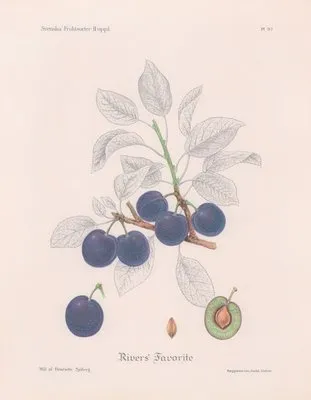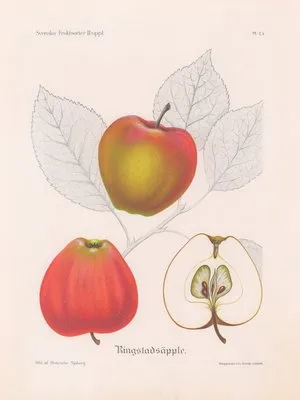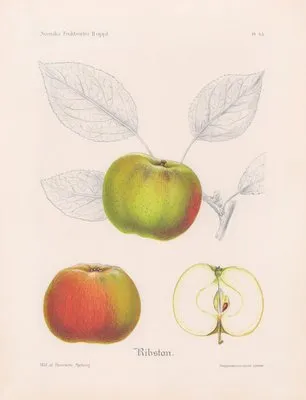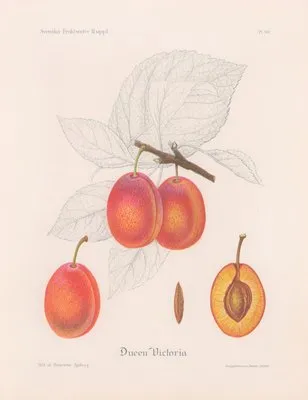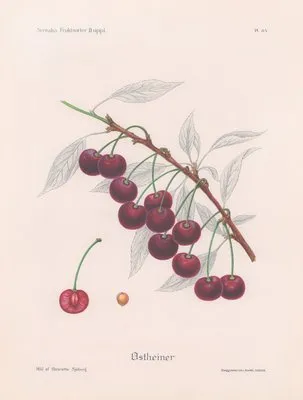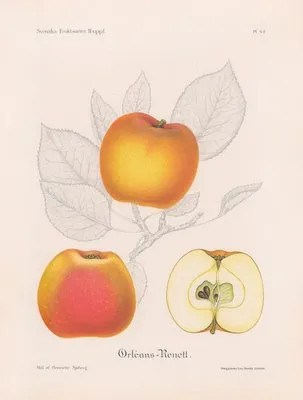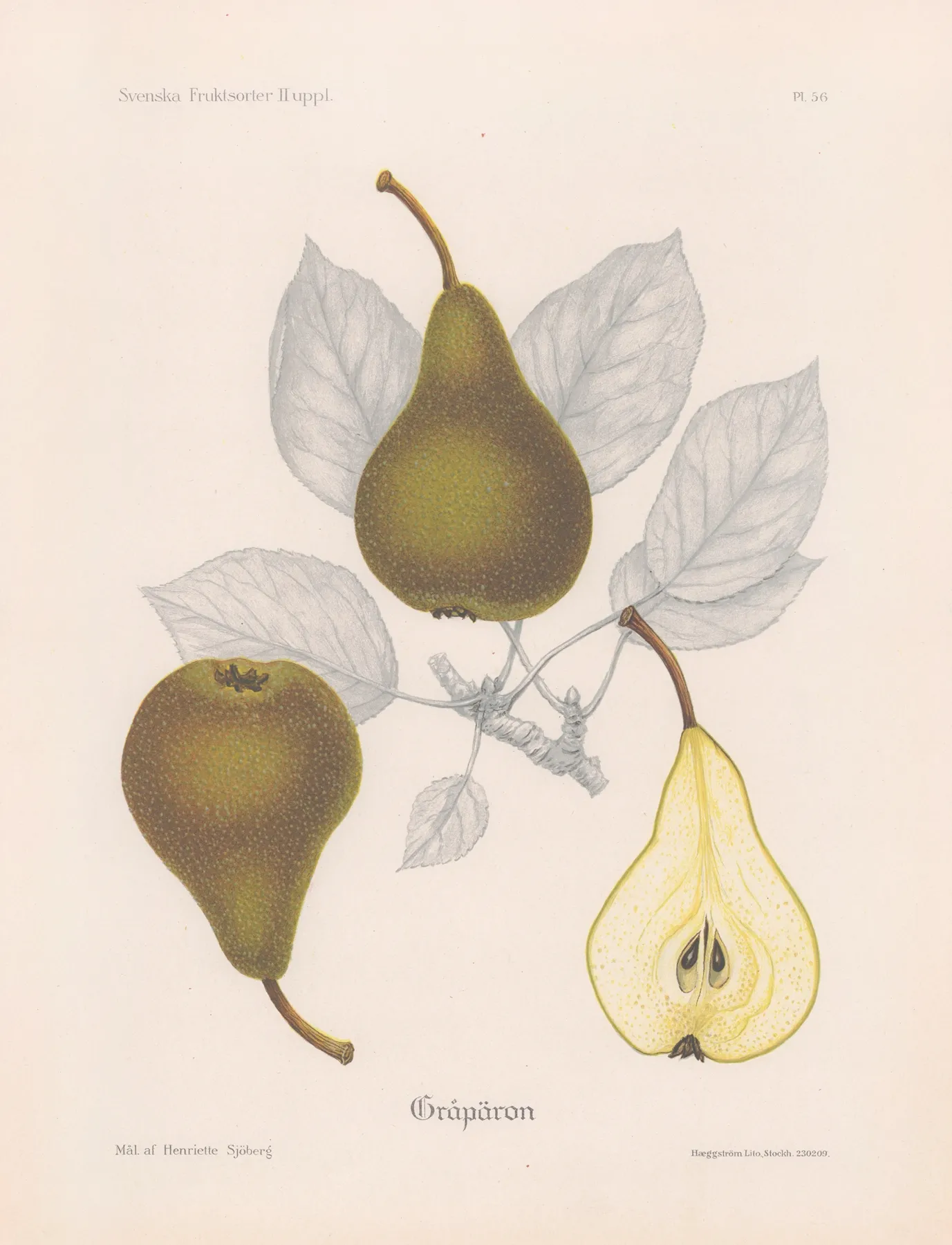
Gråpäron (1924)
Svenska Fruktsorter II uppl. PI. 56 ⑥räpäran Mäl. af Henriette Sjöberé Haeggström Lito,Stock
About this plate
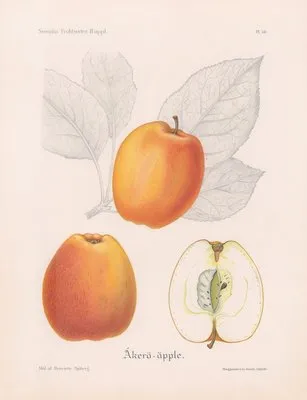
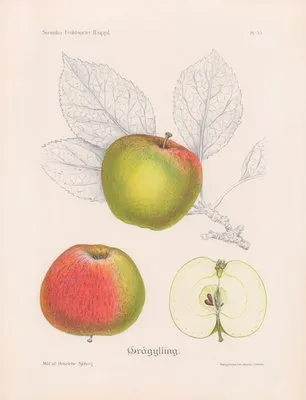
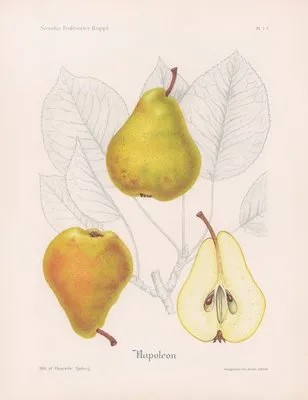
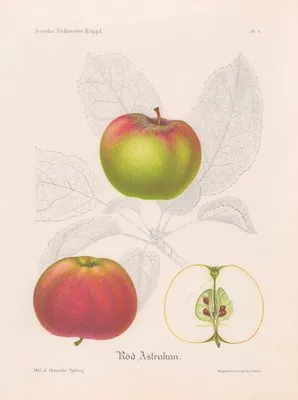
Gråpäron (1924) is plate 90, from Swedish fruit varieties (Svenska fruktsorter), drawn by Henriette Sjöberg. This public-domain plate is reproduced at high resolution, free to view and download. Publication: Stockholm, P. A. Norstedt & Söners Förlag, 1924.
Twelve ways of seeing
- measured cast amber
- upright 1.31 : 1
- published 1924
- Plate 90
Not a catalogue entry but a way of looking: how to stand, what to notice, how the line was cut, when it flowers, where it came from, who made it — and then the poems and the classics that taught China to see the same flower. Read the twelve in order and the plate opens.
-
First Look
夫象物必在于形似,形似须全其骨气。
—— 唐·张彦远《历代名画记》
Likeness is the threshold; bone-and-breath is the point.
The sheet is vertical: the eye climbs and settles in the upper half. Let the plant stand before you look for detail. Then step in close: watch where colour meets line, and whether the line ever breaks. Third, find the darkest small patch: the whole tonal order is measured from there. The pose leans right: the upper half carries 13 points further right than the lower — a living thing, not a diagram.
-
Name and Thing
No reliable binomial survives, so the printed title must serve. Neither name nor binomial survives: the printed title must do.
-
Form and Colour
Measured on this plate: flower colour covers 10.6% of the sheet, foliage 0.0%, the cast amber with a second note of yellow-green. No other plate shares exactly this measure. Fruit plates pair the whole fruit with a section: the outline identifies the variety, the cut reveals skin thickness, core size and seed arrangement — the evidence of registration.No colour group is recorded. Three things fix the habit: leaf arrangement, tepal count, and how the flower is borne.
-
Composition
Tall and narrow, the plant rising in one movement with generous margins — the upright format of most floras. (about 1.31 : 1) No details are appended: a plate for looking, not for keying out. The plant covers only 16% of the sheet, centred near the centre; the emptiness is where the eye rests. Cover the margins with your thumb and the plate suffocates; uncover them and the flower breathes again.
-
Line and Colour
After 1900 photography and colour reproduction ran alongside watercolour: accuracy rose, the cut of the burin disappeared. Craft leaves franker evidence than inscriptions.
-
Season
Late summer into autumn, variety by variety; a fruit portfolio spans the whole harvest. The year 1924 on the plate is that of publication, not of flowering — the gathering came a year or two earlier. The plate records ten days of peak; the other three hundred are leaf, fruit and rest.
-
Provenance
Temperate fruits came mostly from Eurasia, later from the Americas. Nineteenth-century nurseries printed varietal albums for trade and exhibition: every fruit on the page was a saleable claim. In the same volume the kin are shelved together; set several plates side by side.
-
The Book and the Hand
“Swedish fruit varieties (Svenska fruktsorter)” was drawn by Henriette Sjöberg and published 1924. This plate is Plate 90. The image is public domain; the hand-colouring is still one person's hand.
-
Poetic Resonance
投我以木瓜,报之以琼琚。匪报也,永以为好也。
—— 《诗经·卫风·木瓜》
She threw me a quince; I gave back a jade pendant — not as repayment, but to be friends forever.
The poem gives the mood first and the picture supplies the form; set the line beside the plate and the fruit becomes its resting point.
-
The Written Tradition
宁古无时,宁朴无巧,宁俭无俗。
—— 明·文震亨《长物志》
Better old than fashionable, better plain than clever, better spare than vulgar.
The Book of Songs has a quince given and a jade pendant returned — fruit as ritual gift already in pre-Qin China. The difference is not of quality but of question: Europe asks what it is, China asks whom it resembles.
-
Symbolism
In China the pomegranate means many sons, the peach long life, the orange good fortune; in Europe the apple is temptation and knowledge, the grape abundance and sacrifice. Flower language was added later; the flower knows nothing of it, and that innocence is part of its power.
-
What to Take Away
Carry three rules away: whole before detail; line before colour; picture before book. A flora exists to be consulted; look long enough and you forget to consult — someone in 1924 gave a whole day to a single flower.