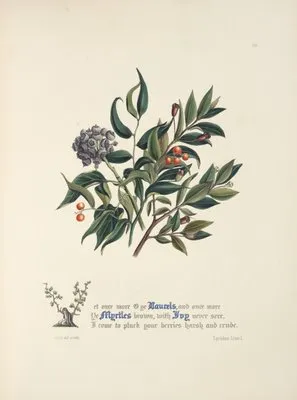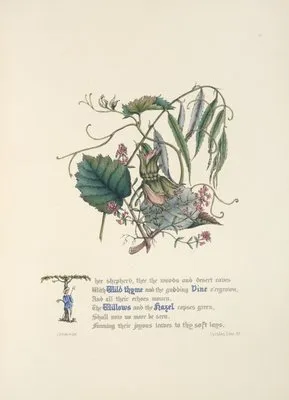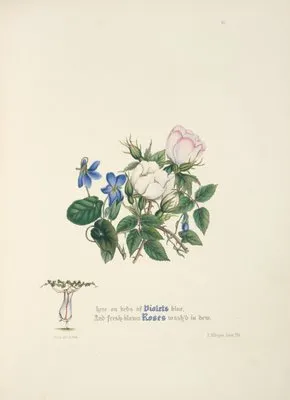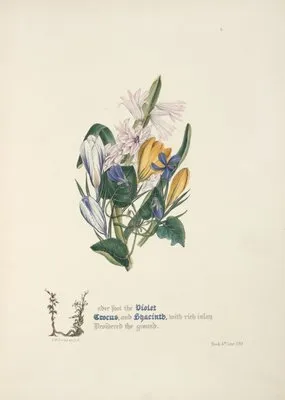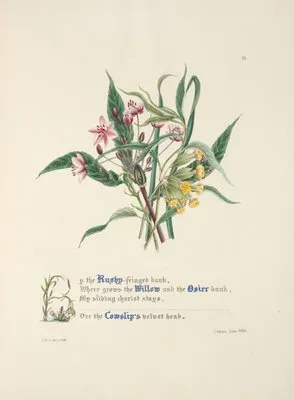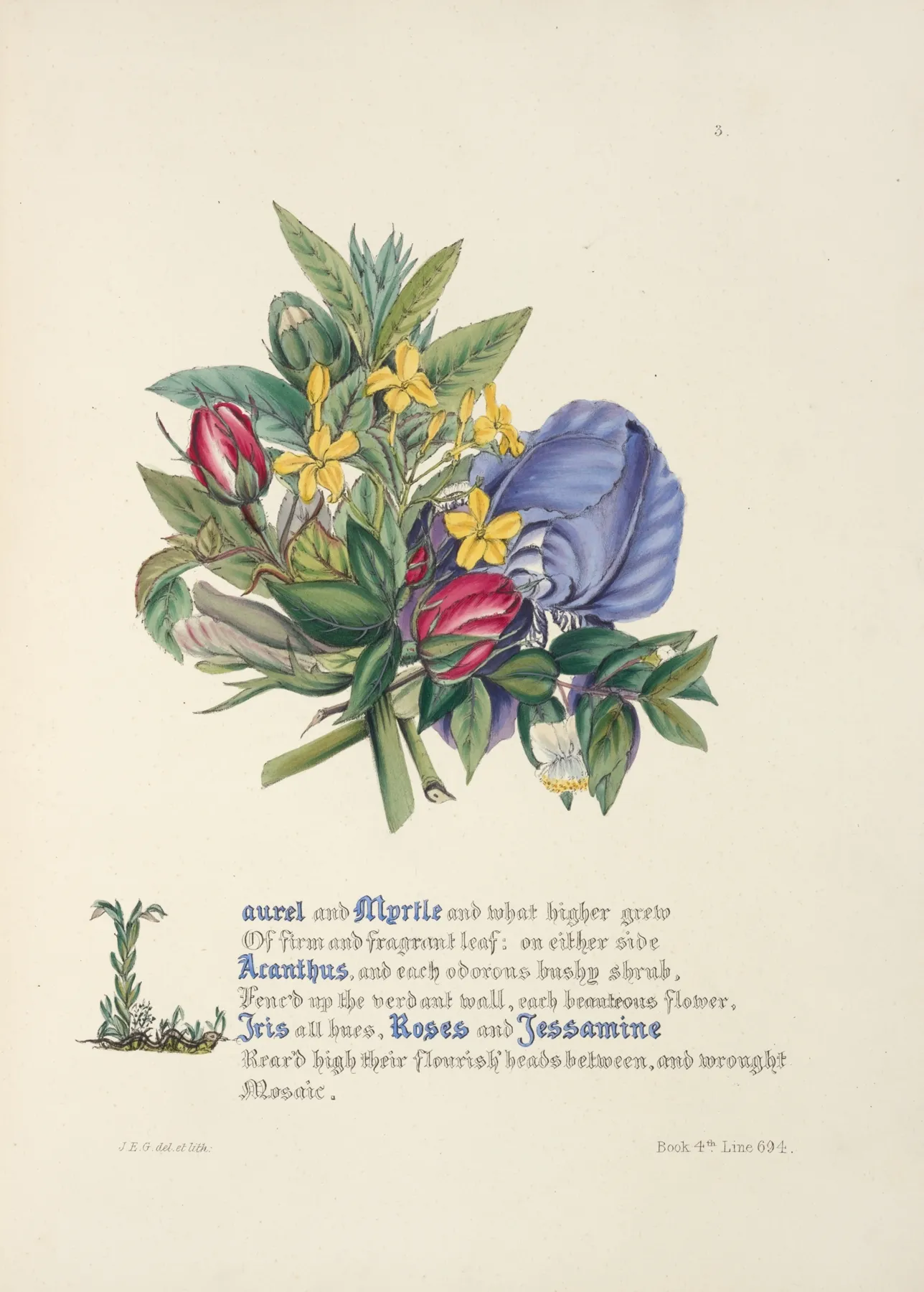
Laurel and myrtle (1846)
aurel and MMprile and lohat higher grelw Of firm and fragrank leaf: on eikher side Aranthus, and each odorous bushy shrub, Fened up lhe verd ank wall, earh beauteous flower, Iris al hues, Koses a
Laurel and myrtle (1846)
Ten ways of seeing
- measured cast yellow-green
- upright 1.40 : 1
First Look
夫象物必在于形似,形似须全其骨气。
—— 唐·张彦远《历代名画记》
Likeness is the threshold; bone-and-breath is the point.
The sheet is vertical: the eye climbs and settles in the upper half. Let the plant stand before you look for detail. Then step in close: watch where colour meets line, and whether the line ever breaks. Third, find the darkest small patch: the whole tonal order is measured from there.
Name and Thing
No reliable binomial survives, so the printed title must serve. Neither name nor binomial survives: the printed title must do.
Form and Colour
Measured on this plate: flower colour covers 6.2% of the sheet, foliage 4.3%, the cast yellow-green with a second note of violet-blue. No other plate shares exactly this measure. A botanical plate: one plant lifted from field or glasshouse and set at the centre of the sheet, root, stem, leaf, flower and fruit in turn, made legible, citable, transmissible.No colour group is recorded. A single plant, laid out with nothing hidden.
Composition
The sheet is tall. No details are appended: a plate for looking, not for keying out. The plant covers only 19% of the sheet, centred near the centre; the emptiness is where the eye rests.
Line and Colour
The first half of the nineteenth century moved from copper to steel to lithography; stipple could render the softest transition. Decide first whether it was printed or painted; only then discuss whether it is beautiful. If you mean to copy it: take its skeleton, its margins and the order of its colours; the burin's hatching is the language of copper — suggest it with pencil density, do not imitate it stroke for stroke.
Poetic Resonance
朝饮木兰之坠露兮,夕餐秋菊之落英。
—— 战国·屈原《离骚》
At dawn I drink the dew fallen from magnolia; at dusk I dine on the fallen petals of autumn chrysanthemum.
The poem gives the mood first and the picture supplies the form; set the line beside the plate and the corolla becomes its resting point.
Symbolism
The symbolism of such a plate lies not in flower lore but in record: the belief that a plant deserves to be drawn accurately — the plainest ethic of the scientific age. Meanings change their tune: the same flower can say opposite things within a century.
Season and Place
the rest of the year it is only a mass of leaves. Various: local hillside or a plant brought from overseas. The nineteenth-century botanic garden and glasshouse were their first address away from home. The year 1846 on the plate is that of publication, not of flowering — the gathering came a year or two earlier. See this kind of plate in the flowering season if you can: once you have met the living flower, you stop reading only colour.
The Book and the Hand
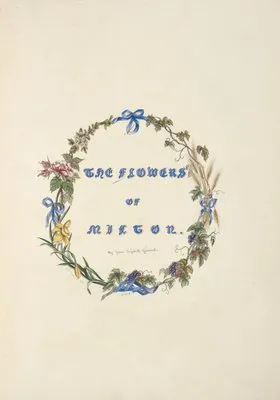
“The flowers of Milton” carries only Jane Elizabeth Giraud's name. The image is public domain; the hand-colouring is still one person's hand.
What to Take Away
Appreciation is not knowledge but habit — one more look each time. Two centuries on, the plant may still flower in some garden; the one on this sheet stopped in the season of 1846.
About this plate
Laurel and myrtle (1846) is plate 21, from The flowers of Milton, drawn by Jane Elizabeth Giraud. This public-domain plate is reproduced at high resolution, free to view and download. Publication: Faversham, Day & Haghe, 1846.