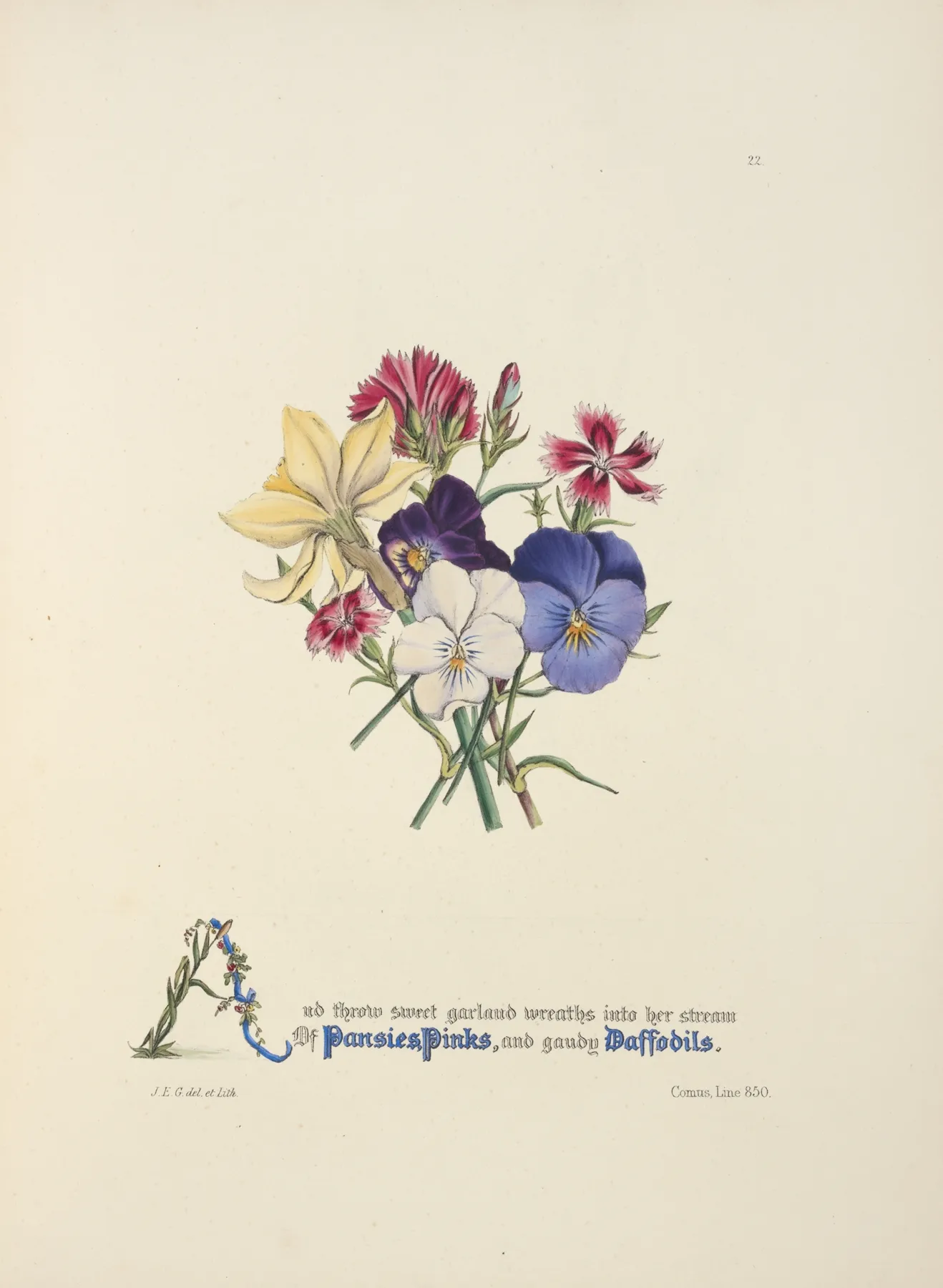
Pansies, pinks and daffodils (1846)
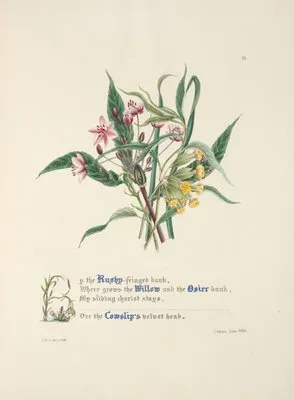
mwans Ao4 oquų shqpinn qum].m∬ 1vams aņanqu qn Af PansiesPinks,and gaudy Daffodils. Comus, Line
Pansies, pinks and daffodils (1846)
Ten ways of seeing
- measured cast violet-blue
- upright 1.37 : 1
First Look
竖划三寸,当千仞之高;横墨数尺,体百里之迥。
—— 南朝宋·宗炳《画山水序》
A vertical stroke of three inches stands for a cliff of a thousand fathoms; a few feet of ink holds a hundred li.
The sheet is vertical: the eye climbs and settles in the upper half. Let the plant stand before you look for detail. Then step in close: watch where colour meets line, and whether the line ever breaks. Third, find the darkest small patch: the whole tonal order is measured from there.
Name and Thing
No reliable binomial survives, so the printed title must serve. Neither name nor binomial survives: the printed title must do.
Form and Colour
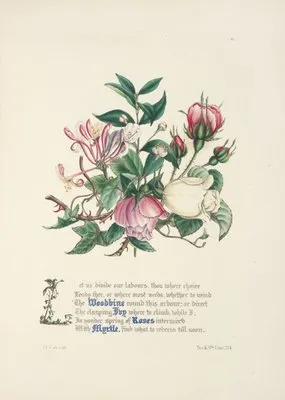
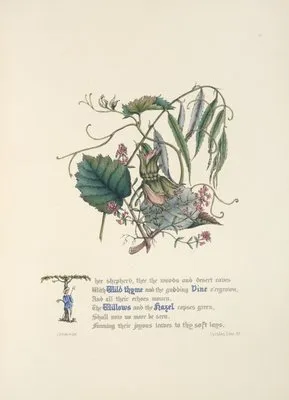
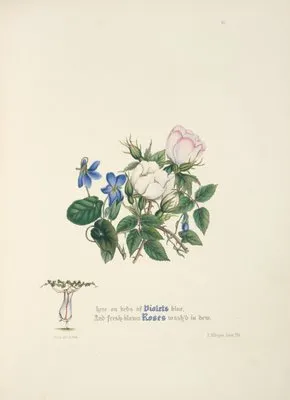
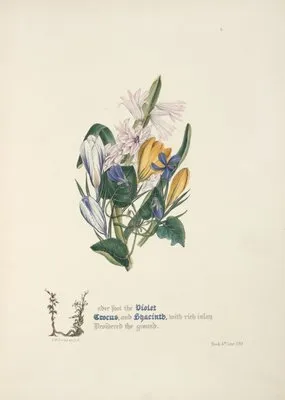
Measured on this plate: flower colour covers 4.7% of the sheet, foliage 0.2%, the cast violet-blue with a second note of red. No other plate shares exactly this measure. A layered bulb, upright strap leaves, six white tepals and a small golden cup — the Chinese name is 'silver terrace with a golden cup'.No colour group is recorded. Read the outline, then the colour layers, then the brush.
Composition
The sheet is tall. No details are appended: a plate for looking, not for keying out. The plant covers only 7% of the sheet, centred near the centre; the emptiness is where the eye rests.
Line and Colour
The first half of the nineteenth century moved from copper to steel to lithography; stipple could render the softest transition. Take a loupe to three places: petal edge, leaf vein, caption. An unbroken line means engraving; colour crossing the outline means a hand. If you mean to copy it: take its skeleton, its margins and the order of its colours; the burin's hatching is the language of copper — suggest it with pencil density, do not imitate it stroke for stroke.
Poetic Resonance
应有水仙潜出听,飜将唱作步虚词。
—— 唐·白居易《江上吟元八绝句》
The poem gives the mood first and the picture supplies the form; set the line beside the plate and the corolla becomes its resting point.
Symbolism
In China it is the New Year's offering — clear, fragrant, a little otherworldly; in Europe, because of Narcissus, it means self-love and the gaze turned inward. Meanings change their tune: the same flower can say opposite things within a century.
Season and Place
Late winter into early spring: forced in water in the twelfth month, blooming at the New Year. Zhangzhou in Fujian has grown it since Ming times. The year 1846 on the plate is that of publication, not of flowering — the gathering came a year or two earlier. See this kind of plate in the flowering season if you can: once you have met the living flower, you stop reading only colour.
The Book and the Hand
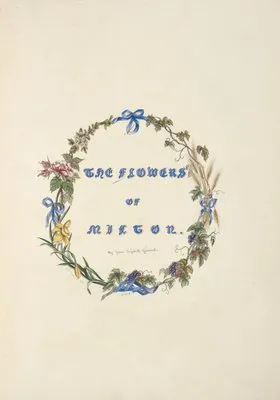
“The flowers of Milton” carries only Jane Elizabeth Giraud's name. A plate is collective work: drawer, engraver and colourist were different hands, and the unnamed ones decided how good it looks.
What to Take Away
If you keep one line, keep Guo Xi's: from afar its momentum, up close its texture. Two centuries on, the plant may still flower in some garden; the one on this sheet stopped in the season of 1846.
About this plate
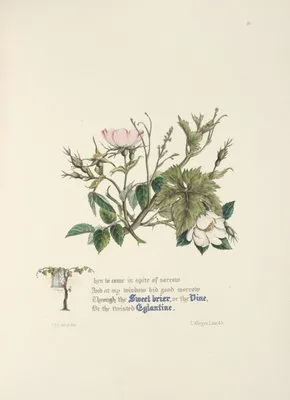
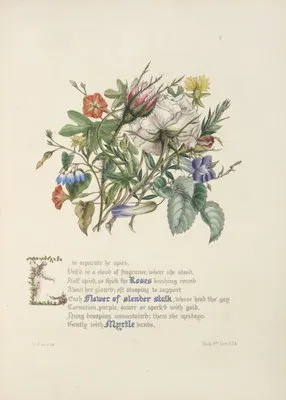
Pansies, pinks and daffodils (1846) is plate 1, from The flowers of Milton, drawn by Jane Elizabeth Giraud. This public-domain plate is reproduced at high resolution, free to view and download. Publication: Faversham, Day & Haghe, 1846.