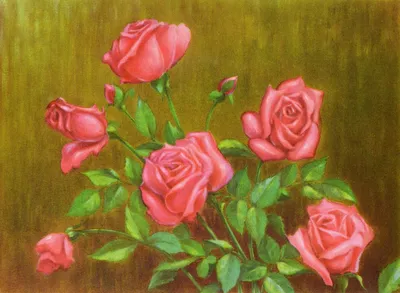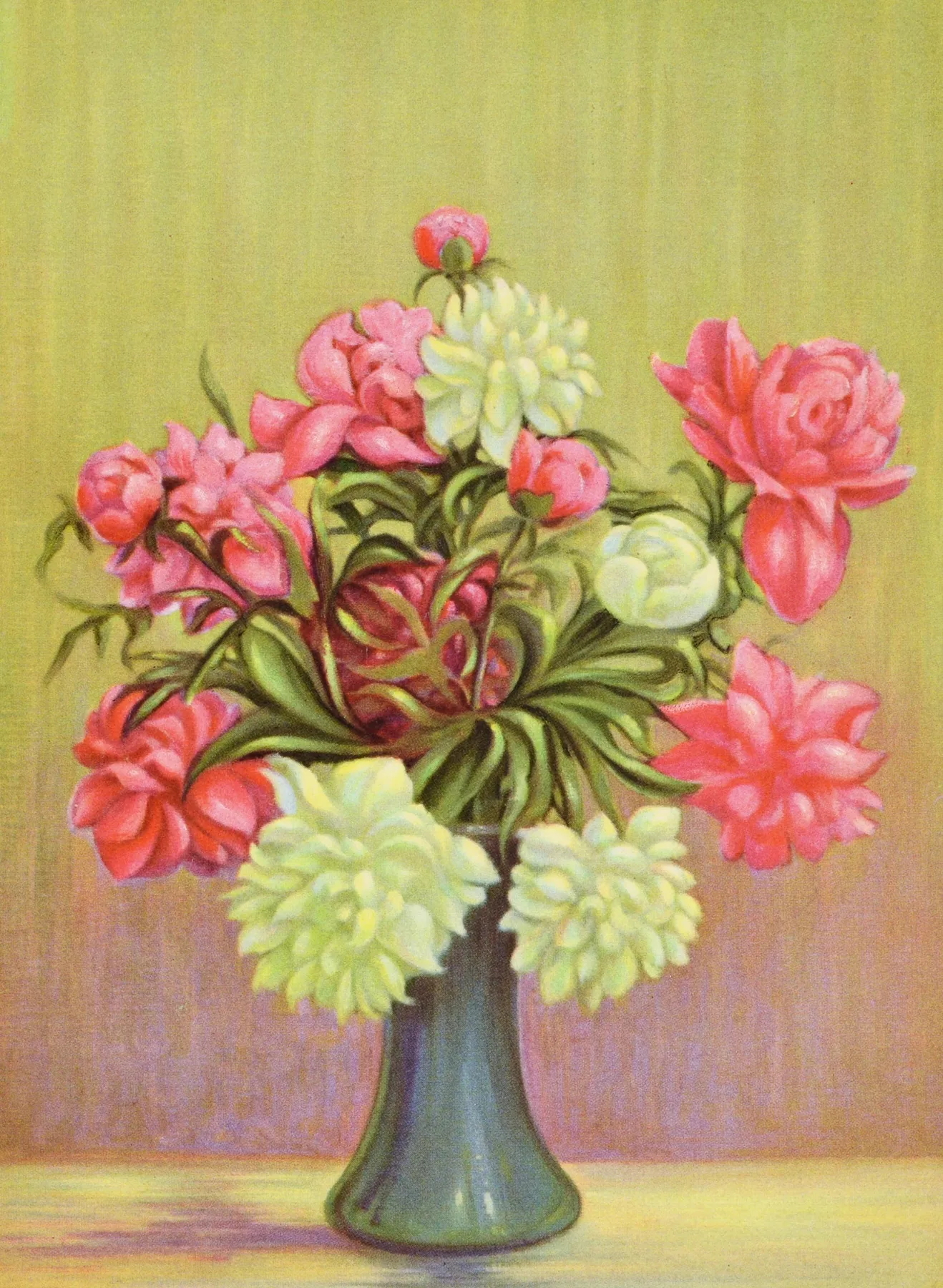
Peony (1937)
Ten ways of seeing
- upright 1.37 : 1
First Look
论画以形似,见与儿童邻。
—— 宋·苏轼《书鄢陵王主簿所画折枝》
To judge painting by likeness alone is the view of a child.
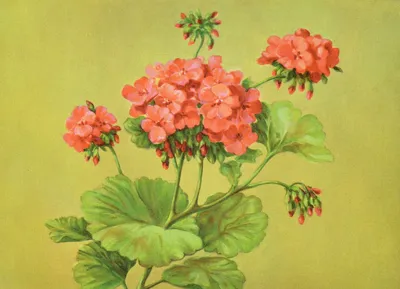
The sheet is vertical: the eye climbs and settles in the upper half. Let the plant stand before you look for detail. Then step in close: watch where colour meets line, and whether the line ever breaks. Third, find the darkest small patch: the whole tonal order is measured from there.
Name and Thing
No reliable binomial survives, so the printed title must serve. Neither name nor binomial survives: the printed title must do.
Form and Colour
Herbaceous peonies die back each year, tree peonies keep woody stems; both have twice-trifoliate leaves and huge double blooms, often blotched at the petal base.No colour group is recorded. A single plant, laid out with nothing hidden.
Composition
Tall and narrow, the plant rising in one movement with generous margins — the upright format of most floras. No details are appended: a plate for looking, not for keying out. Blank paper is not unfinished work: it is where the eye rests.
Line and Colour
After 1900 photography and colour reproduction ran alongside watercolour: accuracy rose, the cut of the burin disappeared. Craft leaves franker evidence than inscriptions. If you mean to copy it: this is a photomechanical record — match the colours directly, do not imitate the printing grain.
Poetic Resonance
唯有牡丹真国色,花开时节动京城。
—— 唐·刘禹锡《赏牡丹》
The poem gives the mood first and the picture supplies the form; set the line beside the plate and the corolla becomes its resting point.
Symbolism
The tree peony is 'national beauty and heavenly fragrance', an emblem of prosperity; the herbaceous peony is tenderness — given at parting, hence its name 'jiangli', 'about to leave'. Flower language was added later; the flower knows nothing of it, and that innocence is part of its power.
Season and Place
Late April to early May, around the Grain Rain solar term. Native to China: tree peonies centred on Luoyang, herbaceous ones on Yangzhou. Most garden peonies in Europe descend from eighteenth-century Chinese imports. The year 1937 on the plate is that of publication, not of flowering — the gathering came a year or two earlier. The bud and the ripe fruit on one branch tell the season; the name in the title often tells the journey.
The Book and the Hand
“The language of flowers” carries only Lafayette F. Cargill's name. The image is public domain; the hand-colouring is still one person's hand.
What to Take Away
Next time you stand before a flowering plant, give it three minutes: leaf arrangement, direction of the flower, the darkest patch. The flower of that year is dust, yet its image on paper has outlived every living cousin.