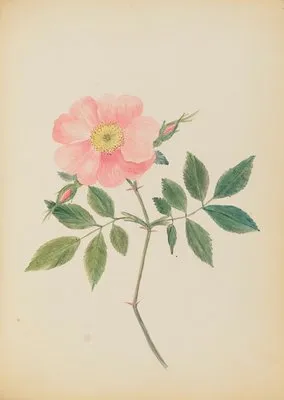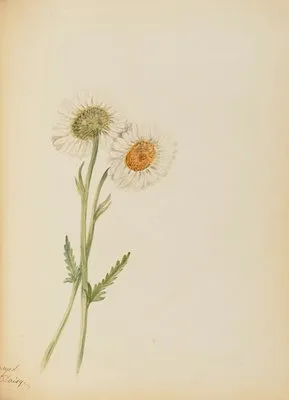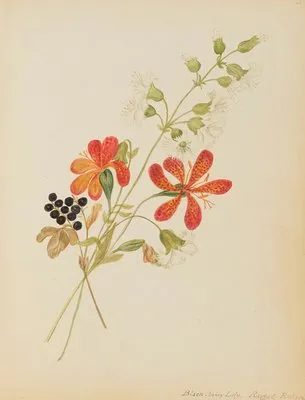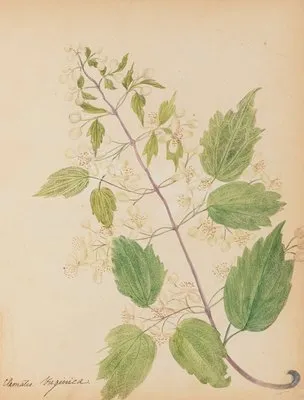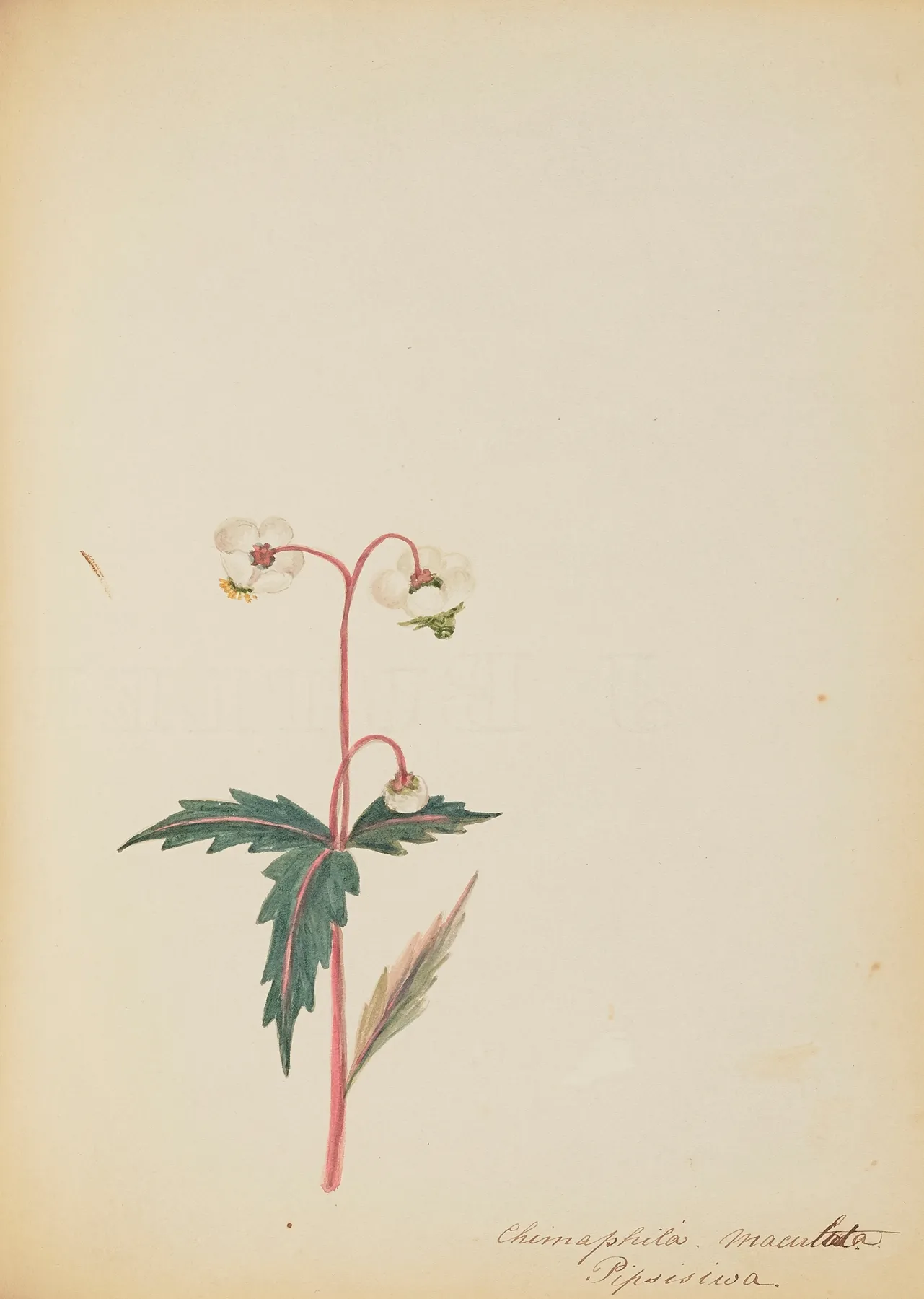
Chimaphila maculata Pipsisiwa (1856)
Pisis iiwa|斑叶喜冬草
Chimaphila maculata Pipsisiwa (1856)
Ten ways of seeing
- measured cast red
- upright 1.41 : 1
First Look
论画以形似,见与儿童邻。
—— 宋·苏轼《书鄢陵王主簿所画折枝》
To judge painting by likeness alone is the view of a child.
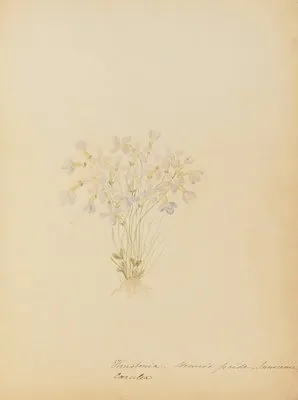
The sheet is vertical: the eye climbs and settles in the upper half. Let the plant stand before you look for detail. Then step in close: watch where colour meets line, and whether the line ever breaks. Third, find the darkest small patch: the whole tonal order is measured from there.
Name and Thing
No reliable binomial survives, so the printed title must serve. The Chinese name 斑叶喜冬草 is a modern rendering of the Latin, not an old garden name.
Form and Colour
Measured on this plate: flower colour is sparing, 1.1% of the sheet against 0.2% of foliage, the cast tending red — as with pale or white blooms, outline and tone do the talking. Wildflowers are rarely tidy: small blooms, slender stems, leaves imperfect and often chewed. That untidiness is exactly what records wind, light and soil.No colour group is recorded. A single plant, laid out with nothing hidden.
Composition
The sheet is tall. No details are appended: a plate for looking, not for keying out. The plant covers only 17% of the sheet, centred a little left of centre; the emptiness is where the eye rests.
Line and Colour
In the later nineteenth century chromolithography took over: colour printed rather than painted, line demoted. Decide first whether it was printed or painted; only then discuss whether it is beautiful. If you mean to copy it: block in the broad shapes and colours first, detail last; lithographic softness comes from thin washes — two or three pale layers will get you close.
Poetic Resonance
春风尔来为阿谁,胡蝶忽然满芳草。
—— 唐·李白《琴曲歌辭 山人勸酒》
The poem gives the mood first and the picture supplies the form; set the line beside the plate and the corolla becomes its resting point.
Symbolism
In Chinese verse wildflowers bloom unseen, owing nothing to praise; in the West they mark a place — one species, one landscape's character. In a flora it is a species first and a symbol second; the order is worth keeping.
Season and Place
in the northeastern United States, April to August — each species for two or three weeks, so a wildflower book is arranged by month. they resent transplanting and will not mass in a border — the difference between a wildflower and a garden flower. The year 1856 on the plate is that of publication, not of flowering — the gathering came a year or two earlier. Read the locality and the flowering season both with a discount: one is hearsay, the other a ten-day peak.
The Book and the Hand
“Wild flowers of Georgetown, DC” carries only Rebecca Nourse's name. A plate is collective work: drawer, engraver and colourist were different hands, and the unnamed ones decided how good it looks.
What to Take Away
Next time you stand before a flowering plant, give it three minutes: leaf arrangement, direction of the flower, the darkest patch. A flora exists to be consulted; look long enough and you forget to consult — someone in 1856 gave a whole day to a single flower.
About this plate
Chimaphila maculata Pipsisiwa (1856) is plate 37, from Wild flowers of Georgetown, DC, drawn by Rebecca Nourse. This public-domain plate is reproduced at high resolution, free to view and download. Publication: Georgeotwn, D.C., 1856.