Gentiana Saponaria (1856)
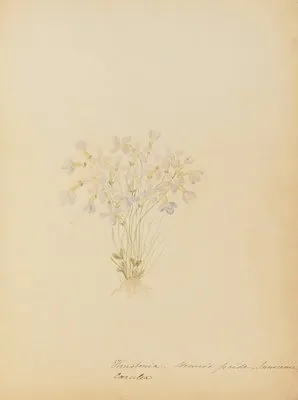
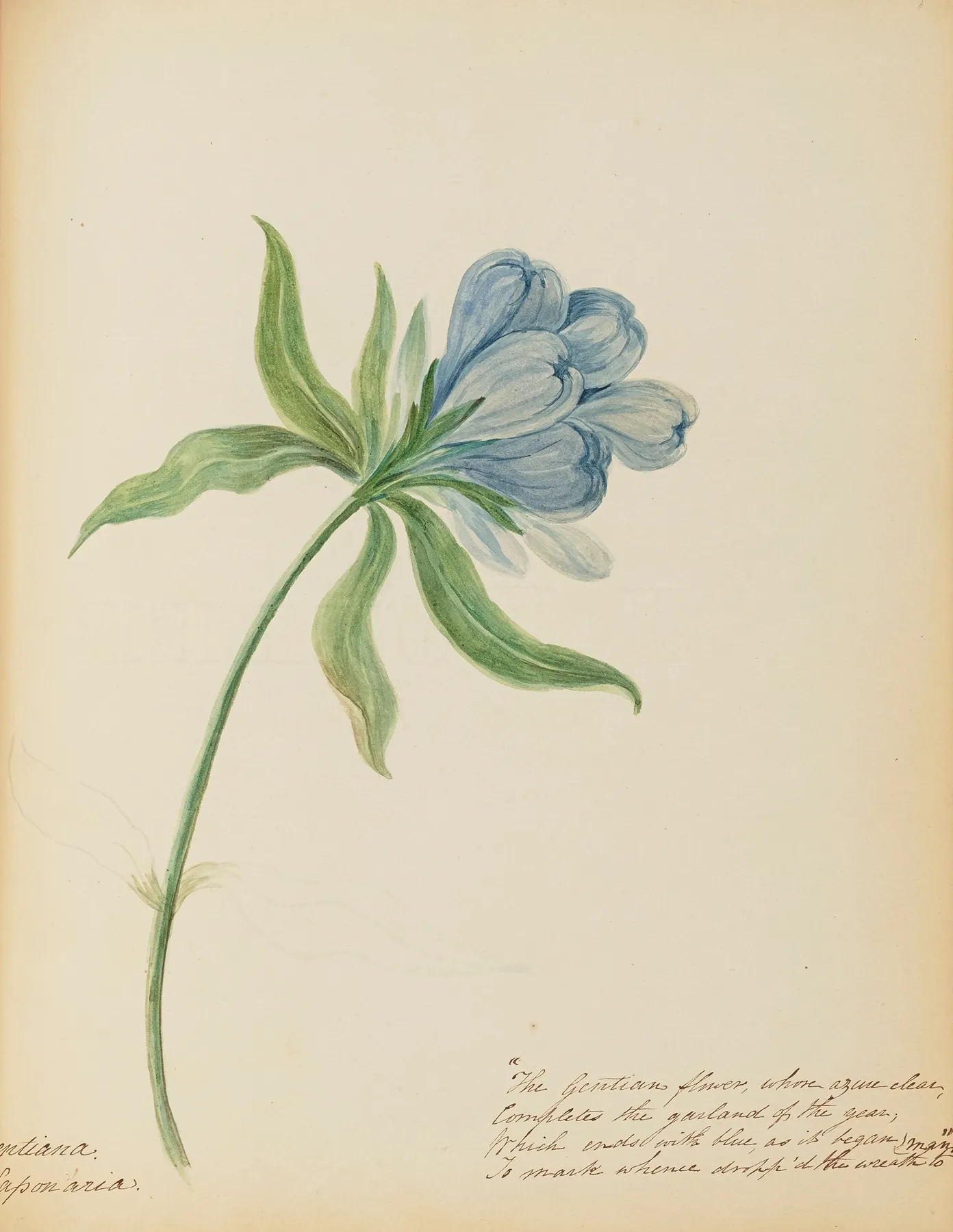
Comhelio the gnland f the|Gentiana Saponaria (1856)
Gentiana Saponaria (1856)
Ten ways of seeing
- measured cast amber
- slightly upright 1.29 : 1
First Look
江馆清秋,晨起看竹,烟光日影露气,皆浮动于疏枝密叶之间。
—— 清·郑板桥《题画竹》
On an autumn morning at the river lodge I looked at the bamboo: mist, sunlight, dew, all drifting among the sparse and dense leaves.
Slightly taller than wide; the eye lands above centre. Then step in close: watch where colour meets line, and whether the line ever breaks. Third, find the darkest small patch: the whole tonal order is measured from there.
Name and Thing
The binomial is Gentiana saponaria: the first word is the genus it belongs among, the second the epithet that sets it apart. Two words carry a whole provenance. No established Chinese name exists, so it is cited by its binomial alone.
Form and Colour
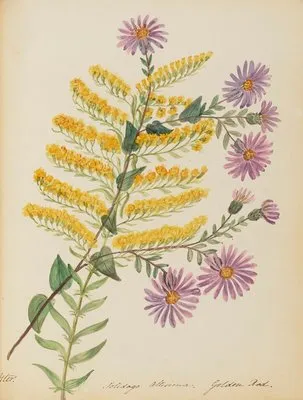
Measured on this plate: flower colour is sparing, 1.2% of the sheet against 4.3% of foliage, the cast tending amber — as with pale or white blooms, outline and tone do the talking. Wildflowers are rarely tidy: small blooms, slender stems, leaves imperfect and often chewed. That untidiness is exactly what records wind, light and soil.No colour group is recorded. Three things fix the habit: leaf arrangement, tepal count, and how the flower is borne.
Composition
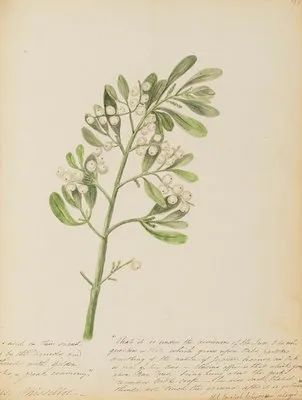
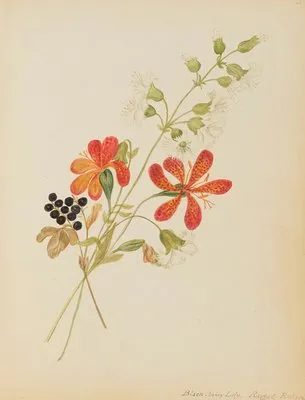
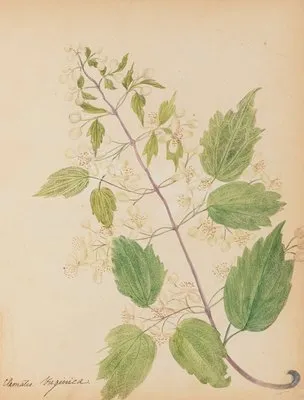
The sheet is slightly tall. No details are appended: a plate for looking, not for keying out. The plant covers only 19% of the sheet, centred a little left of centre; the emptiness is where the eye rests.
Line and Colour
In the later nineteenth century chromolithography took over: colour printed rather than painted, line demoted. Decide first whether it was printed or painted; only then discuss whether it is beautiful. If you mean to copy it: block in the broad shapes and colours first, detail last; lithographic softness comes from thin washes — two or three pale layers will get you close.
Poetic Resonance
叶心朱实看时落,阶面青苔先自生。
—— 唐·杜甫《院中晚晴懷西郭茅舍》
The poem gives the mood first and the picture supplies the form; set the line beside the plate and the corolla becomes its resting point.
Symbolism
In Chinese verse wildflowers bloom unseen, owing nothing to praise; in the West they mark a place — one species, one landscape's character. Meanings change their tune: the same flower can say opposite things within a century.
Season and Place
in the northeastern United States, April to August — each species for two or three weeks, so a wildflower book is arranged by month. they resent transplanting and will not mass in a border — the difference between a wildflower and a garden flower. The year 1856 on the plate is that of publication, not of flowering — the gathering came a year or two earlier. See this kind of plate in the flowering season if you can: once you have met the living flower, you stop reading only colour.
The Book and the Hand
“Wild flowers of Georgetown, DC” carries only Rebecca Nourse's name. The image is public domain; the hand-colouring is still one person's hand.
What to Take Away
Next time you stand before a flowering plant, give it three minutes: leaf arrangement, direction of the flower, the darkest patch. Two centuries on, the plant may still flower in some garden; the one on this sheet stopped in the season of 1856.
About this plate
Gentiana Saponaria (1856) is plate 89, from Wild flowers of Georgetown, DC, drawn by Rebecca Nourse. This public-domain plate is reproduced at high resolution, free to view and download. Publication: Georgeotwn, D.C., 1856.