蓝颏青蜂鸟属
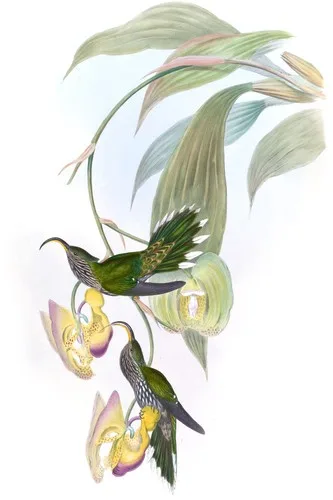
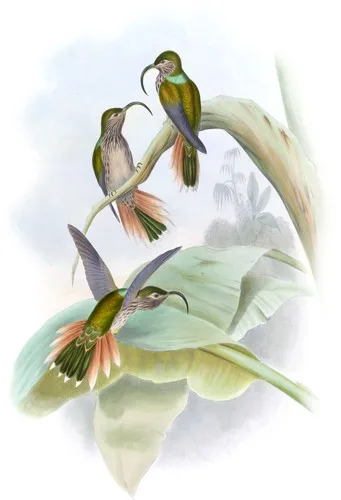
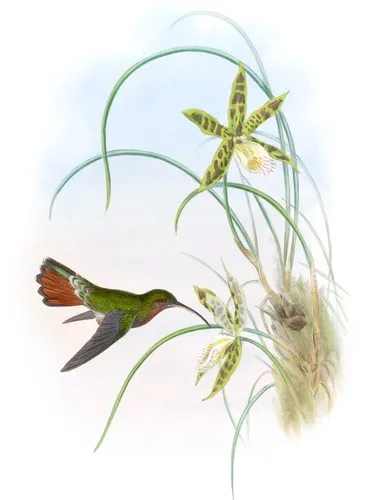
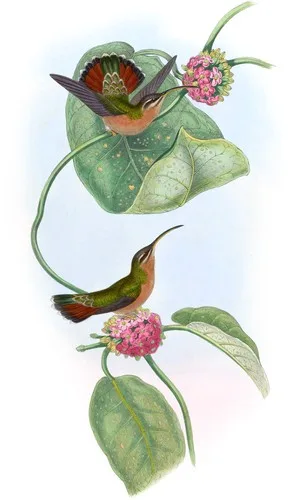
Damophila amabilis
Damophila amabilis
Black-throated Damophila
- 中文名
- 蓝颏青蜂鸟属
- 学名
- Damophila amabilis
- 合集
- 古尔德蜂鸟图谱
- 绘者
- John Gould(约翰·古尔德)
- 年代
- 1861
- 图版号
- Pl. 341, Vol. V
- 原书页码
- p.341
- 授权
- CC0 1.0 Universal (Public domain)
十观
- 略纵 1.19∶1
- 1861 年刊
- 图版 341, Vol. V
第一眼
六法者何?一、气韵生动是也;二、骨法用笔是也;三、应物象形是也;四、随类赋彩是也;五、经营位置是也;六、传移模写是也。
—— 南齐·谢赫《古画品录》
一千五百年前的六条标准:气韵、用笔、形似、设色、构图、临摹。你在这幅图上一样样对过去,就是一次完整的读画。这一幅略高于宽,落点在中央偏上。第二步凑近一寸:看线与色的交界,色有没有压住线,线有没有断。第三步,把视线放到最深的那一小块:整幅的用色秩序,都是从那里排开的。
名与实
学名 Damophila amabilis:前一词是属,管它归在哪一类;后一词是种加词,管它在这一类里凭什么与众不同。双名制的好处是唯一:全世界叫这个名字的,只能是这一种。中文名“蓝颏青蜂鸟属”是后人据学名回译的通行叫法,与古书里的旧名未必对得上——名与物之间,总隔着一层翻译。
形与色
鳞茎由多数肉质鳞片抱合而成,故名“百合”;茎直立,叶披针或轮生,花被六片,盛开时向外反卷,雄蕊六枚,花药长大如丁字。此幅未作色相归档,只能就形制论。颜色不是平涂的:最浅处近乎纸色,最深处在花瓣重叠的缝里。把这两处找到,画面的呼吸就出来了。
构图与呼吸
画幅略高于宽,主株居中偏上,视线自然落在花冠。(高宽比约 1.19∶1)全幅只画一株,不作解剖附图——这类图更近于“观赏”,而非“鉴定”。空白不是没画完,是给眼睛留的落脚处:一张图若四边都塞满,花反而会闷。
一刀一色
十九世纪后半叶,石版与彩色石印渐成主流:颜色可以直接印出,不再依赖手工,线条反倒退居其次。图像的“准确”提高了,手性却淡了。工艺留下的破绽比题跋更诚实:刻工不会撒谎,上色的人赶时间的时候会。想动笔临它的人记住一句:先铺大块的形与色,干后再收细部;石印的柔和层次来自薄涂与网点,水彩分两三遍淡铺即可逼近。
诗境
两丛香百合,一架粉长春。
—— 宋·陆游《北窗偶题四首 其一》
“两丛香百合”——古人写到这一层,已不只是赏花,是借花说人;画面则只负责把那朵花留住。
花语
西方以白百合为圣母之洁,天使报喜时手持者即是;中国取其“百年好合”之谐音,婚仪用之,是世俗的祝福而非宗教的纯洁。在图谱里,它首先是一个物种,其次才是一种象征——这个次序值得记住。
时与地
初夏至盛夏,六七月间开。百合花期短,三五日即谢,故画者多取初开之态。北半球温带,中国、日本与欧洲山地皆有。中国百合入药已久,十九世纪欧洲又从东亚引去数十种,一时百合育种大盛。图上所记的 1861 年是刊行之年,不是花期;真正的花藏在原书的采集记录里,通常比出版早一两年。图上的产地常是“据说来自”,图上的花期常是“盛开那十日”——两处都要打个折扣读。
书与人
《古尔德蜂鸟图谱》(Gould's Hummingbirds)由约翰·古尔德绘,成于1849-1887。此幅为其中图版 341, Vol. V,见原书第 341 页。图版今属公有领域,可以自由取用;但纸上那层手工上色,仍是两百年前某一个人的手。
带走一双眼睛
下次去公园,找一株开着的花站三分钟:看叶怎么排、花朝哪个方向开、最深的一块色在哪。三分钟之后,你已经会看这一类的图了。1861 年的那朵花早已化作尘土,它留在纸上的样子,却比任何一株活着的同类都长寿。
关于本图版
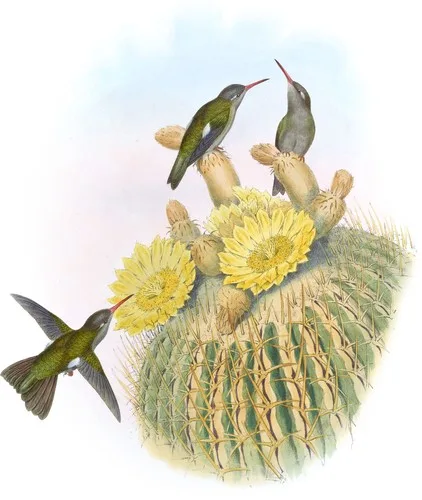
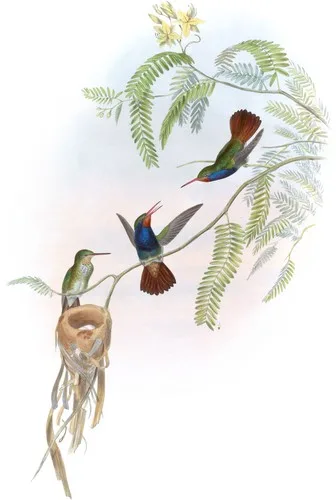
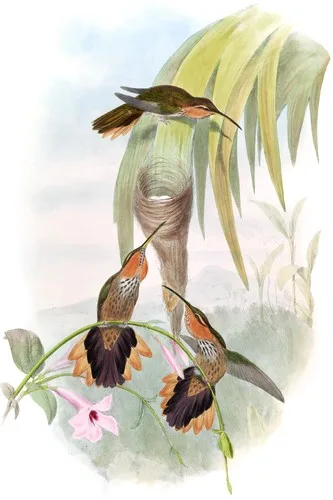
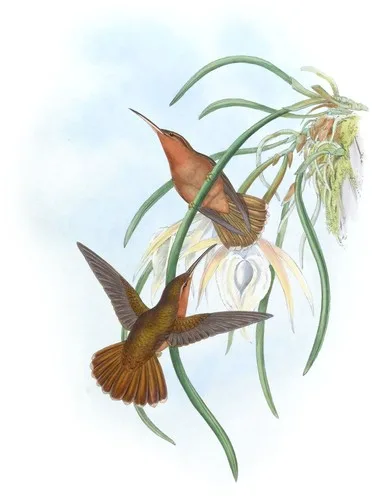
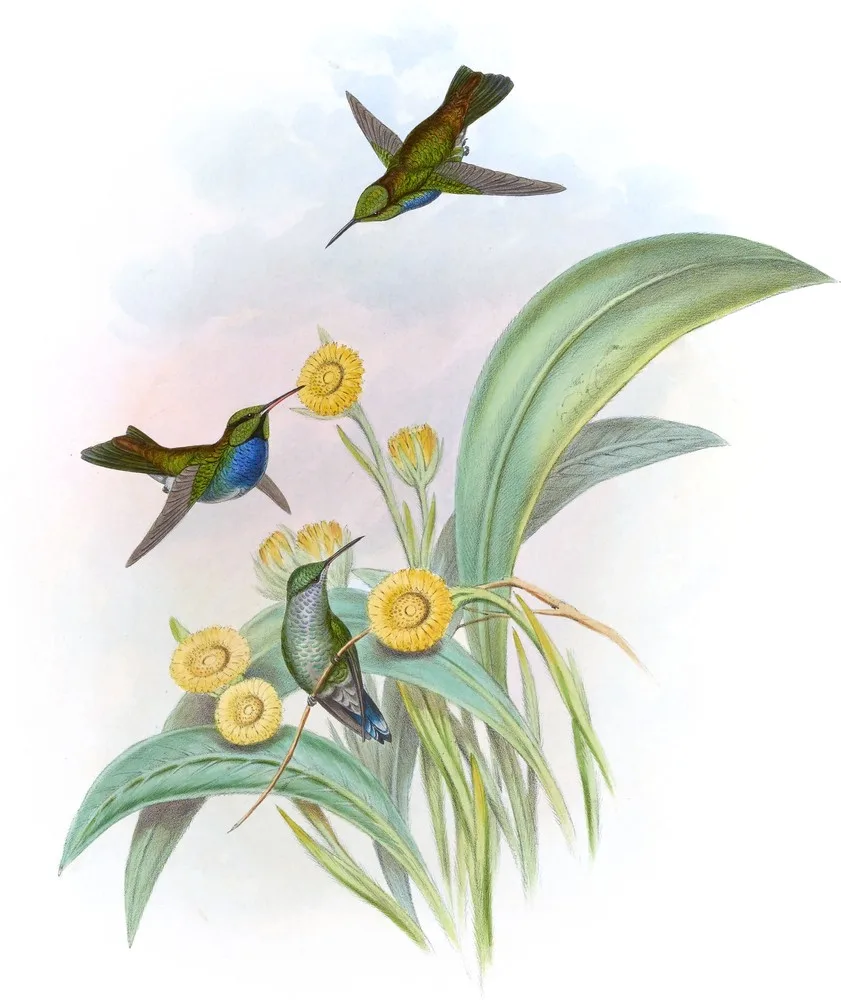
本图选自约翰·古尔德的《古尔德蜂鸟图谱》(Gould's Hummingbirds),原书 1849—1887 年间出版。图中描绘的是蓝颏青蜂鸟,学名 Damophila amabilis,在分类体系中列于蜂鸟科(Trochilidae)。
该合集全编共 421 幅图版,此图为其中之一,图版编号 Pl. 341, Vol. V,对应原书第 341 页,版式为纵幅。图为公有领域原件的修复扫描,构图与设色未经改动。
原书文字(英文 / 法文)
New Granada and Ecuador
It was not until long after that great emporium of novelties, Bogota, had begun to unfold its treasures to the scientific world, that we became acquainted with this pretty species of Humming-bird.
Collection after collection had been received from thence for years; but it was not until 1851 that a single example of the Damophila amabils made its appearance. It was from this specimen I took my description, and to which I gave the name. Since that period it has annually become more and more common, numerous specimens having been sent from the same locality, so that this bird which was unique in 1851 is now (1859) precisely the reverse. It is a species which, in the opinion of Dr. Reichenbach and the late Prince Charles L. Bonaparte, differs sufficiently from the other forms of the family to constitute it the type of a new genus; and accordingly the generic title of Damophila was proposed for it by the former, and Juliamyia by the latter; fortunately it has not received a second specific appellation, and hence there is no difficulty with regard to its synonymy. ‘The only information known respecting it, is that it is found in the neighbourhood of Santa Fe de Bogota. It will be seen that the female differs somewhat from the male in colour, particularly in the absence of the bright green of the crown and sides of the head.
The male has the crown of the head shining metallic green; chin black; breast beautiful violet-blue, with a line of lustrous green, commencing at the angle of the bill, passing down the sides of the neck; upper surface bronzy green; tail-coverts and central tail-feathers greenish bronze; lateral tail-feathers brownish black; wings purplish brown; under surface like the upper, but less brilliant; centre of the abdomen and under tail-coverts grey; upper mandible and tip of the lower mandible black, the base of the latter fleshy white.
The female has all the upper surface bronzy green; wings purplish brown; two middle tail-feathers bronze, the lateral feathers bronze at the base, then black and slightly tipped with grey; under surface dull brownish green, fading into grey on the centre of the abdomen and under tail-coverts.
The Plate represents both sexes of the natural size. The plant is the Espeletia argentea.
References
- Trochilus (———?) amabilis, Gould in Proce. of Zool. Soc., part xix. p. 115.
- Damophila amabilis, Reich. Auf. der p. 7.
- Juliamya amabilis, Bonap. Rev. Zool. 1854, p. 255.